Score
Xavier Nuezs Photos Of American Ruins Highlight An Underused Photographic Trick
Xavier Nuez's innovative light-painting technique transforms derelict American spaces into striking visual narratives, emphasizing the therapeutic power of creativity. His work not only showcases a unique artistic approach but also serves as a poignant reminder of how personal experiences can shape and inform brand narratives, particularly in the realm of storytelling and emotional engagement.
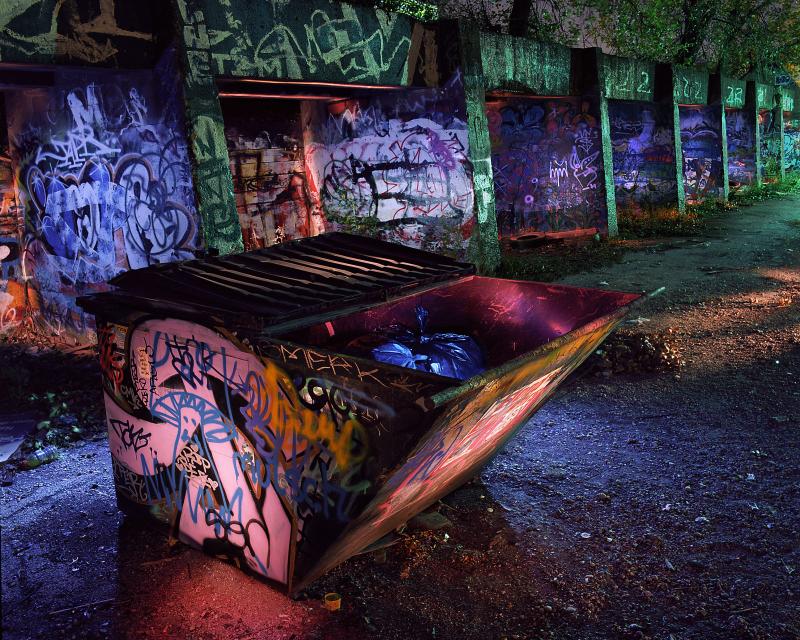
Creative Boom: Inspiration Photography The way Xavier Nuez captured these photographs of American ruins is utterly remarkable Light-painting America's most derelict spaces, Xavier Nuez created something extraordinary… and accidentally healed himself in the process. Written By: Tom May 5 May 2026 Chicago There's a technique at the heart of Xavier Nuez's photography that's well worth knowing about. Every image in his Alleys & Ruins series—a body of work spanning a quarter century, 30-plus American cities and more than 1,200 nights—was lit by hand. Not from the side, not from a tripod. From inside the frame.
Xavier himself walked through each scene in total darkness, holding coloured lights and building layers during exposures that sometimes ran to 90 minutes. The camera can't see him because he keeps moving. Only the light registers on the negative. He's both everywhere in these photographs and completely absent from them. The results are extraordinary. Derelict warehouses, collapsed interiors, and forgotten alleyways become theatrical, saturated and strange. It's as if someone had art-directed a post-apocalyptic film set and then left before the shoot.
The before-and-after comparison between the daytime location and the finished photograph is often hard to believe. Portland Detroit This is the same technique, broadly, that light-painting enthusiasts have used for decades. But what Xavier has done differently is apply it with obsessive rigour to medium-format film over 25 years of work. The resulting photographic memoir, Alleys & Ruins: From Breakdown to Beauty, will be published in September through Gypsy Press. The New York Times has called it a "masterpiece." The International Society for Traumatic Stress Studies has called the book "an important work".
Clinical psychologist Dr Lyssa Menard of Northwestern University, meanwhile, describes it as "a psychologically precise and unusually compelling account of trauma and recovery, and a rare example of creative practice functioning as self-repair." When it comes to Xavier's own life story, that last phrase is the one that matters most. A creative paradox Here's what happened. In 1987, Xavier walked into a job interview and, as he puts it, his brain snapped. What followed—years before Complex PTSD had a name or a place in the diagnostic manual—was a nervous system collapse that made ordinary life unbearable.
St Louis Toronto Conversations were terrifying. Social situations were intolerable. He saw over a dozen clinicians. None had the right map. What he discovered instead, almost by accident, was that wandering dangerous alleys and abandoned ruins at night calmed his system. "I now understand I was returning to environments that matched how I felt inside," he says. The ruined, the abandoned, the threatening: these were his comfort zone, because they matched the landscape he was already living in. In 1993, he quit his job and began shooting them.
The paradox that emerges from the work is one that all creatives will recognise in some form: the conditions that produce the work are not the conditions you'd choose. Detroit Kansas City Xavier was, by his own account, terrified of a simple conversation, but fearless in a Detroit ruin at 2am. He had guns pointed at him. Gangs chased him through ruins and dark alleys. Yet he kept going back. "In every photograph," he writes, "the subject matter says run, and the light says stay." A technique built from constraints His process is almost wilfully impractical.
Article truncated for readability. Read the full piece →
The article discusses an innovative photographic technique that can influence brand storytelling, making it significant and relevant for brand strategy professionals, but it may not have a broad impact on the overall industry.
Weekly digest
Get the Signal digest
Every Monday morning — the top 3 brand trends, 10 high-signal articles, and one emerging signal to watch.
No spam. Unsubscribe anytime.