Score
Is Crumbl falling apart? Yes, it is
Crumbl's recent foray into overly sugary drinks and extravagant dessert offerings has sparked backlash and raised concerns about the sustainability of its viral marketing strategy. As the brand faces declining sales and criticism from influencers, it highlights the risks of relying on novelty and social media hype without maintaining product quality, suggesting a need for a more balanced brand strategy that prioritizes both innovation and consumer trust.
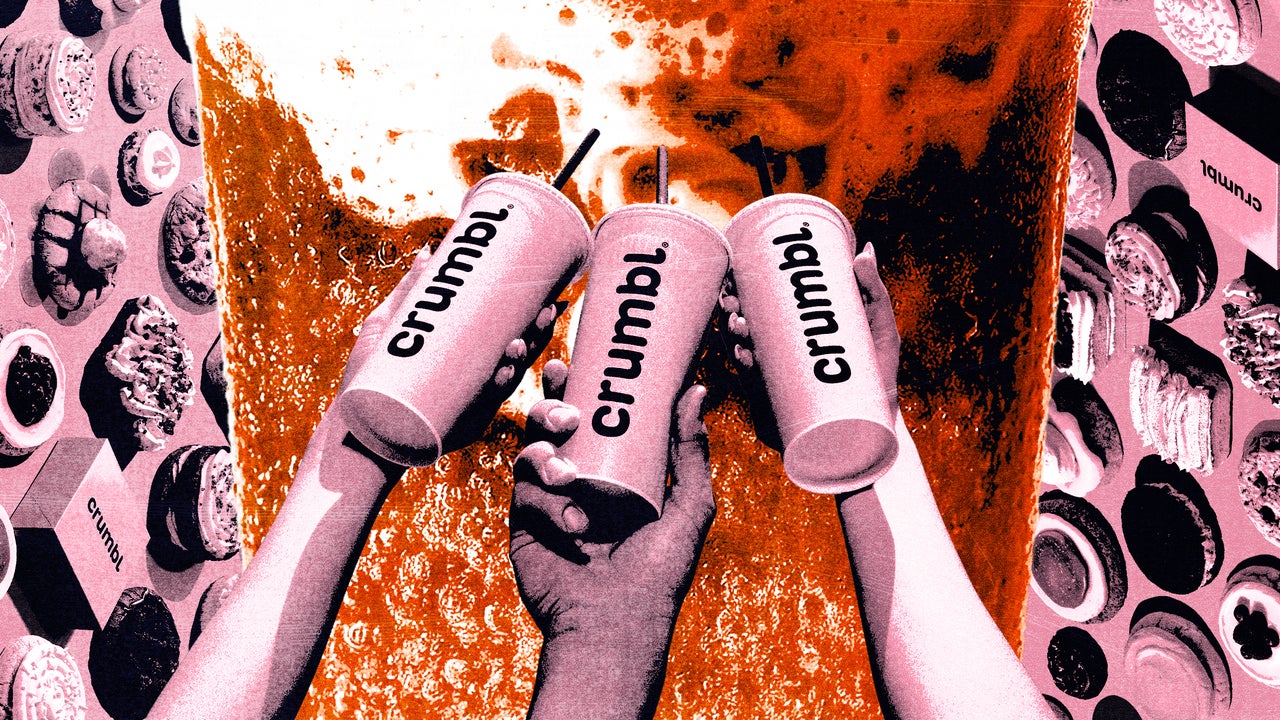
FastCompany: Perhaps by now you have seen, somewhere on social media, a drink made by Crumbl that half the internet seems convinced could be a biohazard. Called the Crazy Cousins, it mixes a base like Sprite or Mountain Dew with a full can of Red Bull, strawberry purée, pineapple syrup, and a serious glug of coconut milk. The 32-ounce version delivers 186 grams of slurpable sugar. “Almost half a pound of sugar, or five cans of Coke” is how Itay Shechter, a wellness influencer with more than a million followers, explained it in a post that went viral. “I had to stop everything and go make that video,” Shechter told me last week.
“My job is making a number like that impossible to scroll past.” Physician Mark Hyman declared it “the equivalent of eating 19 Krispy Kreme donuts” and said it “should be illegal.” Fox News anchor Bill Hemmer joked that he’d stir in Ketel One. The betting app Polymarket got creative —“JUST IN: Crumbl cookie company releases drink with 186,000mg of sugar,” making it sound even more like a toxic threat. A drink containing nearly four times the recommended daily limit of sugar might seem like reaching rock bottom for Crumbl.
But in the eight-year-old Utah company’s push beyond cookies into the colorful parade of turbocharged sweets it’s rolled out lately, betting that it can’t go any lower may be premature. Somewhere between the following drops . . . “cookie fries” nostalgia-bait mashups loaded with Reese’s, Oreos, or Pop-Tarts Kim, Kourtney, and Kylie’s full-menu takeover dirt cups with gummy worms layered icebox cakes mousse-topped skillet cookies Jimmy Fallon’s 1,200-calorie Holiday Seasoning Candy Cane Brownie protein balls the rollout of 46 “dirty soda” flavors, all at once . . . Crumbl lost the plot.
“Crazy Cousins” [Photo: Crumbl] A growing backlash (fanned by even Zooey Deschanel) coupled with weakening sales suggests that the formula that made Crumbl one of the fastest-growing sensations of the 2020s may be going as soft as the interiors of its sugar cookies. Crumbl may become a business lesson in what happens when a company built for virality runs out of ways to top itself. Or, more uncomfortably, it may do the opposite, proving that a drink containing a half-pound of sugar is noteworthy not because it went too far, but because it didn’t go far enough.
In this deep dive into the Crumblverse, store employees reveal what the company’s really selling—and it’s not dessert. We explore how its more baroque offerings meant to lure customers back are playing a dangerous game; the unexplored weakness in Crumbl’s model that could sink the chain; what Crumbl has in common with Sweetgreen; what the company will look like in five years; and its true cultural legacy, which isn’t going anywhere. [Photo: Lucia Buricelli/Bloomberg/Getty Images] “Somebody had to say it” If McDonald’s is a real-estate company acting like a hamburger chain—as B.J.
Novak’s character put it so well in The Founder , the 2016 biopic about Ray Kroc’s aggressive takeover of the fast-food empire—then Crumbl, to quote QSR Research Hub founder Justin Sellers, is “a viral content engine masquerading as a cookie brand.” I observed the phenomenon up close as soon as I began researching this story, watching my social algorithms get overtaken. My feeds quickly served up a seemingly endless menu of posts by creators who, every week, dutifully roll out Crumbl unboxings, usually as they sit in their car.
Article truncated for readability. Read the full piece →
The article addresses significant challenges faced by a popular brand, highlighting the importance of balancing innovation with product quality, which is highly relevant to brand strategy professionals.
Weekly digest
Get the Signal digest
Every Monday morning — the top 3 brand trends, 10 high-signal articles, and one emerging signal to watch.
No spam. Unsubscribe anytime.