Score
Steak ’n Shake, Cracker Barrel, and the most feared man in fast food
The ongoing feud between Steak ’n Shake and Cracker Barrel highlights the importance of brand perception and customer loyalty in fast food. Steak ’n Shake's aggressive marketing tactics, including public attacks on Cracker Barrel's management and branding decisions, demonstrate how a brand can leverage controversy to reposition itself in the market, particularly under the leadership of a polarizing figure like Sardar Biglari. This scenario underscores the need for brands to remain attuned to their historical identity while navigating modern consumer expectations.
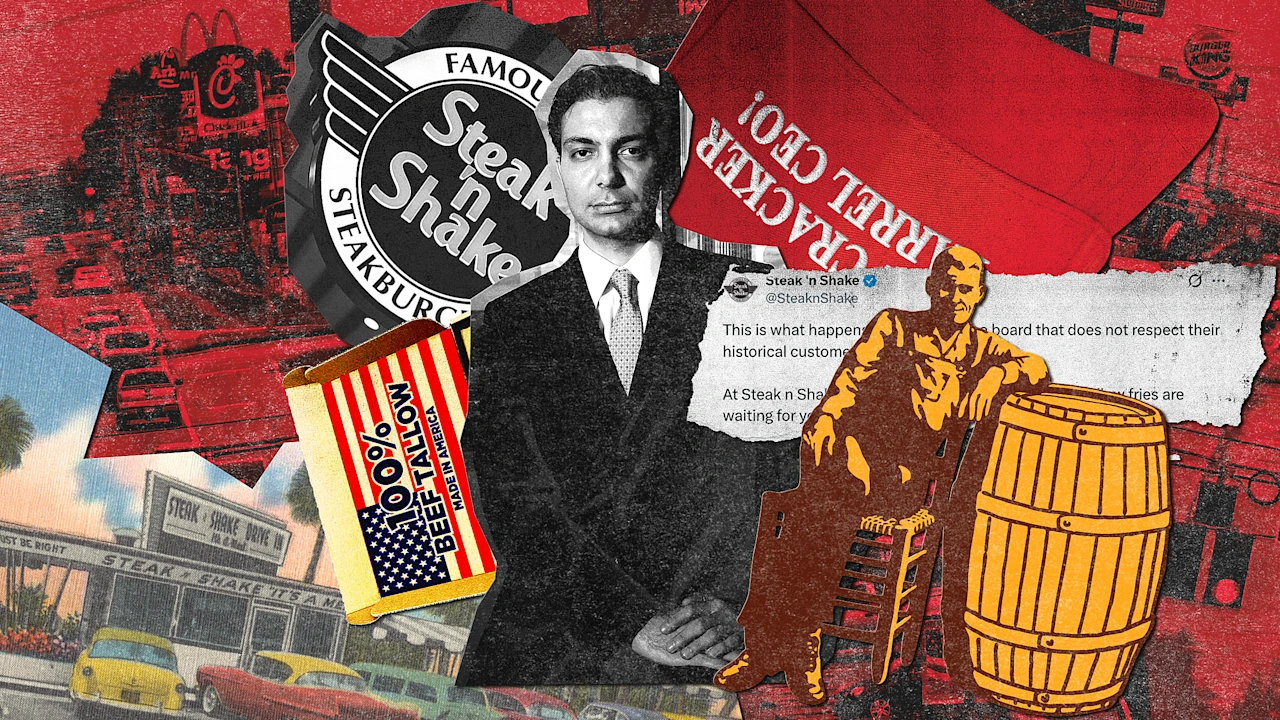
FastCompany: Last August, as the internet piled on Cracker Barrel over its new “modern” logo, something even stranger was unfolding at Steak ’n Shake. For one week, the chain’s X account didn’t try to sell a single burger. Instead, it attacked Cracker Barrel’s “destruction of shareholder value,” alongside other financial grievances. It sold $20 red MAGA-style hats bearing the words “Fire Cracker Barrel CEO,” and drew attention to a billboard near Cracker Barrel’s Nashville headquarters that Steak ’n Shake had secured, repeating the line. Days later, Cracker Barrel admitted defeat. The logo reverted. The internet moved on. Steak ’n Shake did not.
The account remained fixated for months—into 2026—hammering Cracker Barrel’s shrinking portion sizes, falling foot traffic, use of microwaves, alleged day-old biscuits, and 85% stock drop. Meanwhile, those responding to the posts were often . . . crypto bros? Who were cheering Bitcoin? What on earth was going on? And why was Maxim magazine, out of nowhere, getting involved? The answer to these questions, and a bunch you didn’t think of yet, was Steak ’n Shake’s CEO, Sardar Biglari. The 48-year-old rabble-rouser, arguably the most notorious activist investor in the restaurant world, was trying a new tactic.
In the past, Biglari fought for control of businesses via his holding company or investment funds. In 2025, he conscripted his biggest consumer brand, Steak ’n Shake, to be the public face of his battle to send Cracker Barrel’s CEO packing. It was just one of several campaigns Biglari mounted across the industry over the past year. Others forced the boards of Jack in the Box and El Pollo Loco to trigger their so-called poison pill, a takeover-deterrent plan that makes a company too bitter for a hostile buyer to swallow.
(Jack in the Box, which has been plagued by nearly 11 C-suite and board member departures since 2020, has so far kept Biglari at bay. El Pollo Loco is said to be exploring private equity buyout offers rather than sell to him.) Cracker Barrel first deployed a “poison pill” in 2011 to stop Biglari from buying more shares and has done it again three times since; waging defense against his campaigns has cost shareholders $31 million, according to the company. Some chain restaurants, such as Chick-fil-A, In-N-Out, and Starbucks, have high-profile founders and burnished legacies that they uphold.
Others, run by private equity, bear no sign of their corporate leaders or founding missions. (“Roark Capital”? One in every 20 dollars spent dining out goes to one of its two dozen restaurant brands, including Subway, Dunkin’, Buffalo Wild Wings, and Sonic.) But Biglari is neither: He uses his burger chain’s cash to buy stakes in rival restaurant companies, then demands they answer to him, as a competitor seated at their table. Not everyone is a fan. “He’s considered to be very strange by most professionals in the restaurant world,” says analyst John Gordon, founder of Pacific Management Consulting Group.
Industry veteran John Hamburger, president of the Franchise Times Corp., adds, “Restaurant people dismiss him because he’s, you know, upsetting the apple cart.” As a financial analyst told The New York Times ’s Kevin Roose in 2012, Wall Street is likewise “very skeptical of [Biglari]. . . . Even if he’s absolutely right, it’s somewhat annoying.” Compounding the enigma surrounding Biglari is the fact that he speaks publicly just once a year, through the Biglari Holdings annual shareholder letter.
Article truncated for readability. Read the full piece →
The article discusses a significant feud between two established brands in the fast food industry, showcasing the impact of brand perception and loyalty, which is highly relevant to brand strategy professionals.
Weekly digest
Get the Signal digest
Every Monday morning — the top 3 brand trends, 10 high-signal articles, and one emerging signal to watch.
No spam. Unsubscribe anytime.