Score
This anti-AI font was made with AI
The development of Ghost Font by Eric Lu and Mixfont illustrates a strategic approach to typography that leverages AI while simultaneously challenging its capabilities. This innovative project not only enhances user engagement through dynamic design but also positions Mixfont as a leader in exploring the intersection of technology and creativity, suggesting that brands can benefit from embracing AI to create unique, user-centric solutions in design.
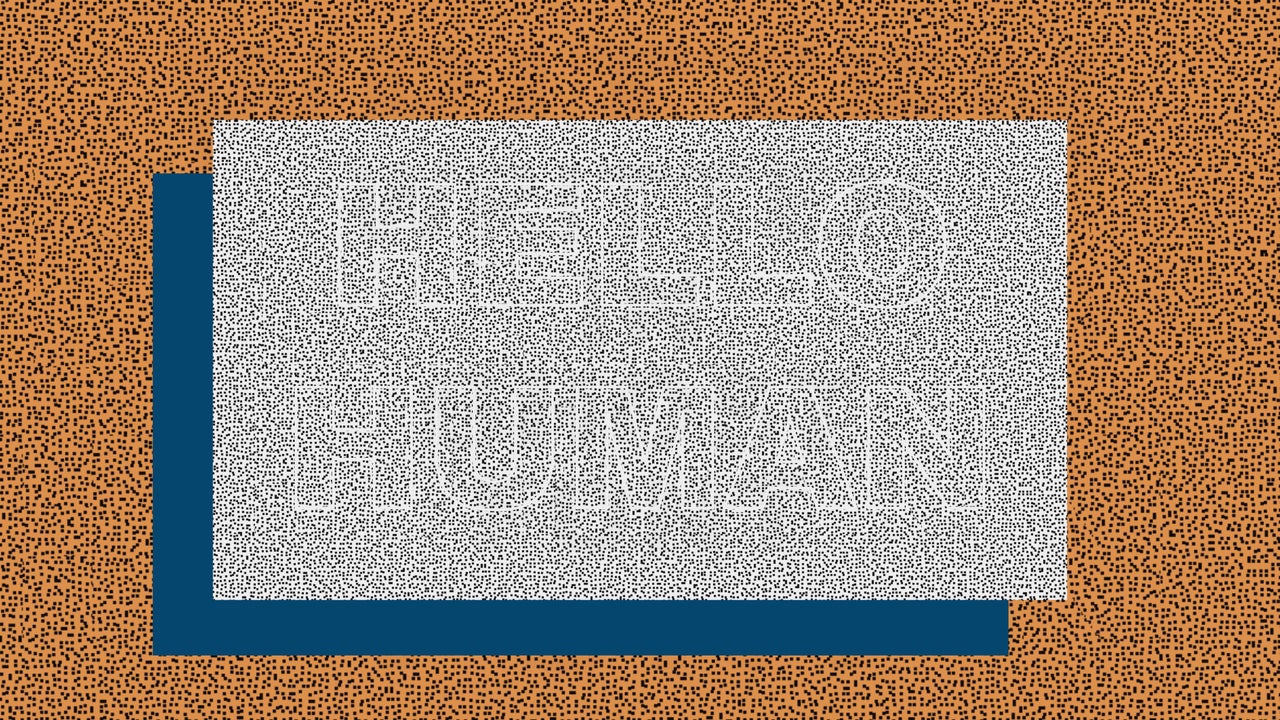
FastCompany: When a close friend of Eric Lu, a software engineer, noticed her grandmother losing motor skills, she asked her to write down her name on a piece of paper as a keepsake—maybe she could use it for a tattoo later on. But thanks to Lu and artificial intelligence , the handwriting was digitized, becoming a font for her to use in the future. For Lu, the intersection of technology and typography—and the benefits it can bring to individuals like his friend—has been a long running intrigue.
That’s why he launched Mixfont back in 2016, a then font pairing generator that has since evolved into a repository of research that explores how AI and fonts can interact with one another. “Typography is one of those things that you don’t notice until you kind of open your eyes to it, and then you see it all around you,” says Lu. Lu considers Mixfont an ongoing exploration of how AI can “play a bigger role in typography,” offering various tools including an AI-powered font generator tool. But his and Mixfont’s latest project flips the script on the technology, using AI to challenge AI itself.
With his latest typographic exploration, Ghost Font, Lu proposes a new way of using fonts beyond typographic design. Though Lu calls it a font, he says it’s more of a dynamic typographic tool that generates a moving video. The work is inspired by designer Sang Mun’s 2013 font ZXX , which used visual noise to trick optical character recognition software. Ghost Font brings the premise to the AI era, using motion to hide messages in plain sight: Hundreds of small dots form words in motion that humans can read, but that appear as noise to both AI models and a static screenshot.
Lu tested the font against leading AI models like Claude Fable and GPT Sol 5.6 Ultra, both of which initially struggled with making sense of the font—although users online eventually figured out a way to prompt the chatbot for accurate deciphering. “Even if it doesn’t stop it completely, just the fact that it’s going to slow things down and protect you, at least at that first layer is already helpful. And something that’s going to benefit a lot of people,” he says. For instance, a practical use of introducing video elements to fonts could be in updating CAPTCHA systems, where AI has gotten increasingly adept at recognizing static images.
Lu explains that using motion or video makes it more difficult for automated bots to crack a code, while remaining legible for humans. [Screen Capture: Mixfont] While Lu’s latest project proposes an adversarial stance to AI, Mixfont’s other tools—which bring in over 10,000 daily users—highlight the practical everyday benefits the technology brings to users and designers.
For instance, users can upload an image of their own handwriting or even photos of fonts found in real life and turn these into a TTF file, or describe the typeface they are looking for through prompts like “create a modern sans serif font that can be used for startup logos.” [Screenshot: Mixfont] In addition to being able to download the file and use it in a design project, users can sell their creations, regardless of whether the user uses a paid or free plan of Mixfont. “The goal of it really is just to explore how AI can be applied to these different fields and within typography,” he says.
Article truncated for readability. Read the full piece →
The article discusses a unique approach to typography that combines AI with a critique of its limitations, making it significant for the design industry while also providing actionable insights for brand strategy professionals.