Score
The first commercial human-like robot is here. Are replicants next?
The launch of UBTech's U1, the first mass-produced humanoid robot, represents a significant step in the robotics industry, positioning the brand as a pioneer in the human-robot companionship market. This development suggests that brands should consider emotional engagement and companionship as critical components of their product strategies, especially in sectors like elder care and hospitality, where human-like interaction may enhance user experience.
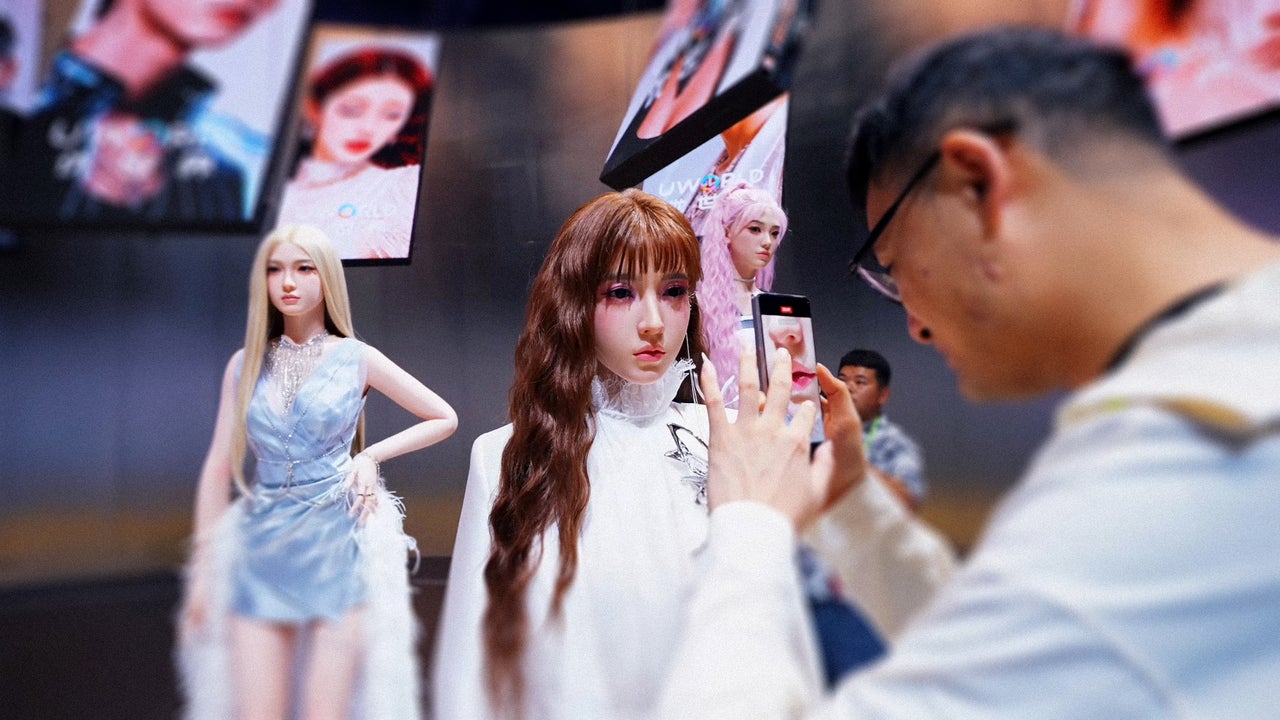
FastCompany: The Chinese robotics company UBTech has launched the U1, the first mass-produced ultrarealistic human robot. This marks the first time anyone has manufactured and sold a humanoid robot that actually resembles a human. UBTech is framing the U1 as a human companion and believes the future of the robotics industry lies in providing emotional support.
The company’s chief brand officer, Michael Tam, describes the human-robot companionship economy as “the first essential scenario in human history with unlimited emotional value, boundless companionship, and full-life-cycle coverage.” [Screenshot: UBTech] In a press release , the company said that 90 million people in China live alone, and spoke of hypothetical uses such as elder care, reception and hospitality, and “premium domestic service applications” (whatever that means). At last Tuesday’s launch in Shenzhen, representatives from the company touted the robot’s ability to hold conversations and maintain eye contact.
It still has plenty of flaws—no one is actually mistaking this for a person—but think of it as Version 0.1 of the replicants from Blade Runner , an important leap for the future of embodied artificial intelligence . A closer look at the U1 What we saw in Shenzhen last Tuesday is far from a perfect human robot. The U1 sits deep in what’s known as the “ uncanny valley ,” because the closer a machine gets to looking human, the more its flaws stand out, triggering an automatic sense of revulsion in your brain. It’s a byproduct of hundreds of thousands of years of evolution that makes our brain quickly notice anything that feels off.
The U1 has silicone skin (those who’ve touched it say it feels just like human skin, “but cold”). It’s able to pick up on the tone of your voice, and processes emotions without sending data to an external server. [Screenshot: UBTech] But the illusion breaks during interactions. Critically, its joint movements still give away the motors hiding beneath that skin. Its physical abilities are limited, its muscles don’t move the way a human’s do, and its “emotional intelligence” is, at bottom, the product of pattern recognition and language-model prediction, not real feeling.
It won’t take hundreds of thousands of years for these robots to become androids indistinguishable from human beings, straight out of Philip K. Dick’s fiction. Yet, given the current objectives of the robotic industry, we may not see it in our lifetimes unless more companies bet on it. [Screenshot: UBTech] The business of humanoid robots The U1 isn’t a delivery robot, a tablet assembler, or a wheeled assistant like the ones already working the streets, hospitals, hotels, and factories across China for months now.
Right now, Chinese companies like Unitree or Xpeng and American corporations like Tesla or Figure AI are ignoring humanoids of this kind, focusing on more utilitarian designs . In fact, they are mostly ignoring the home market for the time being, designing robots with assembly lines and warehouses in mind. [Screenshot: UBTech] This is because putting one of these robots in a house is far more complicated than deploying one in an industrial setting, where environments are controlled and tasks are repetitive.
Article truncated for readability. Read the full piece →
The launch of a mass-produced humanoid robot is a significant advancement in technology that could reshape brand strategies, especially in industries focused on human interaction.
Weekly digest
Get the Signal digest
Every Monday morning — the top 3 brand trends, 10 high-signal articles, and one emerging signal to watch.
No spam. Unsubscribe anytime.