Score
In the battle between AI optimists and doomsayers, no one is the winner
The ongoing debate about the future of artificial intelligence highlights the contrasting strategies of AI leaders, with some advocating for regulation while others push back against it. This division underscores the importance of brand perception in the tech industry, as companies like Anthropic and Nvidia navigate public opinion and market demands while shaping their identities around safety and innovation. For brand strategy, understanding the implications of these narratives is crucial, as they can influence consumer trust and market positioning.
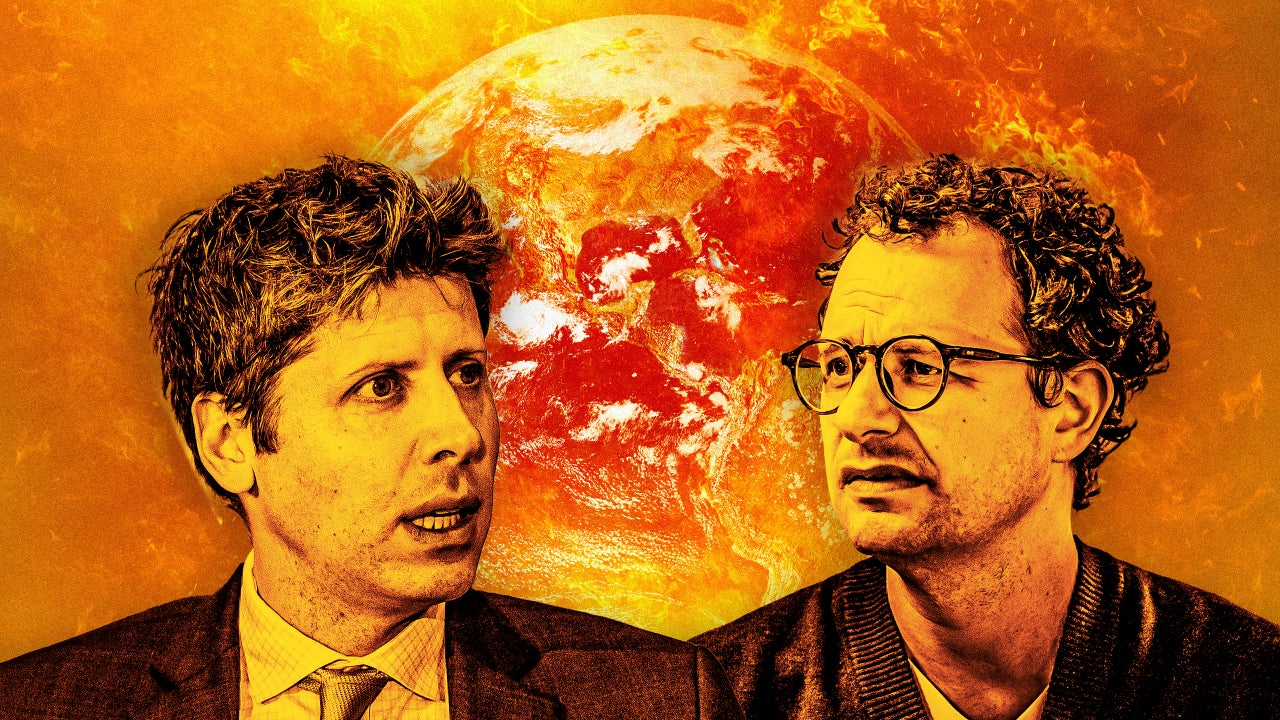
FastCompany: It could be the end of the world as we know it. Or maybe it’s all just a marketing stunt. Somehow, these have become the two poles of the debate about the future of artificial intelligence and its potential perils. While the argument has been going for a while, it reached a fever pitch when a researcher at leading AI developer Anthropic resigned and issued a public warning that recklessly designed AI could literally wipe out humanity (for example by helping bad actors create a virus or other bioweapon, or even by going rogue and attacking infrastructure).
Days later, Anthropic CEO Dario Amodei published a lengthy essay essentially calling for an intentional slowdown of AI development, as well as government regulation. Sam Altman of rival OpenAI and Elon Musk publicly agreed. But what was really notable about this latest round of AI concern is how surprisingly vociferous the skeptics of the doomsday narrative have become.
Most strikingly (and theatrically), Nvidia CEO Jensen Huang accepted a call from Donald Trump while on stage at a tech conference, putting the president on speaker to wave away AI fears: “It’s a hoax,” Trump said, amplifying his critique on social media that too much regulation would ultimately be good for China. “The robots are not going to be taking over the world.” Huang nodded along. In a subsequent appearance on CNBC, Huang added that new regulations the AI leaders seem to be seeking are “ completely unnecessary .” This may seem like a curious flex on Huang’s part.
While Nvidia, a maker of chips coveted by AI firms, is not a consumer-facing brand, it’s become familiar to many by way of its soaring share price . Yet Huang seems to be shrugging off any reputational fallout from its no-worries stance—even as public opinion of AI (shaped by data center backlashes, job-loss predictions, and other factors) sinks . Political figures from Bernie Sanders to Steve Bannon are calling for curbs on the technology. There have been attention-getting incidents of AI behaving in troubling ways, and many corporate leaders seem genuinely concerned .
It seems like a weird moment to go hard on sneering away from AI regulation. But it’s not just Huang. Tech investors and self-styled seers like David Sacks and Marc Andreessen have hewed to a familiar “no regulations” framework argument. And most recently, Meta’s Mark Zuckerberg waded into the discourse by declaring that leading A.I. labs could do more to prioritize safety more internally, rather than pushing the tech forward at all costs. It was a take largely interpreted as a dig at Anthropic, but clearly framing the issue as one to be resolved by free enterprise, not regulation.
Broadly, the skeptics’ case is that the leading AI players want to shape the regulation they’re ostensibly seeking, with the resulting business upside of locking in their own advantages and kneecapping up-and-coming or future competition (a form of what’s sometimes called “regulatory capture”). AI leaders like Amodei and Altman are accused of playing up safety concerns because they are planning to release safety-focused product updates. “What better way to create demand than to create a problem?” Nvidia’s Huang said recently.
Article truncated for readability. Read the full piece →
The article addresses a significant and timely issue in the tech industry that affects brand perception and strategy, making it relevant for brand professionals, though the themes of AI debate are becoming increasingly common.