Score
The anti-humanoid: Why Genesis AI’s new robot design isn’t a fake human
Genesis AI's new robot, Eno, challenges the prevailing trend of humanoid robots by adopting a minimalist design that emphasizes functionality and user comfort. By prioritizing a non-threatening appearance and a 'calm intelligence' approach, Genesis AI aims to redefine consumer acceptance of robotics in everyday life, suggesting that brand strategy should focus on user-centric design and emotional comfort over mere technological mimicry.
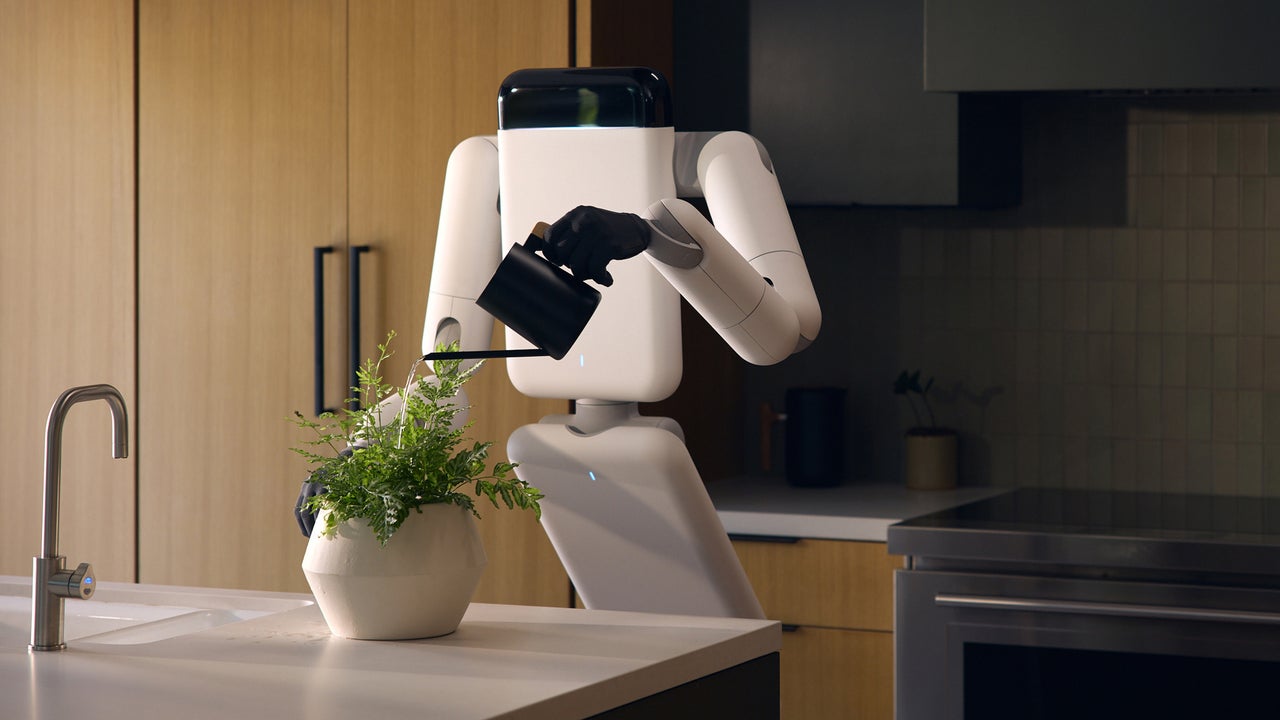
FastCompany: Genesis AI is betting against the tech industry’s obsession with bipedal, human-mimicking robots. Their first general-purpose machine, Eno, pairs millimeter-precise dexterous, human-like hands with a minimalist, wheeled base that can dynamically fold away out of sight. It’s a general purpose robot, designed to do anything you can imagine, from factory jobs to household chores, but its first deployment will be in labs. Genesis AI just fixed one of the biggest design flaws in modern robotics: Human ego.
Instead of building another uncanny-valley humanoid that may intimidate and make people uncomfortable, the company’s CEO and founder Zhou Xian and head of design Daniel Hundt decided they needed to create a gentle, ‘invisible’, use-case agnostic physical agent that gets out of the way by folding down, origami style. Called Eno, the wheeled robot has a design that intentionally avoids looking like a human but operates with human-level dexterity. The robot sleeps folded, waiting for you to need it.
Then, whenever you call it, it wakes up, rising up as it unfolds its collapsible frame that follows a design principle they call “calm intelligence.” [Image: Genesis AI] “A good test that we ask ourselves is, if you wake up at two o’clock in the morning, and you’ve come to the bathroom, and you see a robot in your home, what would you feel comfortable with having in your home?” Hundt tells me in a video interview.
“I think a robot should feel like it is subservient to you, it should be an object that helps you, it shouldn’t feel like it can dominate you, and I think there’s so many humanoids out there that just feel like they’re more capable than you as a human, and I think that automatically makes you put a little bit at ease.” Like Hundt, Xian believes that everyday consumers reject the idea of a synthetic person walking through their living spaces. “I think generally, people think very human-like humanoids are cool tech, but most of the people we talk to, they’re like, no, I can’t see having one of these in my home,” the founder notes.
[Image: Genesis AI] Calm intelligence The entire physical presence of Eno revolves around the concept of folding away. Instead of standing idle in the corner of a room like a freaky mannequin, the machine utilizes a central column made of articulated panels. When inactive, this segmented tower collapses through a series of physical motions, reducing the entire unit to the volume of a checked suitcase. Hundt notes the team’s calm intelligence guiding principle prioritizes capability without the baggage of human form.
He points at Tars—the blocky, utilitarian robot in the movie Interstellar —as an opportunity to step back and rethink our collective idea of robots, influenced by decades of humanoids in sci-fi film and literature. For Hundt and the Genesis AI’s design team, the question was “how do we approach this with the technical requirements that we wanted [focusing on dexterous manipulation first] and create a canvas for that; really design it around these capabilities. And also this one simple idea of it folds away,” Hundt explains.
Article truncated for readability. Read the full piece →
The article discusses a significant shift in robot design that could influence brand strategies in the tech industry, presenting a novel approach to user-centric design that is highly relevant for brand strategy professionals.