Score
The last starchitect: Ma Yansong’s ostentatious, otherworldly case for the architectural showstopper
Ma Yansong's design of the Lucas Museum of Narrative Art exemplifies the potential for architecture to create emotional connections and serve as a landmark in urban spaces. As the architectural landscape shifts towards sustainability and adaptive reuse, Yansong's bold, avant-garde approach highlights the ongoing relevance of statement buildings, even as the industry grapples with changing priorities and economic pressures.
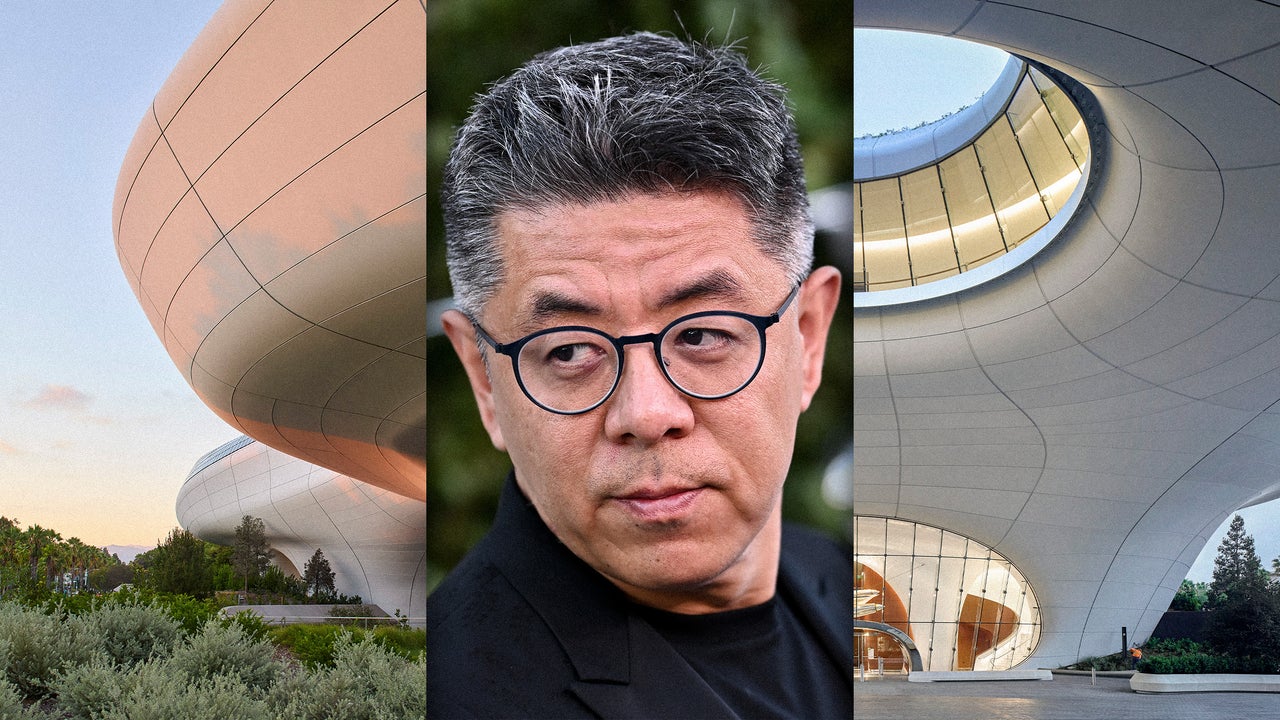
FastCompany: Ma Yansong steps into a spotlight of his own design. The star Chinese architect is in the entry plaza at the Lucas Museum of Narrative Art, the audacious and gargantuan blockbuster of a building he’s designed in Los Angeles’s Exposition Park to hold the art collection of filmmaker George Lucas. Ma, 51, is here for the museum’s press preview day in early September, and gamely walks into a circle of sunlight shining through the oculus in the roof of the $1 billion museum, where he poses for a crescent of photographers. He’s the face and creative leader of MAD Architects , the Beijing-based firm with offices in L.A.
and Rome that he’s run for 22 years. He’s arguably the most famous architect in China, and one of the most famous in the world. Ma’s curvy and adventurous buildings have become landmarks in cities across his native country, from an opera house in northern Harbin that spills out like an open-armed octopus to a crater-esque sports stadium in Quzhou to a recently completed cluster of museums in Shenzhen that resemble gigantic boulders.
Recently several large-scale projects have also been completed outside of China, including the spiraling Fenix Museum in Rotterdam , the Netherlands, and an apartment building in Denver with a rip through its facade . Most of MAD’s projects are statement buildings, with far-out forms and fluid surfaces; some have become the most famous buildings in their cities. The Lucas Museum is, in some ways, Ma’s most significant project yet. Its world-famous founder, its controversial origin story , and its divisive curatorial stance only add to the intrigue of the building’s unavoidably audacious form.
Covering more than 300,000 square feet and blurring its surfaces into green space and parkland designed by L.A.-based landscape architects Studio-MLA , the museum is an aerodynamic meteor in motion, or perhaps an amphibian mid-metamorphosis, all clad in a warped grid of white polymer panels and topped with an oil black solar array and a planted artificial hill. For anyone even vaguely thinking about George Lucas and Star Wars , the museum is most easily seen as a spaceship—one that’s landed on the edge of a vast urban park preparing to host its third summer Olympics.
Affable and surprisingly humble in person, Ma is unperturbed by the spaceship comparison. He often speaks about his own projects in contrast to “normal” buildings, meaning it as no slight to either. He argues there’s a need in cities for both the background buildings and those that stand out. What’s important, he says, is that there are buildings that connect people to a place and create an emotional reaction. “It’s like listening to music or reading a book. When you close a book, you find that new side of you, right? You find new thinking. That’s what museum architecture should do,” he says.
Ma Yansong attends the Lucas Museum of Narrative Art opening night gala on September 19, 2026. [Photo: Gilbert Flores/Variety/Getty Images] The museum opens as the world is generally trending away from this kind of look-at-me architecture.
Article truncated for readability. Read the full piece →
The article discusses a significant architectural project by a prominent figure, which has implications for urban design and brand identity, though it is somewhat niche in its appeal to brand strategy professionals.
Weekly digest
Get the Signal digest
Every Monday morning — the top 3 brand trends, 10 high-signal articles, and one emerging signal to watch.
No spam. Unsubscribe anytime.