Score
The PC era is dying. Welcome to the collective computer era
The shift from personal computers to a collective computing model signifies a major transformation in brand strategy, as companies must adapt to a market where computing power is increasingly seen as a utility rather than a product. Brands will need to focus on subscription models and integrate AI capabilities into their offerings, emphasizing accessibility and efficiency while navigating rising costs and changing consumer expectations.
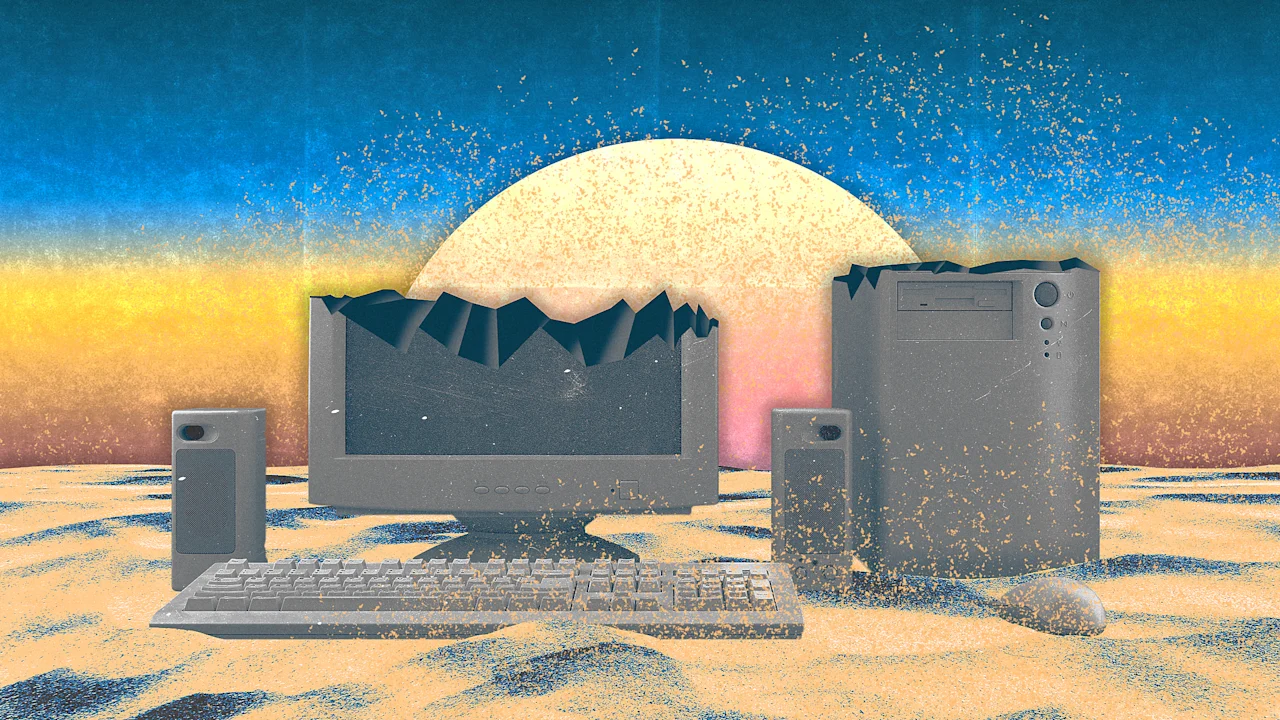
FastCompany: “The purpose of computers is human freedom.” – Ted Nelson, Computer Lib/Dream Machines (1974) The computer is as emblematic of the American dream as the automobile. Perhaps it’s only natural that Apple, HP, Adobe, Google, and Amazon were each launched out of a garage. It was inside the garage that the modern era of personal computers was born, where anyone could own the power to calculate millions, and then billions of processes per second. PCs are a tool designed to move us faster, with a hood you can pop open to soup up. We insist that our computers speed up every year if only because it’s proof of progress.
The very term “personal computer” promises liberty and autonomy; this isn’t the bus, but a transistor-powered rocket carrying a payload of rare earth minerals and rainbow hued headlights. The PC shrunk whole industries of work to our desktops, driving our ambitions anywhere they wanted to go. Whether you were publishing without a publisher, creating art without a studio, balancing books without an accountant, or mailing without a post office, the computer offered an all-in-one device for self-starters—a business in a box. Like cars, we invest in new computers because they are more expensive to fix than keep.
And they enable us to pursue the two most important American ideals: self-expression and capitalism. But half a century since the idea of the PC went mainstream, the personal computer as both a product and an ideal has never been more at risk. In the age of AI , companies are acquiring unprecedented amounts of hardware, driving up prices, and affecting the entire PC market along the way. It’s affecting everyone from Dell dudes to kids dreaming about a Playstation 6. You can call the PC endangered, or on the precipice of anthropogenic evolution .
Either way, we’re currently shifting toward a world of consolidated processing, where the PC is trending toward a luxury item. Meanwhile, computation itself is becoming a utility, priced and positioned as intelligence that we rent on demand. Buying a computer today Computers of all types are generally more expensive to acquire today than they were a year ago. As companies including OpenAI, Google, Meta, and Amazon plan unprecedentedly massive data centers to process AI, they’ve gobbled up the available stock of chips—all while tariffs add an extra dollop of pain to one’s wallet.
DRAM in particualr—the semiconductor inside computers that holds information used by the CPU—is the culprit, with prices ballooning by 172% in 2025 . Then they grew another 90% in Q1 of 2026 alone. On top of that, the NAND flash memory powering most solid state hard drives has also been on the rise, up by 50% in Nov 2025 and projected to keep growing. In practical terms, this means a midrange gaming PC will cost hundreds more this year than last, as computer component prices have become one of the richest sources of memefodder on the internet.
( Wedding gift, anyone ?) Major OEMs like Dell and Acer are warning that 20% price increases are coming later this year. One analyst expects a 12% drop in desktop and laptop shipments. On one hand, 262 million PCs still sell every year, and sales were up 9% last year (though some of that was due to defensive purchasing as prices skyrocketed.) On the other, the PC hardly dominates mainstream computing these days. Smartphones already outsell PCs by 5 to 1 . Hit first and hardest will be the low end of the PC market, where margins are tightest. Chromebooks shipments could drop by 28% due to component shortages.
Article truncated for readability. Read the full piece →
The article discusses a significant shift in computing that will require brands to adapt their strategies, making it highly relevant and impactful for brand strategy professionals, while also introducing a relatively novel concept in the context of current trends.
Weekly digest
Get the Signal digest
Every Monday morning — the top 3 brand trends, 10 high-signal articles, and one emerging signal to watch.
No spam. Unsubscribe anytime.