Score
Scientists have designed a way to save our brains from fake AI videos
The development of a cryptographic camera sensor by ETH Zurich represents a significant advancement in media authenticity, which is crucial for brand strategy in an era where trust in digital content is eroding. By ensuring that images and videos can be verified as genuine at the point of capture, brands can enhance consumer confidence and protect their reputations against misinformation and manipulated media.
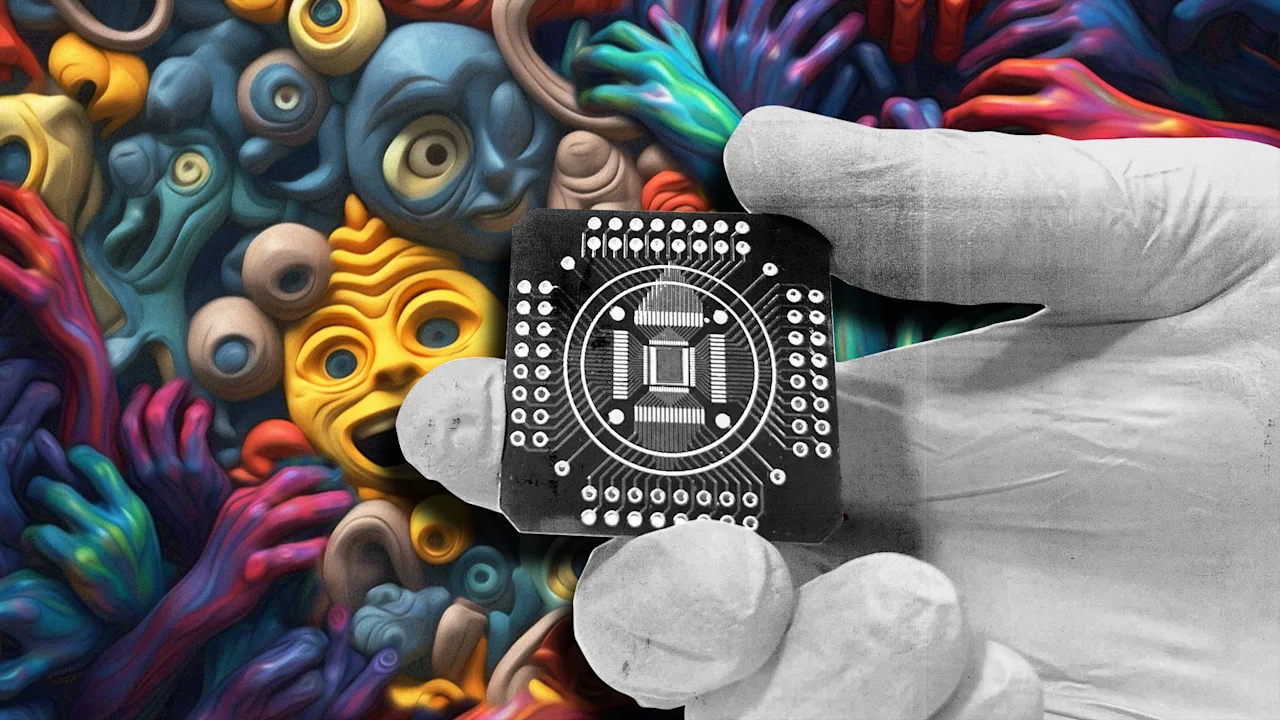
FastCompany: Visual truth is going down in flames, thanks to new generative AI models that produce synthetic media that looks indistinguishable from reality. But a team of university researchers has figured out a hardware fix that just might save us. Engineers at ETH Zurich have designed a working prototype of a camera that physically stamps a cryptographic seal of authenticity onto every photo or video right at the image sensor (electronic chip) that captures each photon from the actual world. “Trust in digital content is eroding.
We wanted to create a technology that gives people a way to verify whether something is genuine,” co-developer Felix Franke explained in a press release . This new hardware architecture fundamentally changes how we authenticate media. Right now, the tech industry relies on a standard called C2PA— Coalition for Content Provenance and Authenticity —which is already available on some devices , such as high-end cameras from Leica, Nikon, Fuji, and Sony’s Alpha line. It also recently hit the mobile market natively with the Google Pixel 10.
This standard relies on the device’s main processor to stamp videos and pictures with a cryptographic seal that verifies their authenticity. When you see the picture or video in a C2PA-enabled player or on TV, the software can tell you it’s real. For example, if Meta enabled Instagram to read these C2PA labels, then a video in your feed could show that it’s trustable, just like your browser shows a little lock icon to indicate that there is a verified, secure connection with your bank. The sensor chip is a prototype that demonstrates technical feasibility.
[Photo: Caroline Arndt Foppa/ETH Zurich] Here’s how the current solution works: The camera lens captures a scene, translates the light into digital information, and shoots it down an internal wire to reach the main computer chip. It is only after the data finishes that commute that the processor slaps a cryptographic signature on the file. But that tiny trip down the wire is a security liability. A sophisticated bad actor can intercept that internal cord, hijack the raw feed, and inject a completely synthesized video stream, producing a video that can be circulated as real.
The phone’s main processor has no idea it is being lied to, so it blindly signs the fake footage, officially certifying any algorithmic hallucination as a verified fact. Would it be hard to do? Yes. But it is possible. ETH Zurich’s solution moves the security checkpoint directly to where the light enters, disabling the possibility of faking authenticity (unless you get Stanley Kubrick to direct your moon landing in a soundstage). How the technology works: A real-world event (1) is recorded by a camera whose sensor chip generates both the image data and a cryptographic signature at the moment of capture (2).
Once stored in a public register (3), the signature can later be used to verify that the recording is authentic and has not been altered (4). [ AI Generated Graphic: Felix Franke/ETH Zurich] With ETH Zurich’s chip, the researchers baked cryptographic circuits right next to the pixels that catch the light. The moment a photo is taken, the device instantly calculates a unique mathematical fingerprint of the captured reality. If you alter even a single pixel of the picture after this stamping happens, that fingerprint completely breaks.
Article truncated for readability. Read the full piece →
The development of a cryptographic camera sensor addresses a critical issue of media authenticity that directly affects brand trust and strategy, making it highly impactful and relevant, while also presenting a novel technological solution.
Weekly digest
Get the Signal digest
Every Monday morning — the top 3 brand trends, 10 high-signal articles, and one emerging signal to watch.
No spam. Unsubscribe anytime.