Score
Matthew Blackburn Gives Ps1 Controllers And Froot Loops The Old Master Treatment
Matthew Blackburn's artwork creatively merges nostalgia with modern consumer culture, using iconic items like PlayStation controllers and Froot Loops to evoke memories of childhood. This approach highlights the importance of nostalgia in brand strategy, suggesting that brands can connect with audiences by tapping into shared cultural experiences and emotions from the past.
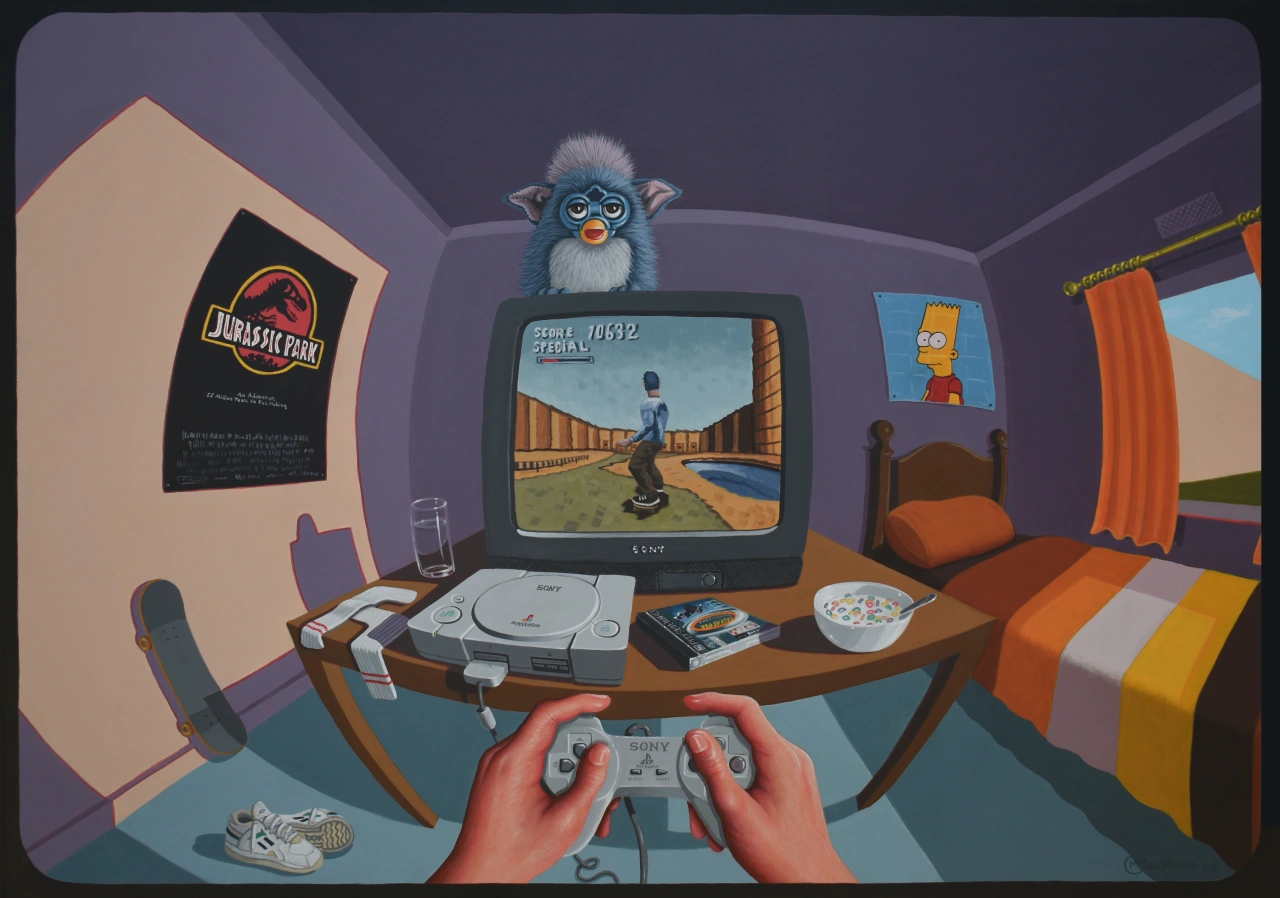
Creative Boom: Matthew Blackburn's art hands you the controller to your own childhood The self-taught Johannesburg painter borrows the language of 17th-century still life and fills it with Rubik's cubes, Coke bottles, and PlayStation controllers, plucked from your childhood bedroom in the early 2000s. Saturday Morning 2001 © Matthew Blackburn Saturday Morning 2001 © Matthew Blackburn The 2000s seem to be having a moment. That decade is everywhere. In our clothes and music, in our conversations. Even in art and design. Many of us are pining for a moment we either experienced firsthand or wish we had. What is it about that era that sparks so much love?
Nostalgia is a deceptive thing. It makes us look back through rose-tinted glasses, often forgetting why now might be better. But perhaps that's not quite what's going on here. As Johannesburg painter Matthew Blackburn sees it, nostalgia is a more complicated emotion than simple comfort. His still life artworks prove it. Just take a look at 'Saturday Morning 2001'. He's painted a bedroom through a fisheye lens, warped at the edges like an old cathode-ray telly used to show your favourite programme – giving you a first-person view. You're literally holding the controller to another life.
You are, in every sense, playing as a younger version of yourself. Why this theme? It began with a brief. The painting was made for Tomorrow is Listening – a group show at Rust-en-Vrede Gallery in Durbanville, Cape Town, based on memories and "memory keeping". "I've always been drawn to nostalgia," he tells Creative Boom, "so I wanted to incorporate subject matter that would remind me of my childhood, particularly video games and skateboarding. From there, I decided to recreate my childhood bedroom, using cliché pop icons to push the retro, nostalgic atmosphere of my work.
That then evolved into a game within a game, giving the audience the controller and placing them in the first-person perspective." It's a simple flip, but it throws us right back to that memory, when all that mattered was making it to the next level. Saturday Morning 2001 © Matthew Blackburn Saturday Morning 2001 © Matthew Blackburn Next comes 'Sunday Morning 2001', a pared-back version of the same idea. On closer inspection, you'll notice the colours of the Froot Loops in the bowl echo the four classic symbols on the PlayStation controller sitting beside them. The same palette of green, pink, blue, and that particular cyan.
That's deliberate. "My planning usually starts off very basic, a few rough sketches, just to start conceptualising what the layout may be," he explains. "I then gather an assortment of props and set up a scene where I take several reference photos, interchanging the different props, altering lighting and keeping in mind the compositional tools to create a visually satisfying work. "From that, I use my reference images to find my colour palettes, mixing colours and often exaggerating certain hues to help create colour and contrast.
I figure out the layout, sketch everything in with pencil, and only then does the painting begin." He works in acrylic on hardboard, a fast-drying medium he's spent years perfecting. He builds layers of refined brush marks until the surface reads as photographic. The finished works are then framed in museum-style gold. This leads nicely to my next observation: Matthew is inspired by the old masters. Sunday Morning 2001 © Matthew Blackburn Sunday Morning 2001 © Matthew Blackburn Vanitas might seem like an odd home for PS1 controllers, but Matthew thinks otherwise.
Article truncated for readability. Read the full piece →
The article discusses a unique artistic approach that connects nostalgia with branding, which is significant for brand strategy professionals looking to engage audiences emotionally.