Score
Tattile: Studio Yellowdot's 3D Printed Furniture at Milan 2026
The collaboration between Barilla's luxury division ARTISIA and Studio Yellowdot showcases how food culture can inspire innovative furniture design, emphasizing the importance of materiality and tactile experience in brand strategy. By translating pasta shapes into 3D printed furniture, this project not only highlights the creative potential of additive manufacturing but also reinforces the brand's identity through a unique, sensory connection to its culinary roots.
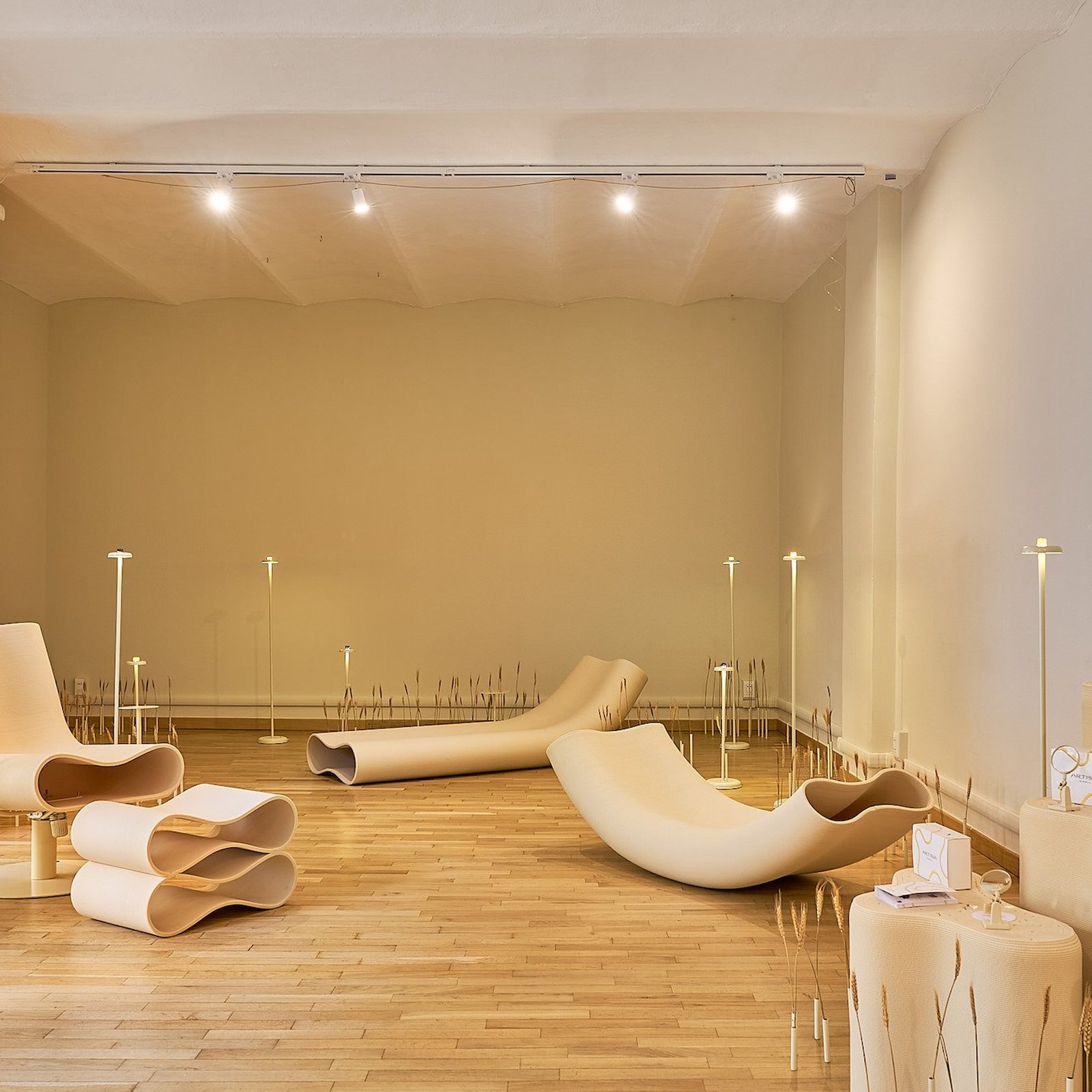
Abduzeedo: Tattile: Studio Yellowdot's 3D Printed Furniture at Milan 2026 kai April 25, 2026 Studio Yellowdot Tattile 3D printed furniture translates Barilla ARTISIA pasta shapes into a daybed, rocking chair, and chaise at Milan Design Week 2026. For Salone del Mobile 2026, Barilla's luxury division ARTISIA commissioned two studios to translate pasta geometry into furniture. Hong Kong and Istanbul-based Studio Yellowdot partnered with Barcelona robotics fabricator LAMÁQUINA to create Tattile, a three-piece seating collection whose forms are drawn directly from pasta profiles.
The word "Tattile" is Italian for tactile, a nod to the haptic quality that defines both pasta's ribbed surface and the furniture's corrugated aesthetic. Each piece in the Studio Yellowdot Tattile 3D printed furniture collection is fabricated using large-format additive manufacturing in wood-composite filament. LAMÁQUINA, a Barcelona studio specializing in robotic fabrication research, handled production of the three pieces: a daybed, a rocking chair, and a chaise lounge.
Each form mimics the ridges, spirals, and curves of Barilla's signature pasta shapes, using additive manufacturing to translate culinary geometry into seating at furniture scale. The material choice, a wood-composite filament, adds warmth and surface texture that echoes pasta's rough, porous character. Studio Yellowdot Tattile 3D Printed Furniture at Milan Design Week The Studio Yellowdot Tattile 3D printed furniture collection is on view through April 26, 2026, at Via Melzo 34 in Milan's Porta Venezia district as part of Edible Reveries, ARTISIA's broader installation presented during Fuorisalone.
The Edible Reveries program explores how pasta geometry, a culturally loaded form, carries new meaning when translated to furniture scale. The project traces how food culture, material science, and robotic fabrication converge into objects that hold the memory of their source.
This article discusses a unique collaboration that merges food culture with furniture design, showcasing innovative use of 3D printing, which is significant for the design industry and relevant to brand strategy professionals focused on materiality and sensory experiences.