Score
Trump’s arch now has elevators—and a $100 million price tag
The proposed design for President Trump's monumental arch in Washington, D.C., has evolved to include significant features such as multiple elevators and event spaces, reflecting a shift towards a more complex and potentially costly structure. This development highlights the importance of balancing ambitious architectural projects with public sentiment and historical context, suggesting that brand strategy for such initiatives must consider both innovation and community acceptance.
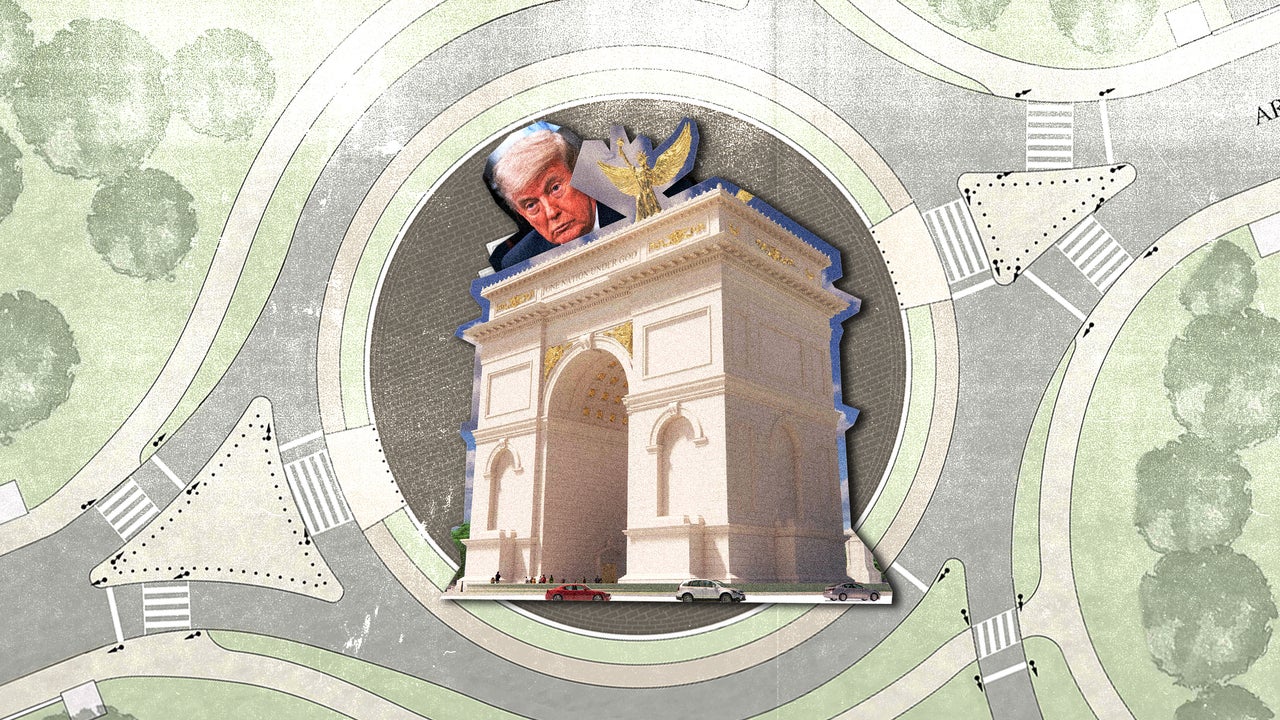
FastCompany: The monumental 250-foot arch President Donald Trump wants to build in Washington, D.C., just got even more bloated—and one step closer to an official approval. A new concept design presented at the May 21 meeting of the U.S. Commission of Fine Arts (CFA) includes several major—and expensive—changes to the project. New details include an internal gallery floor with three event spaces, four elevators inside the vertical supports of the arch and a fifth elevator between the gallery floor and the observation deck, four spiral staircases, and a ground-floor ticketing area. The cost of the project is estimated to be at least $100 million.
[Images: CFA.gov] Despite receiving more than 600 letters over the past month—99.5% of them in opposition to the project—the seven-member commission appointed by Trump in January 2026 unanimously approved the new design concept. (Three letters were in favor of the project, though commission secretary Thomas Luebke noted that two of those letters called for “serious changes” to the design.) Full schematic designs have not been completed; the commission opted to approve the project without reviewing them. The arch is being designed by the Washington, D.C., office of the Harrison Design architecture firm.
Nicholas Charbonneau, a principal at the firm, revealed new renderings and diagrams to the commission showing the internal layout of the vertical supports of the arch, the gallery level, and the observation deck. The gallery-floor spaces, labeled in the plans as “program space TBD,” could end up housing a café, gift shop, and informational displays, according to Charbonneau. They appear to have no windows. [Image: CFA.gov] In total, the rooms and deck would create about 10,000 square feet of space, or about as much area as two basketball courts.
Given that size, the spaces would be accessible only to a small number of people at any given time. Should it be built, the arch would be overseen by the National Park Service, which Charbonneau says is considering a limit of 80 visitors per hour. Five elevators for such a limited capacity may be excessive. Though required for accessibility reasons and for the ease of people ascending to the 166-foot-high observation deck, elevators are a notoriously costly part of any building project. Commercial elevators can cost up to $100,000 per landing to install, plus the costs of ongoing operations and maintenance.
Adding five elevators to the project will likely increase its budget by several million dollars. [Image: CFA.gov] The reviewing commissioners were seemingly unconcerned by any of the interior design details, focusing their comments and questions on the exterior. In line with a suggestion made during the commission’s last design review, ground-level pedestals with golden lion statues are no longer part of the rendering—a rare instance of golden objects being removed rather than added to a Trump-aligned project.
Commissioner Mary Anne Carter, chair of the National Endowment for the Arts, suggested the removal of the statues is an effort to soften its relationship to nearby Arlington National Cemetery. “I think simpler is better in many ways,” she said. “Remember that the gravestones in Arlington are very simple white markers, and so I think losing a bunch of the adornments is actually very helpful.” During the public comment period, though, individuals and organizations were not convinced such changes make the monstrous arch any better.
Article truncated for readability. Read the full piece →
The article discusses a significant architectural project related to a high-profile figure, which impacts brand strategy, but the concepts of balancing innovation with public sentiment are not entirely new.