Score
Elon Musk’s flying Roadster was an ad for a SpaceX and Tesla merger after all
The article discusses Elon Musk's recent demonstration of a flying Tesla Roadster, which is seen as a marketing stunt to promote a potential merger between Tesla and SpaceX. Analysts express skepticism about the actual benefits of such a merger, suggesting it may be more about boosting stock prices than creating real synergies between the two companies. Brand strategists can learn from this situation about the importance of genuine value creation in mergers and the potential pitfalls of relying on marketing stunts to influence shareholder perception.
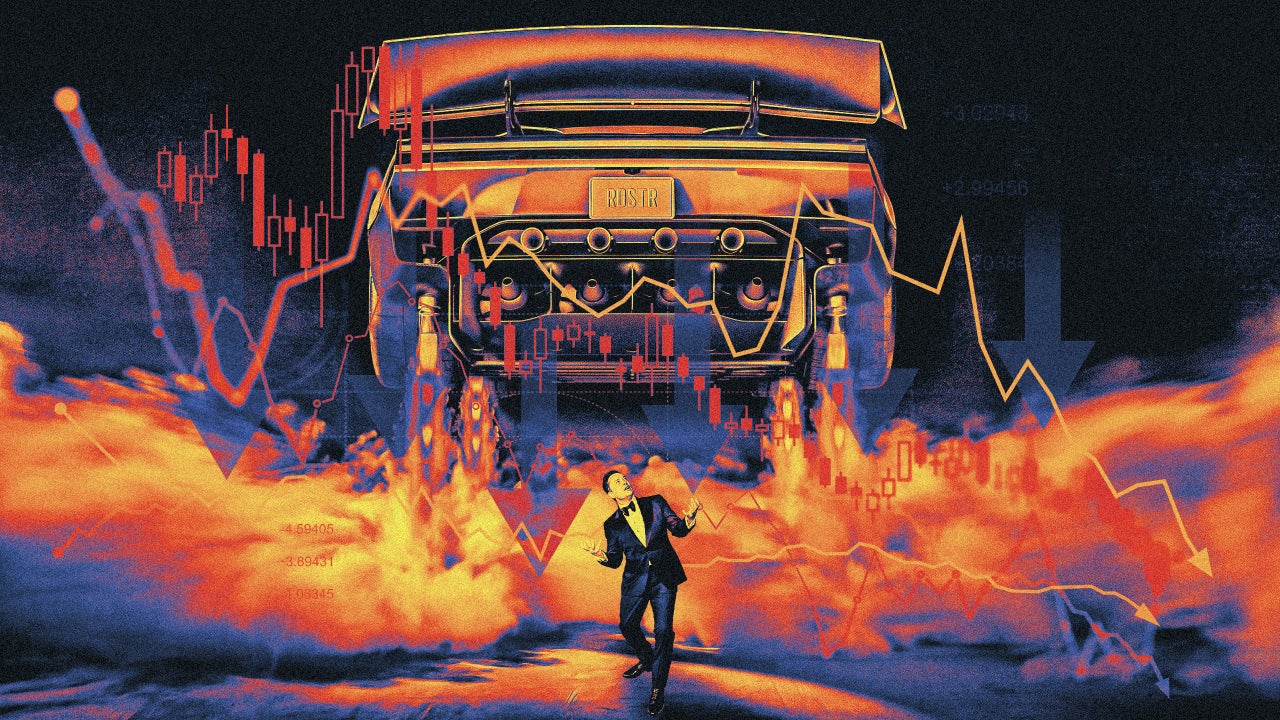
FastCompany: Last Thursday, Elon Musk made a Tesla Roadster flip and hover, thanks to cold-gas thrusters built by SpaceX. Five days later, on SpaceX’s third-quarter earnings call, he announced that the boards of Tesla and SpaceX are forming special committees to study the possibility of merging the two companies. If you think the timing is a coincidence, I have a Mars condo to sell you. When I wrote about the Roadster last week, it felt obvious to me that the show was a marketing operation designed to convince shareholders to approve a merger between Musk’s companies. Its job was to make the synergies between his two companies look real.
At unveiling, Musk called the Roadster “the culmination of incredible work by Tesla and SpaceX engineers working closely together.” But that’s not synergy. That’s a stunt-y collaboration for a fantasy car that benefits neither Tesla nor SpaceX. Ferdinand Dudenhöffer, director of the Center Automotive Research institute in Bochum, Germany, can’t imagine SpaceX’s cold-gas thrusters ever going into production cars. “It’s a bit like the flying cars that showed up in the comics of the 1950s,” he tells me via email. Back then, they were supposed to hit the market around 2000.
“They remained utopias.” To Dudenhöffer, the flying Roadster is a tech story meant to lift Tesla’s weak share price, and the synergy is “a modern marketing fairy tale.” If the deal happens, the company will see itself diluted in a sci-fi melange of rockets, cellphones, and AI servers . Tesla’s stock was up about 3% in early Wednesday trading, while SpaceX got a 9% bump. Fans are the mark again First off, any merger would require shareholder approval at both companies. That’s an easier sell at SpaceX, where Musk controls about 82% of the votes through super-voting shares.
Musk owns about 20% at Tesla, and would need to win over a large share of investors to ensure they achieve a majority. On SpaceX’s earnings call on Tuesday, Musk described that as “quite a high hurdle.” Tesla’s huge base of small retail investors doesn’t care much about voting . Voter turnout is so low that Tesla asked and won SEC approval last month for an “auto-vote” program. On the call, Musk tried to hard-sell the idea that there’s “a lot of merit to combining the companies, as we are pretty much in the superintelligence singularity.” I question that logic. How is Tesla going to help there?
The car company has spent a decade mostly failing at the one AI product it keeps promising. I’ve lost count of the times I’ve written that Musk has failed to deliver on his Cybercab promises , which is still geofenced. Its shortcomings are even more clear when you compare it to the competition. Google’s Waymo runs robotaxis in 15 American cities and gives about 500,000 paid rides a week. Baidu’s Apollo Go had passed 22 million rides across 27 cities by April. BYD sells cars in China that park themselves with nobody inside , what it calls Level 4 autonomy, and it pays for any damage they cause.
It has since extended that guarantee to its city driving assistant. Plus, SpaceX already has AI chops through SpaceXSI . Musk also mentioned his Terafab AI chip plant as an example of synergy, but the two companies are already building that factory together. And Tesla already sells Megapack batteries for SpaceX’s ground facilities, like server farms. Two companies run by the same man don’t need a merger to work together. They need a purchase order. Optimus, however, may have been a synergy worth a merger: a humanoid robot from Tesla flown by SpaceX, doing the dangerous work on Mars before any human arrives.
Article truncated for readability. Read the full piece →
The article discusses a high-profile event involving a major brand and its potential implications for the industry, making it significant, while also providing insights relevant to brand strategy professionals.
Weekly digest
Get the Signal digest
Every Monday morning — the top 3 brand trends, 10 high-signal articles, and one emerging signal to watch.
No spam. Unsubscribe anytime.