Score
How Trump’s federal architecture renovations go against ‘republican simplicity’
The article discusses how President Trump's alterations to federal architecture, particularly at the White House, challenge the foundational principles of 'republican simplicity' and egalitarianism that have historically guided American design. This shift towards opulence and grandiosity not only risks erasing the contributions of influential designers and presidential legacies but also raises questions about the role of government in preserving national architectural heritage. For brand strategy, this highlights the importance of aligning brand identity with core values and historical context to maintain authenticity and public trust.
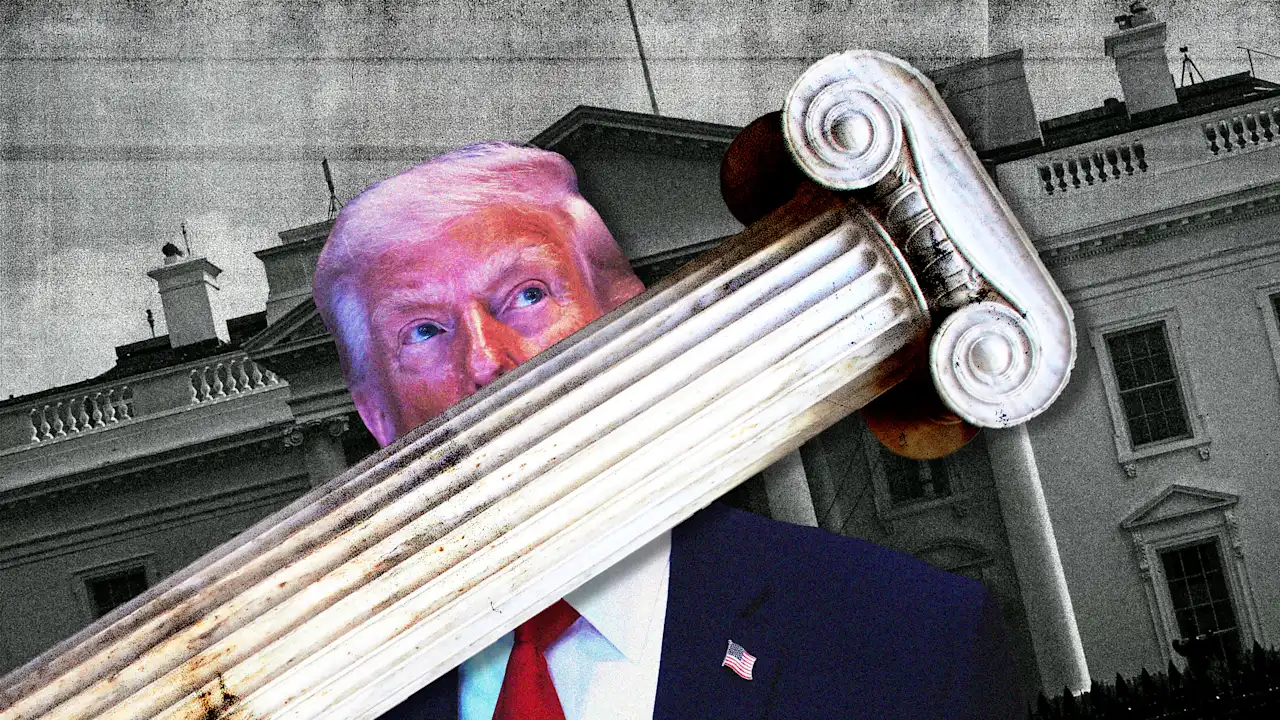
FastCompany: Sand was thrown in the gears of President Donald Trump’s grand White House ballroom plans on March 31, 2026, when U.S. District Court Judge Richard Leon ordered a pause on construction . The president, the judge wrote, was the “steward” of the residence, not its “owner.” In response, the Justice Department filed an emergency motion , asking that construction be allowed to resume due to security risks caused by the project being in a state of limbo. Presidents of the United States, unlike other world leaders , have not typically sought to impress their own architectural tastes on national monuments. In this regard, Trump is the exception.
His approach to remaking federal architecture has mirrored his approach to university funding and immigration enforcement : move fast and break things. But Trump’s imposition of his aesthetic preferences doesn’t just threaten to erase chapters in the story of the nation’s federal architecture. It also risks undoing the legacies of presidential wives, influential designers, and the egalitarian ideals that many of these buildings embody.
Gaudy grandeur Since his second term began in January 2025, Trump has paved over the storied White House Rose Garden—established by first lady Ellen Wilson in 1913 and redesigned by renowned horticulturalist Bunny Mellon in 1962—complaining that ladies’ high-heeled shoes sank into the ground. The art deco bathroom off the Lincoln Bedroom now reflects Trump’s penchant for polished marble . And gold-colored decorative elements have been affixed to the simple woodwork throughout the White House, with some of the ornamentation brought from Mar-a-Lago, Trump’s Florida estate.
Most notably, the East Wing, which housed the offices of the first lady and her staff, was flattened in fall 2025 to make way for a grand ballroom projected to cost some $400 million. The building, if completed as planned, will dwarf the historic White House . The ballroom also reflects Trump’s taste for grandiosity and opulence—the same aesthetic that’s reflected in the 250-foot “ Independence Arch ” that Trump has proposed for the National Mall. Trump has repeatedly complained that public buildings in Washington, D.C., lack grandeur.
He was even quoted by Golf magazine in 2017 as having described the White House as a “real dump,” although he later denied it. Yet many of the structures he has demolished or has sought to revise embody, in their form and decoration, certain republican ideals, such as government by the people, civic virtue, and opposition to concentrated power. Buildings that embody egalitarianism Trump has added accents to the White House to mimic the imposing homes of British and European monarchs.
But the residence’s original “ republican simplicity ”—a concept attributed to Thomas Jefferson— ctually had a purpose: It signaled the egalitarian outlook of the founders. In 1792, when Jefferson was George Washington’s secretary of state, he anonymously entered the competition to design a new presidential home. His submission , which didn’t end up winning, was inspired by Renaissance architecture like Andrea Palladio’s Villa Rotonda . Completed around 1570 in northern Italy, the Villa Rotonda features symmetrical facades and harmonious proportions that have been equated with Renaissance humanism and rationalism.
Article truncated for readability. Read the full piece →
The article addresses significant shifts in federal architecture under a prominent political figure, linking it to broader themes of brand identity and authenticity, which are highly relevant to brand strategy professionals.