Score
Walmart is 3D printing the future of big box stores
Walmart's adoption of 3D printing for store construction represents a significant shift in the retail industry's approach to building efficiency and cost management. By leveraging advanced technology, Walmart not only aims to reduce construction costs and timelines but also sets a precedent that could influence other retailers to embrace innovative building methods, thereby reshaping brand strategy around sustainability and modernization.
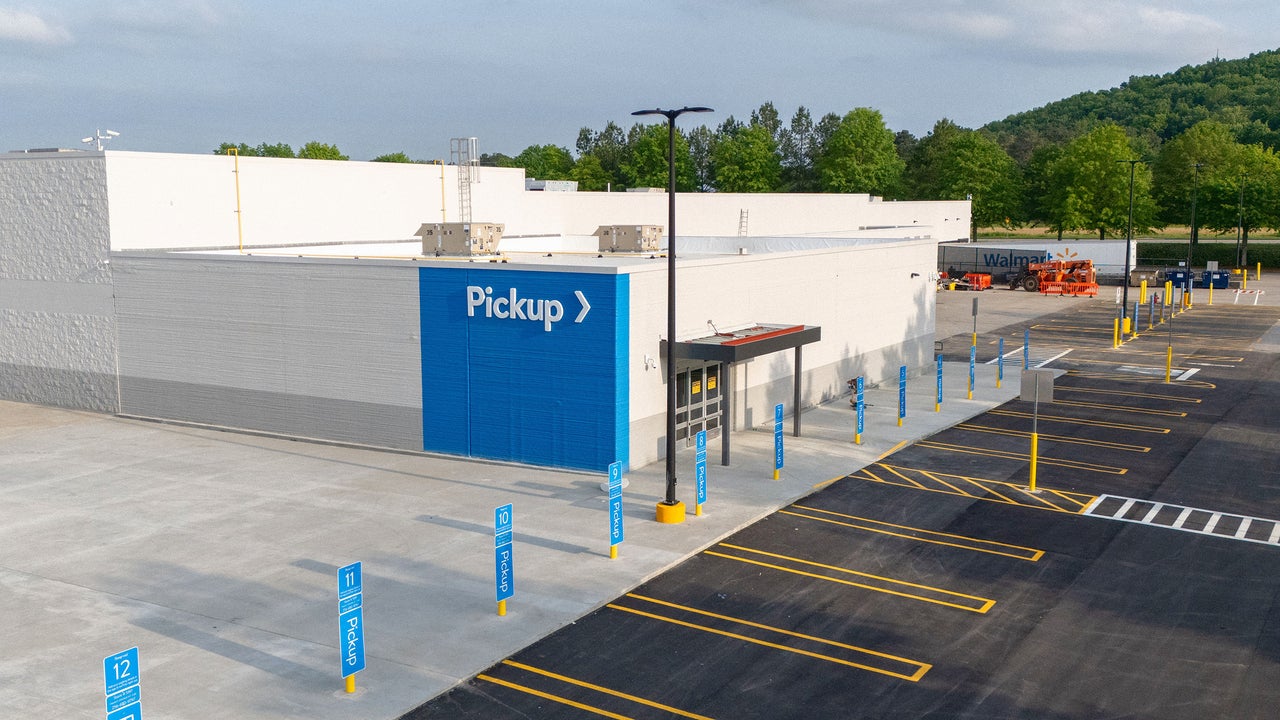
FastCompany: Walmart once famously hyped its “low price guarantee,” showcasing how the retailer’s scale helped customers save money. Now, in a push to cut its own costs, Walmart is 3D printing its stores. For the last two years, contractors working for Walmart have used 3D-printed construction at a handful of sites across the U.S. The walls for five additions to existing stores in Tennessee, Missouri, Alabama, and Arkansas have been completed in this fashion so far. It’s the country’s largest deployment of 3D-printed architecture in the commercial sector.
The retailer’s scale is catalyzing the growth and adoption of the technology, which promises to construct buildings faster and more affordably. Digital fabrication meets big-box stores [Photo: FMGI] The use of 3D printing for construction has mostly focused on residential structures, owing to their smaller size and the nascent state of the technology. Expanding 3D printing to the commercial sector could help scale up the industry. Meanwhile, completing larger structures with bigger budgets could help prove the utility of the process—and even help bend the cost curve.
To complete its 3D-printed builds, Walmart partnered with Alquist , the maker of robotic A1X 3D printers, and FMGI, a longtime contractor of the Arkansas-based retail giant. (Walmart declined the opportunity to comment on this story.) “This is what keeps me excited,” says Darin Ross, the president and CEO of FMGI, which is based in Woodstock, Georgia. He founded his company in his basement and as it grew into a nationwide firm, he eagerly awaited more innovation. “For 30 years, I’ve watched the construction industry just do it the same way over and over,” he says.
“We as an industry are way behind in adopting new technology and new ways of doing things.” FMGI is trained to operate Alquist’s 3D printers—which pipe layers of a concrete composite, like toothpaste being squeezed from a tube—and recently agreed to expand an existing arrangement with Walmart to 3D print buildings. This includes full-scale buildings and 30-plus projects in the pipeline through 2027. The partnership started with a pilot build at Walmart’s Athens, Tennessee, location in September 2024. Alquist printers laid out the walls for an 8,000-square-foot, 20-foot-high expansion of the superstore.
The additional area helped the store to better accommodate increased pickup and delivery traffic. At that time, it was the largest 3D-printed commercial structure in the United States. From traditional methods to 3D printing FMGI has a long history working in the retail and big-box world. It has completed remodels and new buildings for Home Depot, Trader Joe’s, Aldi, and Publix. As a general contractor for Walmart, it has worked on everything from neighborhood stores to building drone nests for new delivery methods.
The company had initially secured the Athens contract with Walmart as a standard masonry build, but the retailer switched gears and informed FMGI that it wanted to try to 3D print the expansion. As Ross says, “our job is to do what the customer wants.” [Photo: FMGI] The process had a steep learning curve. It involved figuring out how to use the rail-mounted robot printer, which extrudes inch-thick layers of special concrete mixed with fibers to avoid cracks while curing. It took 40 days to figure out how to print the expansion’s 20-foot-tall walls, including mastering the new system.
Article truncated for readability. Read the full piece →
Walmart's use of 3D printing in store construction is a significant development that could transform retail operations and brand strategies, making it highly relevant and impactful for industry professionals.