Score
‘A lot of graphic designers don’t get credit for what they do’: Chip Kidd on building a 40-year career
Chip Kidd's extensive career in graphic design highlights the importance of recognizing the role of designers in shaping visual identities, particularly in the publishing industry. For brand strategy, this underscores the need to value and credit designers for their contributions, as their work is essential in creating compelling visual narratives that resonate with audiences and enhance brand perception.
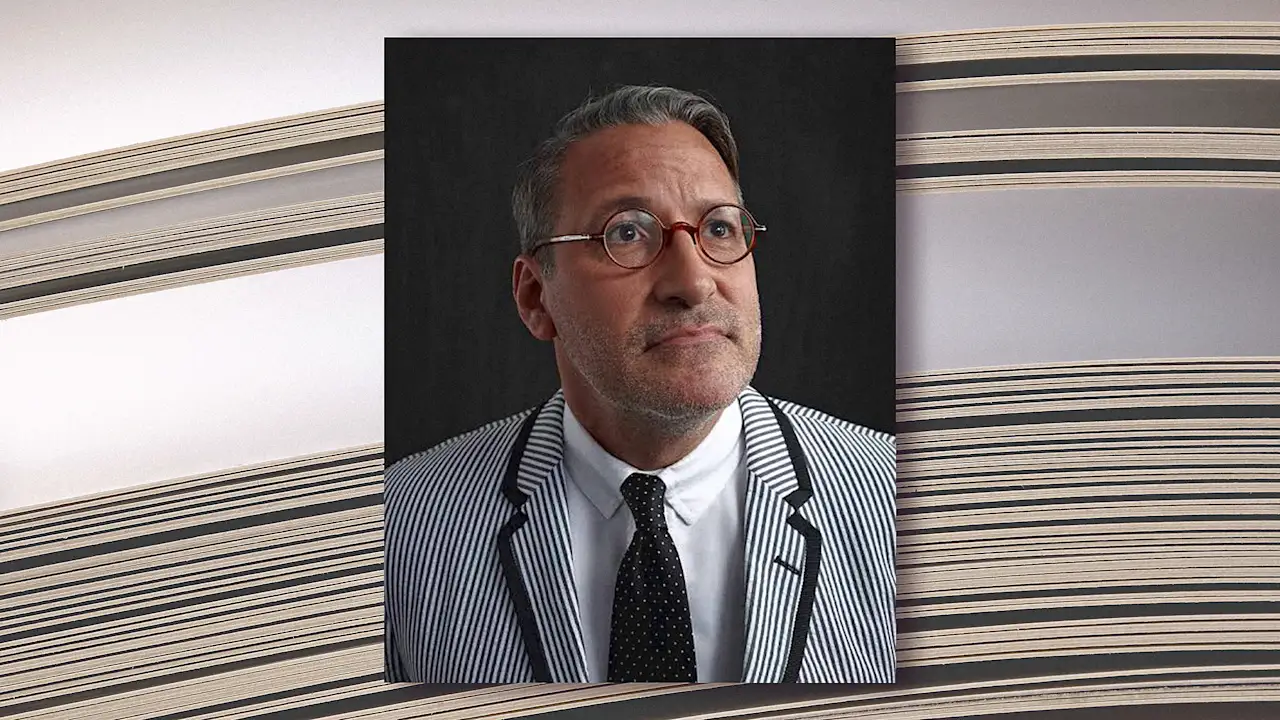
FastCompany: Growing up, graphic designer, editor, and author Chip Kidd was about as artsy as he could be in 1970s suburban Reading, Pennsylvania. “I glommed onto comic books very early on,” he says. “I loved to draw. I loved to write. I took up the drums and joined the marching band; all of this typical artsy-gay-kid-that-can’t-come-out stuff.” Still, he says, he knew he wasn’t the most talented in drawing. “There’s always that other kid that draws better than you who gets the gig to draw everything for the yearbook; It’s not tragic.
It’s like, alright, I’ve got to figure something else out.” [Cover Image: courtesy Abrams Books] That something else, as it happens, worked out pretty well. Today, Kidd is approaching 40 years as Associate Art Director at Alfred A. Knopf (he is perhaps best known for designing the book cover of Michael Crichton’s Jurassic Park ). He’s written two novels, several nonfiction books on graphic design, and in 2025 released his first Marvel graphic novel, The Avengers in the Veracity Trap!
Here, he talks about the kismet of his career arc from Eastern Pennsylvania, the practice of framing graphic design as problem solving, and how The New York Times crossword runs parallel to his creative process. I knew I wanted to do something creative for a living. In high school, we had––and they do to this day at Wilson High School in Westlawn, Pennsylvania––a fully functional television station within the high school. It’s like the ultimate AV Club. We would take turns running the camera, being on camera, directing the camera people. We covered all of our sporting events. For a while I thought that’s what I wanted to do.
Then I started doing graphics for the various shows we were doing. This was from 1982 to 1986, pre-computer, everything done by hand. I didn’t really know at the time what graphic design was, but that’s what I was doing. I got accepted to Penn State in the school of communications. My freshman year, a guidance counselor pointed me in the direction of, “Oh we have a graphic design department here. Maybe you should try that?” So I took Introduction to Graphic Design, Introduction to Color Theory, etc, etc. And that is when I figured out what I wanted to do.
The happily boring story is that I majored in that for the next four years, graduated with a portfolio, and went to New York City in the fall of 1986. That was the goal: go to New York and try to get a job. I interviewed at the time at all of the top graphic design firms and I got good feedback, but nobody had an entry-level position. Someone steered me over to Random House and at their imprint Knopf Publishing. They actually did have an entry-level position. I raised my hand. It was the assistant to the art director at Alfred A. Knopf Publishing. At that time, the art department was literally me and my boss.
It was waxers and t-squares and taping your board onto your drawing table and lining everything up, measuring it all out. I enjoyed that. Then, gradually with time, I was given small design jobs for the books. It grew from there. In October, if I live that long, I will have passed my 40th year at Alfred A. Knopf. I feel very fortunate. Frankly, I’m the last of that breed. I have peers who are also the last, but that’s going to be it. It’s not for me to say, but the age of a 40-year career at the same place used to be not that unusual, but going forward it will be. That’s just the way things have evolved.
Article truncated for readability. Read the full piece →
Chip Kidd's insights on the recognition of designers in branding are significant for the industry, though the themes of credit and value in design are commonly discussed.