Score
You probably haven’t heard of ‘desire lines,’ but they just reinvented this airport’s concourse
The redesign of Frankfurt Airport's Terminal 3 concourse emphasizes a user-centered approach to space, prioritizing traveler experience over traditional commercial imperatives. By utilizing behavioral data to inform the layout and design, the terminal creates a unique environment that encourages leisurely shopping while still accommodating the needs of hurried travelers, ultimately enhancing the airport's brand as a destination rather than just a transit point.
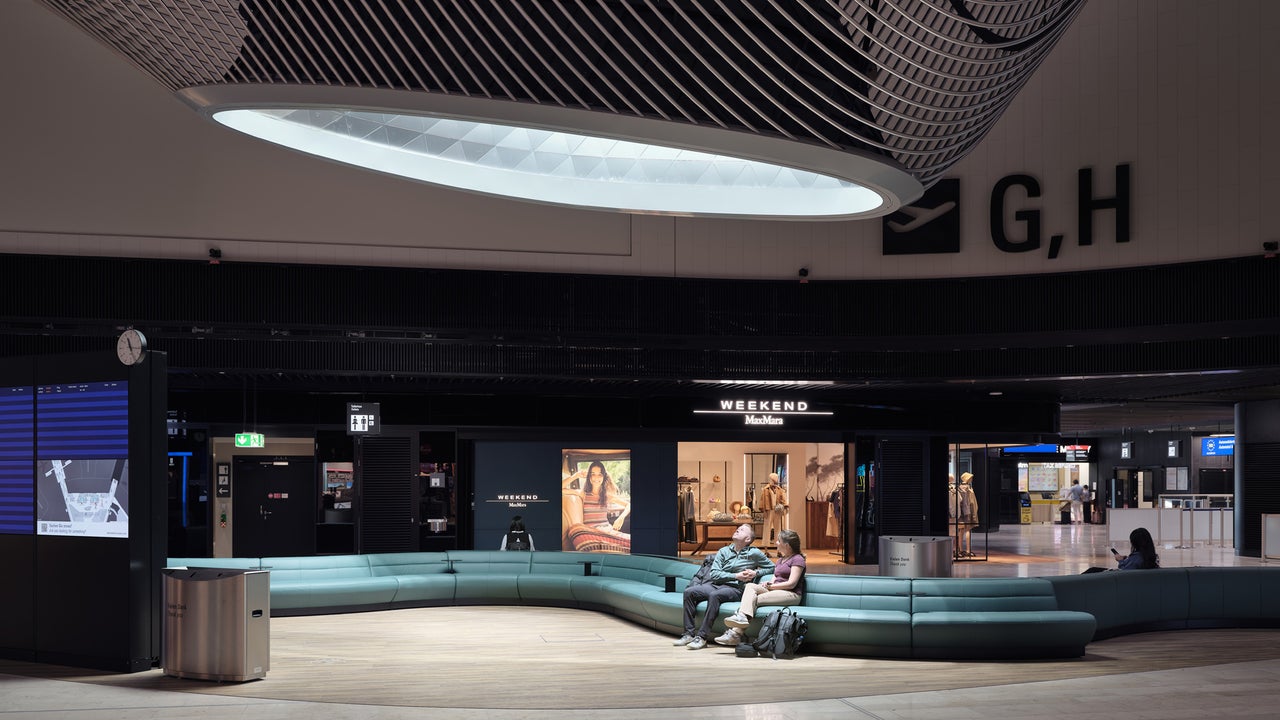
FastCompany: Inside Frankfurt Airport ‘s new Terminal 3 building, there is a concourse that defies the standard logic of airport design. While the business model of most airports has made the airside space past security checkpoints into aggressive shopping malls interspersed with rows of gate seating, the German airport has made a sizeable chunk of its new terminal into a sinuous plaza worthy of a casual stroll. For those not running to make a connection or hopelessly searching for a place to sleep , this new concourse is a refreshingly unusual space for passing some time. That’s also what makes it, somewhat counterintuitively, a good place for shopping.
[Photo: Taufik Kenan/courtesy LAVA] Designed by the Laboratory for Visionary Architecture (LAVA), the space was conceived as a public square that tames down the commercial imperative that guides most airport terminal design. “They literally force you into a maze and add another five to 10 minutes of walking time,” says LAVA cofounder Alexander Rieck. “We wanted to go the opposite way.
We wanted to find out what makes a shopping experience an interesting experience.” [Photo: René Spalekc/spalek.com/courtesy LAVA] The airport concourse design features a series of islands holding a cafe, lounge areas, and planters, all woven through with pathways and surrounded by shops. Rather than breaking up the internal space of the concourse, these elements have been designed to sit within the concourse in a way that would allow for both the traveler rushing to their gate and the window shopper leisurely perusing the high-end goods of the stores.
[Image: courtesy LAVA] LAVA based the location and design of these elements on thousands of digital simulations of the ways people move through space. Analyzing these flows, the designers identified several “desire lines,” or common pathways people take through a space, depending on whether they’re in a hurry, killing time, hungry, in the market for a new handbag, or countless other conditions. The result is a floor plan of wide and swooping pathways bending around lounge spaces and a cafe like they’re boulders in a stream.
[Image: courtesy LAVA] This behavioral data also informed the placement of the shops, a key part of the airport’s business. “Almost no airport in the world is making money by operating airplanes,” Rieck says. “They’re making money with all what happens inside the airport.” LAVA kept the stores on the edge of the concourse in an effort to preserve the open, plaza-like design concept, but used the digital simulations to show that even though the storefronts wouldn’t be right in people’s way, they would be visible through the desire lines that shaped the concourse.
[Photo: Taufik Kenan/courtesy LAVA] “We organized the shops and the shopping areas and the windows according to these view lines that, by coincidence almost, you see in background this shiny thing you probably want to buy,” Rieck says. [Photo: Taufik Kenan/courtesy LAVA] Covering more than 64,000 square feet, the space is not just a trick to lure people into stores. Rieck says the concourse was also designed to help improve the sometimes disorienting experience of getting off a long flight and having to adjust to a new place and time zone.
Article truncated for readability. Read the full piece →
The article discusses a significant redesign of a major airport that prioritizes user experience, which is highly relevant for brand strategy professionals looking to enhance customer engagement in public spaces.