Score
Milan Design Week Simon Weisse The Model Making Genius Behind Grand Budapest Hotel Creates The Worlds Smallest Coffee Shop
The collaboration between Simon Weisse and De'Longhi at Milan Design Week highlights the importance of craftsmanship and creativity in brand strategy. By creating a unique installation that combines art and functionality, De'Longhi effectively positions its coffee machines as not just appliances, but as integral parts of a lifestyle experience, appealing to consumers' desire for quality and authenticity.
Creative Boom: News Art & Culture Milan Design Week: model-making genius Simon Weisse unveils the world's smallest coffee shop The Berlin craftsman known for his work on The Grand Budapest Hotel has teamed up with De'Longhi at Milan Design Week. And this ambitious installation has been causing quite the stir. Written By: Tom May 22 April 2026 There's a queue forming outside a building on Corso Garibaldi in Milan's Brera district, and nobody inside is particularly surprised.
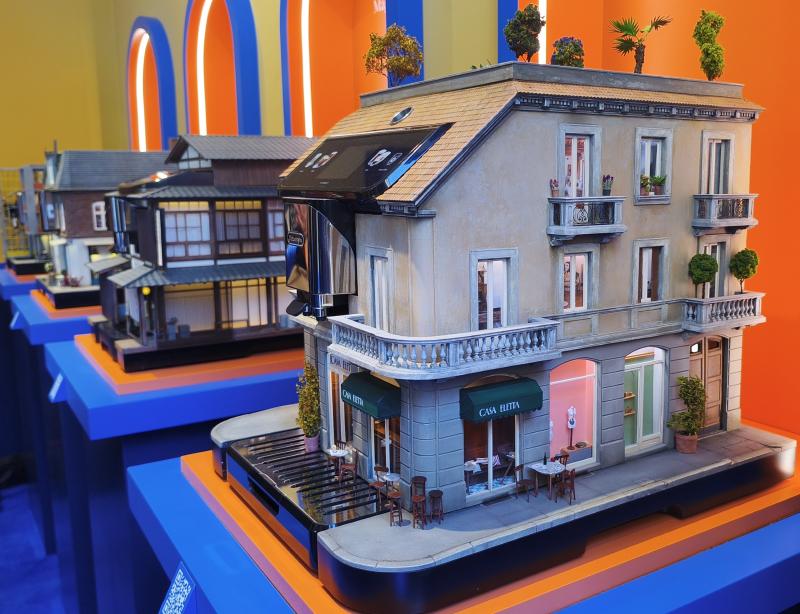
Pressed up against the glass, members of the public are craning to get a closer look at something in the window: a miniature Parisian apartment block, no taller than a wine bottle, that subtly houses a working coffee machine. It's the press day for De'Longhi's "World's Smallest Coffee Shops" installation, and technically, none of this is supposed to be happening yet. The public isn't invited. Nobody has told the public that. Inside, I find Simon Weisse standing quietly near his work.
He's soft-spoken, thoughtful and seemingly unfazed by the fuss around him, which probably goes with the territory of being one of the most celebrated model-makers in the world. This is, after all, the man who built the miniature Grand Budapest Hotel (2024) for Wes Anderson, along with work on Asteroid City (2023) and The Matrix Resurrections (2021). In short, Simon has spent his career making fake things look more real than reality itself. He's also, it turns out, a man who almost turned down this whole project. 01/06 Simon Weisse "When they called me, they said it's for an advertising campaign," he recalls.
"But you know, I don't like advertising so much because the time is so restricted for adverts. And I said, "The idea you have, this will take months. So I don't know if we can do it." However, the agency, Lola Madrid, told him this would be different: a long-term campaign with the ambition and budget to match. Weisse eventually said yes, which is fortunate, because what his Berlin studio has produced is genuinely extraordinary. What they made The concept is elegant in its simplicity.
Take five of De'Longhi's bean-to-cup machines and dress each one as a miniature architectural facade from a different world coffee capital: Paris, Tokyo, Milan, Copenhagen and Berlin. The idea is to argue that the coffee shop experience you'd travel for is already sitting on your kitchen counter. It's a marketing idea that works as a piece of craft, which is a rare thing. Up close, the detail is almost disorienting. Each brick on the Berlin model was painted by hand. The café furniture in the Paris scene was all individually constructed.
There's a miniature coffee machine hidden inside the Tokyo model, a visual joke so small you'd need to be specifically looking for it. "Lucy, our model maker, did all the chairs by hand, for example," Weisse explains. "The table trees, all the vegetation was made by hand. Hans, our painter, painted every brick." The workshop logged over 1,500 hours across the five pieces. What makes these models technically unusual, Weisse explains, is that his team couldn't use any of the standard tricks of the trade. "On set, when we film, we cheat all the time," he says, with something approaching a grin.
Article truncated for readability. Read the full piece →
The article discusses a notable collaboration at a major design event that emphasizes brand strategy through creativity, making it significant and relevant for brand professionals, though the concept of integrating art with product marketing is not entirely new.