Score
Russia is using a World War I camouflage design to try and fool Ukrainian drones
The use of World War I 'dazzle' camouflage by the Russian army to confuse Ukrainian drones highlights a strategic shift in warfare, where traditional visual deception is being adapted to counter modern AI-driven technologies. This approach underscores the importance of innovation in military tactics, as well as the need for continuous adaptation in brand strategies to remain relevant and effective in rapidly changing environments.
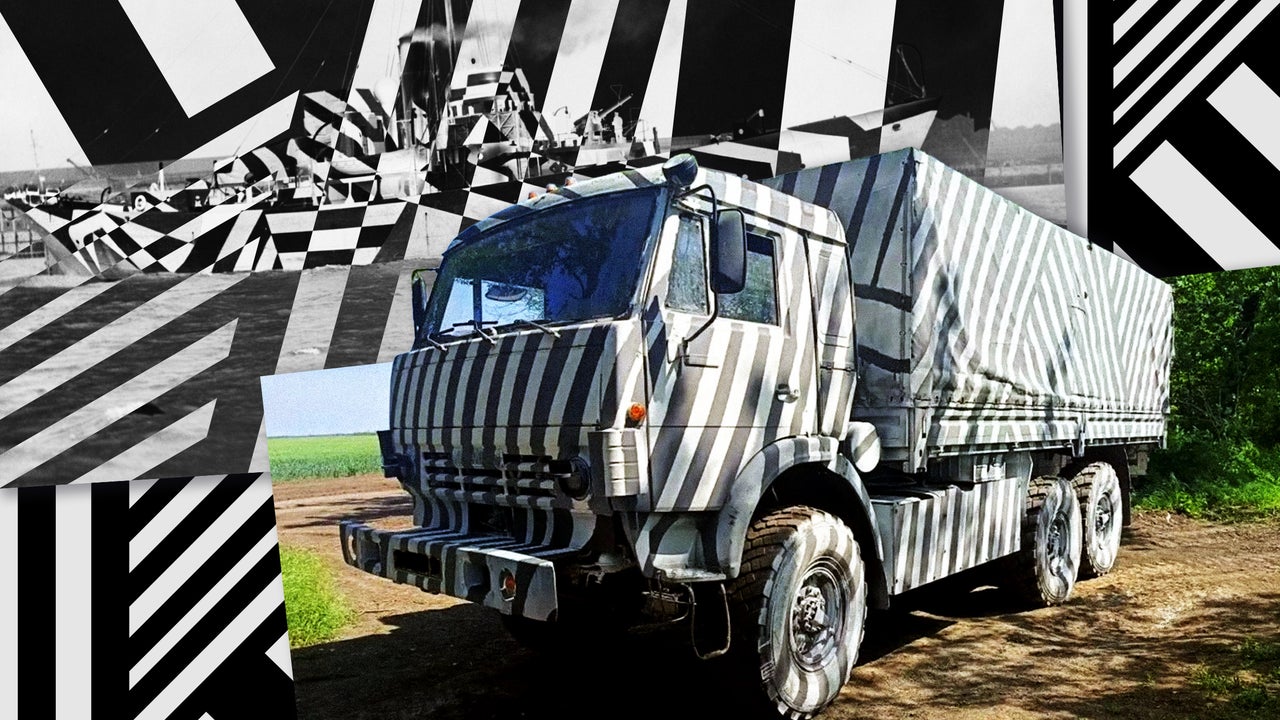
FastCompany: The Russians are using spray paint to fight the Ukrainian robot drones that are decimating their Army’s supply lines. They are painting trucks with stark black-and-white zigzags and blotches covering everything from the chassis to the tires. Yes, you read that right. It’s 2026, and the Russian army is slapping a paint job on its logistics trucks that would look right at home on a 1918 battleship. The British started to paint ships with this type of “dazzle” camouflage during World War I in an effort to confuse enemy ships.
The theory was that the angled, sharply contrasted patterns would trick German navy crews into miscalculating physical properties of British ships, making them miss when firing their weapons against them. Russian trucks are receiving ‘dazzle paint,’ borrowing the same kind of tactic Russia has used for some of its most important military aircraft, to try to confuse seekers on standoff weaponry that use image-matching capability.examples of Ural and KAMAZ heavy-duty truck designs.
pic.twitter.com/CiG110S3Rc — Valhalla (@ELMObrokenWings) June 2, 2026 This time it has nothing to do with hiding trucks from the human eyes of military sailors and officials. The new drone-safe paint job is an attempt to break the artificial intelligence guiding Ukrainian autonomous strike drones. The revival of this old technique, which has been practically abandoned by navies across the world, also reveals how desperate Moscow has become to protect its supply lines.
As The War Zone reports, new photographs published on X show Russian trucks wearing two distinct geometric treatments: one built from sharp directional bands, the other from rounded irregular blotches, both mixing white with black or factory green across every surface including the tires. The intent is to confuse the computer vision algorithms inside Ukrainian strike drones so they can’t identify their target.
That may or may not work, as autonomous drones can be trained to recognize these patterns too, but it opens them wide to drones controlled by humans, as the paint makes the trucks far more conspicuous to any human pilot watching the front lines with the drone video light or night sensors. The dazzle camouflage is also useless against thermal imaging sensors, so a drone equipped with those will just hit any truck or target, regardless of their paint job. HMS Kildangan , ca. 1918. [Photo: Imperial War Museums/Getty Images] Old school Marine artist Norman Wilkinson is the alleged inventor of dazzle camo .
Previous camouflage methods were inspired by how animals use natural countershading to blend with their environment. Wilkinson’s approach was different: rather than concealment, he wanted to induce error. His designs planted fake bow waves on hulls and painted contradictory geometric shapes on smokestacks to break the dual-lens optical alignment tools inside German submarine periscopes, forcing commanders to misread a ship’s course and distance.
Article truncated for readability. Read the full piece →
The article discusses a unique application of historical camouflage in modern warfare, which has implications for strategic thinking in branding, but its direct relevance to brand strategy professionals is moderate.