Score
A glimpse inside the painstaking process of bringing a subway car to life
The article discusses a photography exhibition titled 'In Service: MTA Photographs by Christopher Payne', which showcases the behind-the-scenes processes of New York City's subway and bus systems. The exhibition, commissioned by MTA Arts & Design, features large photographs displayed across various locations, capturing the assembly, maintenance, and the human stories behind the transit vehicles. Brand strategists can take note of how the exhibition emphasizes the importance of human connection and craftsmanship in the narrative of public infrastructure, which can be a valuable lesson in storytelling for brands.
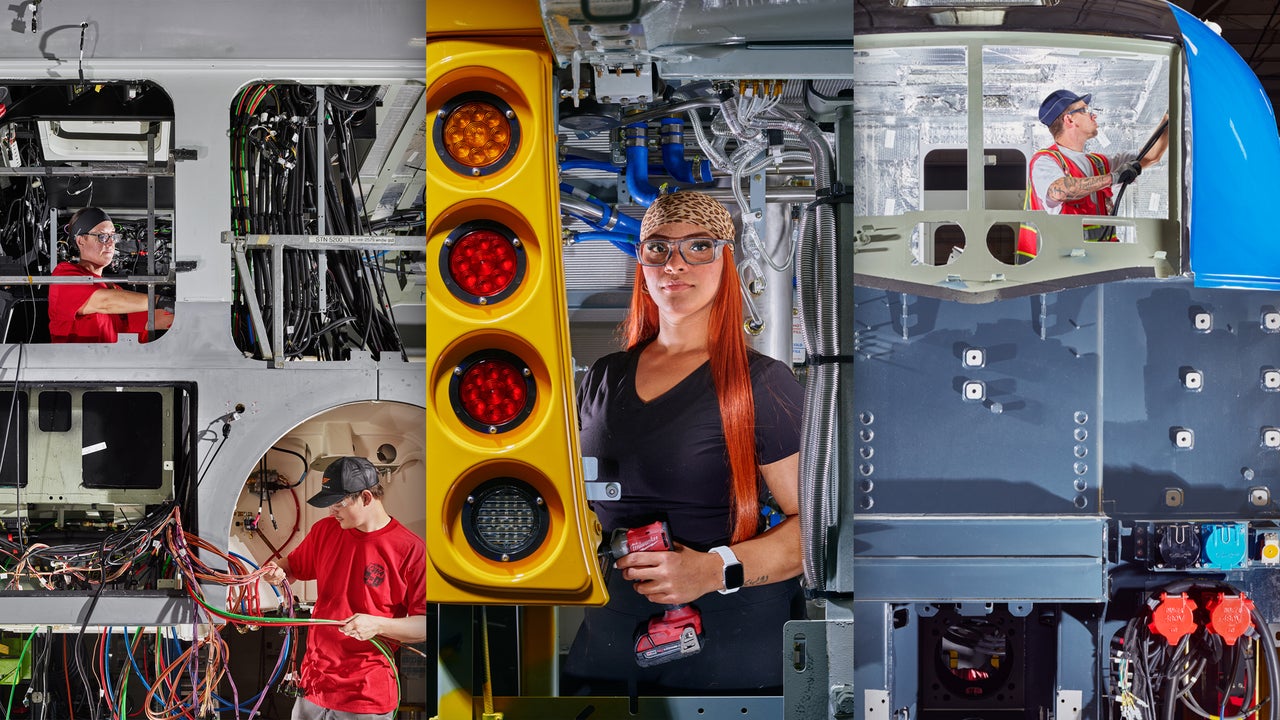
FastCompany: Although the subway system is New York City’s bloodstream, most riders rarely slow down to wonder where the giant metal cars came from, or where they go after their last stop. Now, a new photography exhibit is transporting passersby into the spaces where the city’s subways and buses reside when they’re off duty, and even the spaces where they’re made. Commissioned by MTA Arts & Design, In Service: MTA Photographs by Christopher Payne is the agency’s first systemwide photography exhibition capturing a behind-the-scenes look into the machines of NYC’s transit system.
Presented in 52 light boxes, the large photographs are displayed across five locations in Manhattan and Brooklyn: Grand Central Madison, Grand Central Dining Concourse, 42 St-Bryant Park, Bowling Green, and Atlantic Av-Barclays Ctr. Installation view of In Service: MTA Photographs by Christopher Payne , 2026 [Photo: Nicholas Knight/MTA] A resident of Inwood, Payne was captivated by the 207th Street Overhaul Shop, a nearby 43-acre complex where subway cars go to be repaired. Built from the late 1920s through the early 1930s, the shop services the R62 trains—the stainless steel orange-seated cars that ride the numbered lines.
He became fixated on entering 207th Street and other overhaul shops around the city to see the cars stripped of their elements. Lift system used to move subway cars around in the maintenance shops. New York City Transit-Subways, Coney Island Overhaul Shop, Coney Island, Brooklyn. [Photo: Christopher Payne] The documenting of these spaces began as a personal project, before becoming the basis for a story for The New York Times .
Eventually, it led him to work with the Metropolitan Transportation Authority (MTA) to get unprecedented access to shops across the city as well as the other factories around the country that help build New York’s transit cars. John Reveron torquing valves on a new train engine. Long Island Rail Road, Morris Park, Diesel Locomotive Shop, Richmond Hill, Queens.
[Photo: Christopher Payne] The exhibition features images like a partially assembled car at a subway train factory in Nebraska, a moment of friendship between workers in a bus factory in Minnesota, and simpler photographs from a locomotive factory in California for the Long Island Rail Road (LIRR) and MetroNorth. Jennifer Evans (left) and Ashton Petschen organizing wiring within a bus frame. New Flyer, St. Cloud, Minnesota.
[Photo: Christopher Payne] “I loved sort of being an ambassador of New York City and being able to say to the people making these vehicles that we use every day, you know ‘I ride that every morning’ and ‘that’s where I sit’,” Payne tells Fast Company . Ashley Torres applying bracket for rear door hatch. New Flyer, St. Cloud, Minnesota. [Photo: Christopher Payne] Payne’s work often takes him behind the scenes of factories and restricted areas. These places are filled with large equipment and create a visual chaos that translates to interesting photographs. He describe his approach as finding the “aha, that’s how they did it” moment.
Article truncated for readability. Read the full piece →
While the article highlights an interesting exhibition that connects human stories to public infrastructure, it does not significantly impact the brand/design industry, and the concepts presented are somewhat standard in terms of storytelling in branding.
Weekly digest
Get the Signal digest
Every Monday morning — the top 3 brand trends, 10 high-signal articles, and one emerging signal to watch.
No spam. Unsubscribe anytime.