Score
The design world is already obsessed with this recommendation app. Now, you will be too
Rec League is revolutionizing the recommendation landscape by creating a platform that emphasizes personal, trusted suggestions over algorithm-driven content. For brand strategy, this highlights the importance of fostering authentic connections and positive user experiences, which can differentiate a brand in a crowded digital marketplace.
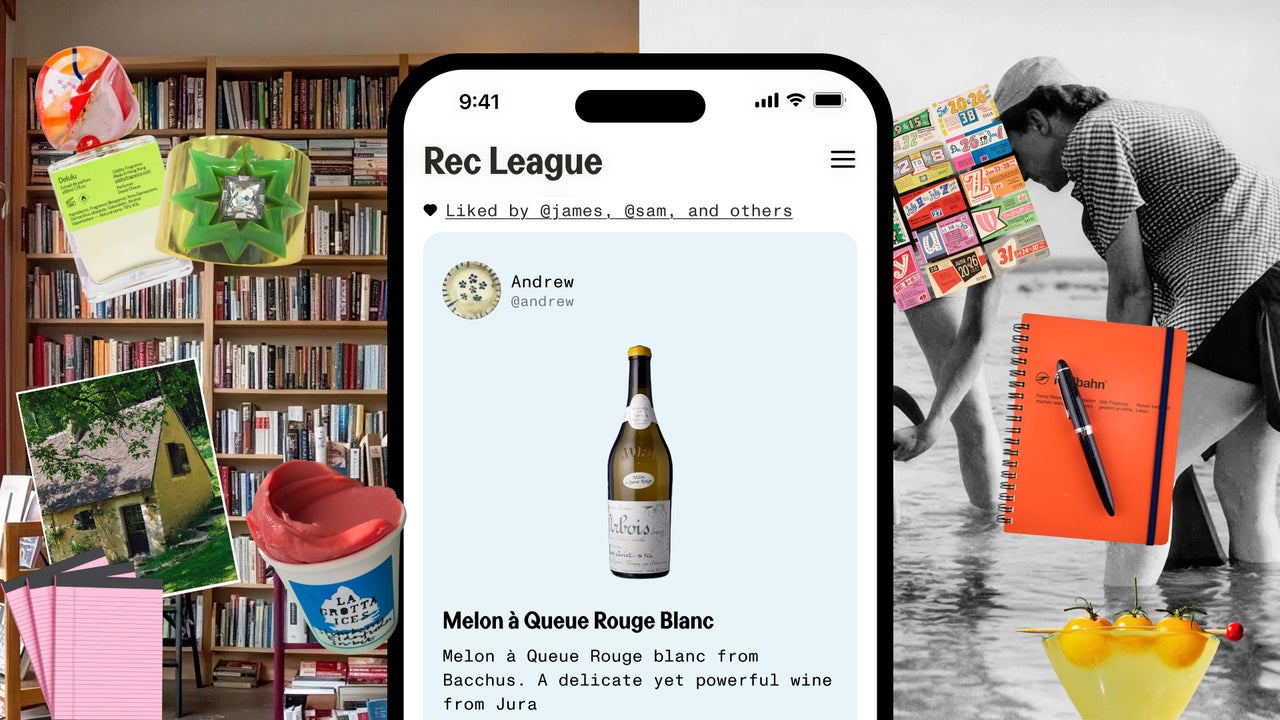
FastCompany: These days, a good old-fashioned, firsthand recommendation is hard to come by. They’re crowded out by algorithms, AI chat boxes, and sponsored content at every turn. Rec League aims to change that. The new platform, with its bright, playful interface, gives users a place to share and connect over trusted finds, bringing back a personal, word-of-mouth ethos to an increasingly app-driven world.
Since its launch last January, Rec League has grown into a space that’s part discovery-based and part social, with over 100,000 recommendations logged, touching on everything from travel and design finds to parenting hacks and unconventional life advice. “We want to be the first thing you reach for when you’re looking for a gift for your friend or when you’re trying to find the exact right bar in the town that you’re visiting, or the stuff that you may have a hard time finding on Amazon, Google, or ChatGPT,” says James Kylstra, chief technology officer and cofounder.
“That’s the vision; it’s the search engine for the thing you really need.” Kylstra and Chris Mueller, who now serves as Rec League’s CEO, met at Substack, where they were leaders on the engineering team. Soon after, they brought on Grier Stockman as chief marketing officer. Stockman previously oversaw marketing and business development for Block Shop, an L.A.-based textile studio started by her sisters. [Screenshots: Rec League/ App Store ] Initially, they envisioned Rec League as an e-commerce site that focused on retailer-to-retailer referrals, but they quickly pivoted.
“We don’t need to re-solve commerce—what we need to solve is the discovery layer,” says Mueller. “We trust all sorts of people in the world, so let’s build a platform that’s just recommendations.” In addition to being a destination for tips, the platform also functions as an organizational repository. “We had so many friends that had all of this great intel stored in Google Docs, in their notes apps, or on a Google Map somewhere, and it was sort of all piecemeal,” says Stockman.
“Where is the place to really store great information?” Once the concept and design were fine tuned, the three founders pulled together a small round of funding from friends and investors, and the platform was fully up and running by the new year.
A Tool for Personal Curation Rec League invites users to build their own customizable pages, where they can make recommendations or group them into collections—as specific, general, or abstract as they like, from “Backyard Dinner Party” to “Kids’ Clothes” to “All Five Senses.” Early on, Kylstra and Mueller landed on a vertically oriented UX that highlights the “primacy of the object,” says Mueller, drawing the eye to individual items and to the broader collections in the form of an almost retro-looking collage. “We spent a fair amount of engineering effort on being able to punch out the images,” says Kylstra.
Article truncated for readability. Read the full piece →
The article discusses a significant shift in recommendation strategies that can influence brand differentiation, making it impactful and relevant for brand strategy professionals, while also introducing a relatively new approach to user engagement.
Weekly digest
Get the Signal digest
Every Monday morning — the top 3 brand trends, 10 high-signal articles, and one emerging signal to watch.
No spam. Unsubscribe anytime.