Score
Baltimore figured out the secret to a better public swimming pool
Baltimore's renovation of the Greater Model Aquatics Center exemplifies a strategic approach to public infrastructure that prioritizes accessibility, community engagement, and health equity. By investing in modernized public pools, the city aims to foster social cohesion and provide essential resources for swimming education, particularly addressing disparities in drowning rates among different demographics.
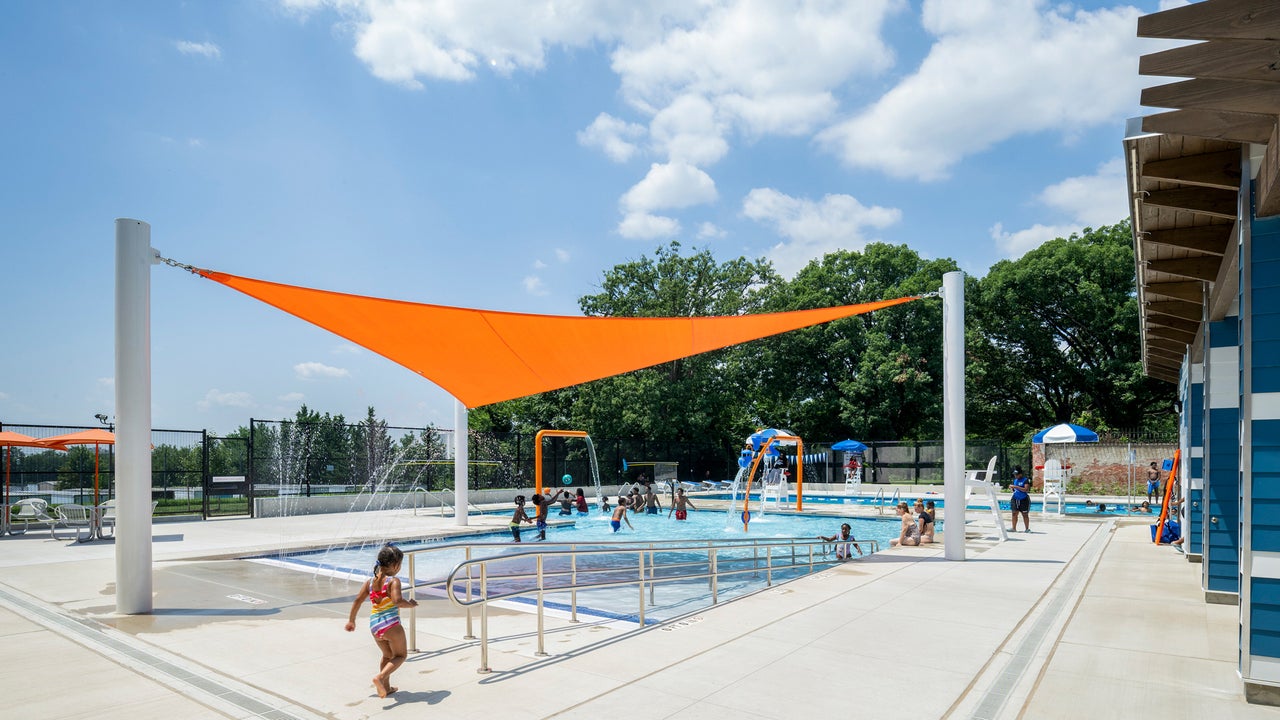
FastCompany: In mid June, Baltimore celebrated the opening of a newly renovated public pool. Located in Poppleton, a neighborhood in West Baltimore, the Greater Model Aquatics Center features a zero-entry wading pool (it gently slopes from the deck into the water, like a natural shoreline), a six-lane lap pool, and an expansive deck furnished with bright yellow lounge chairs, shade umbrellas, and a splash pad. A new rec building with public restrooms is also part of the complex. [Photo: CannonDesign] During the ribbon cutting, which took place on an 87-degree day, the sounds of play could be heard behind remarks from city officials.
“These young people—hear these babies enjoying themselves in the water today—this is what it’s all about: our future generations enjoying this space, understanding that they stand on the shoulders of those who came before, who have fought to make this happen,” said John T. Bullock, the city council representative for the neighborhood. [Photo: Baltimore City Rec and Parks] Greater Model had been closed since 2019, when the city was forced to shutter the facility because of disrepair and deferred maintenance—a common problem afflicting aging public pools across the country .
Baltimore, whose network of neighborhood public pools was built up during the 20th century, is demonstrating how to get many of these facilities back online and with modern features that help these public spaces better serve their communities. [Photo: Baltimore City Rec and Parks] With the help of the architecture firm CannonDesign, the Parks and Recreation Department is overhauling five aquatics centers using a kit-of-parts approach oriented around accessibility and multi-generational use.
The idea is that well-functioning public pools for all are key to healthier cities from the perspectives of climate adaptation , social cohesion, and more. The collaboration shows how cities across the country could reinvest in this critical public infrastructure. “So many individuals in this community depended heavily on pools,” says Reginald Moore, the director of Baltimore City Recreation and Parks (BCRP).
“Yes, it is a place for them to cool off during Code Red days , but it’s also a place where families go to connect.” The investment in these facilities comes at a time when cities have been pivoting to splash pads, which typically have lower construction costs and don’t require lifeguards, to address the need for public cooling. “We’ve seen a lot of cities remove their pools or close them and replace them with a splash pad,” says Monica Pascatore , the architect at CannonDesign who led the project. “I would challenge them to think about the difference between splash and immersion.
The physiological relief of immersion on the body is very different than splash. And it doesn’t offer the opportunity to learn to swim, which is an equity issue where it’s really important to fill that gap.” [Photo: CannonDesign] Designing a better neighborhood pool Beginning in the early 20th century, Baltimore built small neighborhood pools to help alleviate crowding at its larger aquatics centers. These were simple swim centers with a single pool and a capacity for 30 to 40 people. Today, the city operates five large aquatics centers and 12 smaller neighborhood pools. The city’s pools were segregated until 1956.
Article truncated for readability. Read the full piece →
The article highlights a significant public infrastructure initiative with implications for community engagement and health equity, making it relevant for brand strategy professionals interested in social impact, though it may not be groundbreaking in the broader design industry.