Score
New Branding for LEGO by Interbrand & OLA
LEGO's recent branding overhaul by Interbrand and OLA aims to create a cohesive design language that reflects its identity across various products and platforms. By streamlining its extensive brand guidelines and focusing on visual storytelling, the new design system enhances recognition and connection within LEGO's diverse ecosystem, ensuring it resonates with both young and adult audiences without losing its core essence.
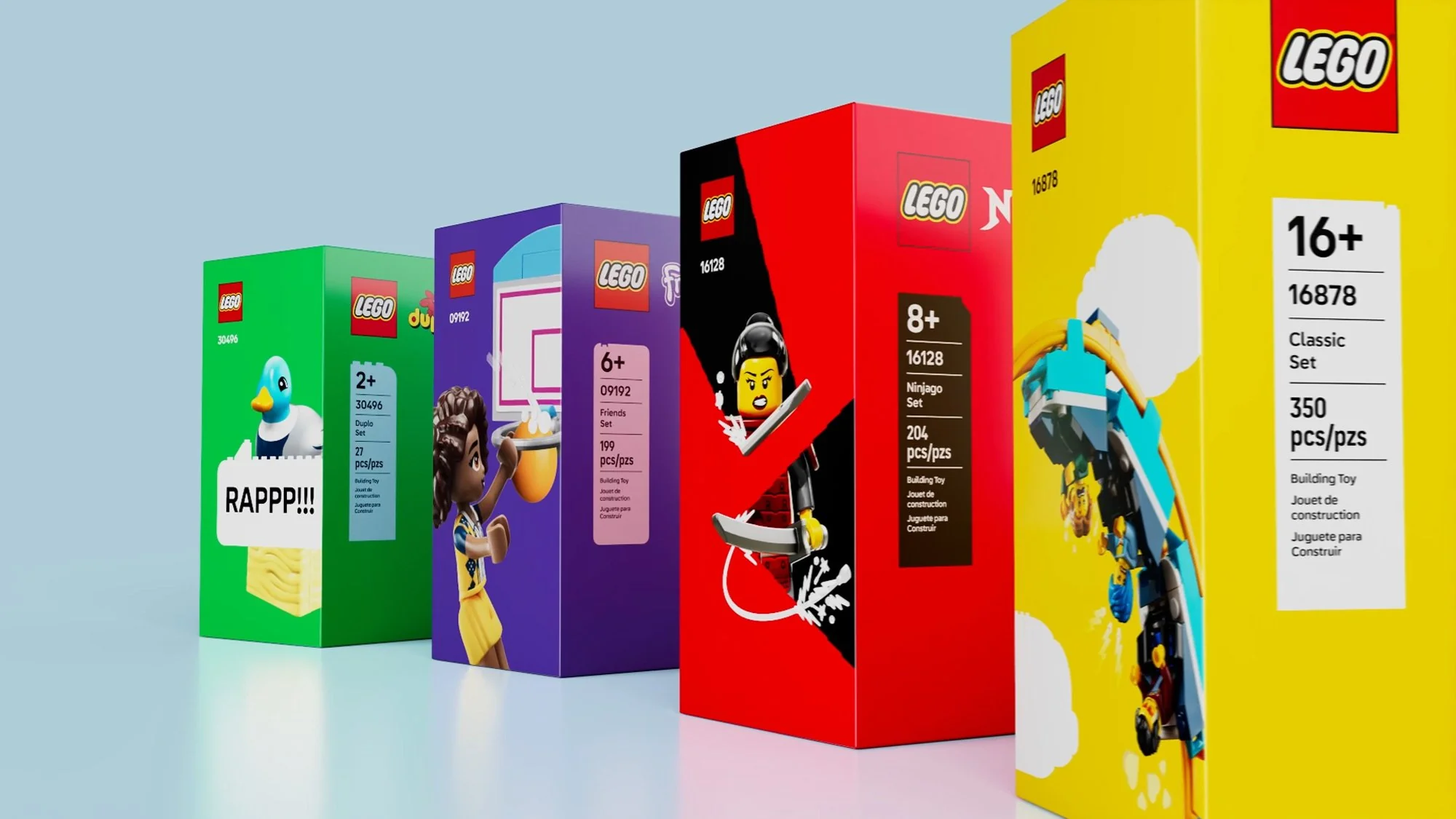
Source: LEGO by Interbrand & OLA Opinion by Emily Gosling Posted 13 June 2024 As recognisable brands go, LEGO is up there with the Nike swooshes and McGolden Arches of this world. Pretty much anything in that red and yellow lockup with vaguely Stay Puft-esque lettering (naturally there’s a LEGO version of that exact sailor) instantly says ‘LEGO’ – even when what it really says is, unlawfully, ‘Lepin’; or somehow scraping into legality, ‘Xinh’; or just ‘Brick’; or in a simple twist of genius, ‘Logo’. As anyone in the branding world knows, and few outside of it seem to know (or care), a brand is so much more than a logo.
But beyond that mark, it’s tricky to recall what else makes up the LEGO identity in terms of things like colour palettes, fonts, or graphic devices. There’s no discernible Cadbury purple (that’s Pantone 2685 C for the nerds) or Oatly cutesy-quirky-drippy brand typography (it’s called John Rounded, in case you were wondering). Arguably, LEGO hasn’t really needed to worry too much about its ‘brand world’ over the years: it’s gone from strength to strength, expanding its original offer way beyond kids’ products and into the lucrative worlds of adult-focused collectors’ editions – Harry Potter, Star Wars and a whole load more.
Founded in 1932 in Denmark by Ole Kirk Kristiansen, LEGO’s famous bricks first emerged in 1958. Having weathered the odd storm in the following decades, in 2021 researchers found that investing in LEGO was more lucrative than gold, stocks, art or wine, according to CEO Magazine. But with LEGO’s global reach and countless, innumerable variants, partnerships, audiences and more, over time the visual identity has naturally become rather sprawling, with little in the way of cohesion aside from that aforementioned logo. That’s why for the past two years the LEGO Group’s in-house creative and strategic agency, Our LEGO Agency (OLA), has been wo
rking with global brand consultancy Interbrand to create a consistent, cohesive design language, as well as ‘refreshed assets and architecture’. The new design system is being rolled out globally across all LEGO physical product ranges, including its partnerships and franchises with the likes of The Walt Disney Company, Lucasfilm, Warner Brothers, and Epic Games, as well as the brand’s digital platforms. ‘The LEGO Group has seen incredible growth over the last two decades…’ says Interbrand.
‘The product’s incredible success led to a unique challenge – there was a need to build on and evolve its own brand DNA that could be easily recognised across all products and digital experiences…With the LEGO Group’s strong attention to detail and focus on quality, there was the opportunity to strengthen the connection within the ecosystem that had already been created.’ Over the decades, LEGO’s identity system had become so unwieldy that across the board it had amassed 23 sets of brand guidelines and more than 110 separate principles; so one of the most important tasks for OLA and Interbrand was to streamline and consolidate these. The desi
gners landed on five new key design principles: design for your audience; build from its system-in-play (which refers to the way that the LEGO elements bought many years ago will still fit perfectly with LEGO elements bought in the future); tell stories; be playful and optimistic; and keep it simple. In a nod to the fact that the brand’s youngest fans were often too young to read, the new designs were initially inspired by Interbrand and OLA’s research into ‘modes of visual storytelling’ – namely the semiotics of comic books – which play out in the visual language’s liberal use of things like speech bubbles, and the ‘cells’ used to delineate
Article truncated for readability. Read the full piece →
The rebranding of LEGO, a major global brand, by prominent agencies signifies a substantial shift in brand strategy, making it highly impactful and relevant for industry professionals, while the approach to cohesive design language adds a moderate level of novelty.
Social search skipped (SERPAPI_KEY not configured) — original score preserved.
Weekly digest
Get the Signal digest
Every Monday morning — the top 3 brand trends, 10 high-signal articles, and one emerging signal to watch.
No spam. Unsubscribe anytime.