Score
The Obama Presidential Center is more than its granite tower
The Obama Presidential Center represents a significant shift in urban development, emphasizing sustainability as a core aspect of its design and operation. This approach not only reflects former President Obama's environmental agenda but also sets a new standard for future large-scale projects, showcasing how architecture can harmonize with nature and community needs. For brand strategy, this highlights the importance of aligning a brand's identity with its values and mission, particularly in the context of social and environmental responsibility.
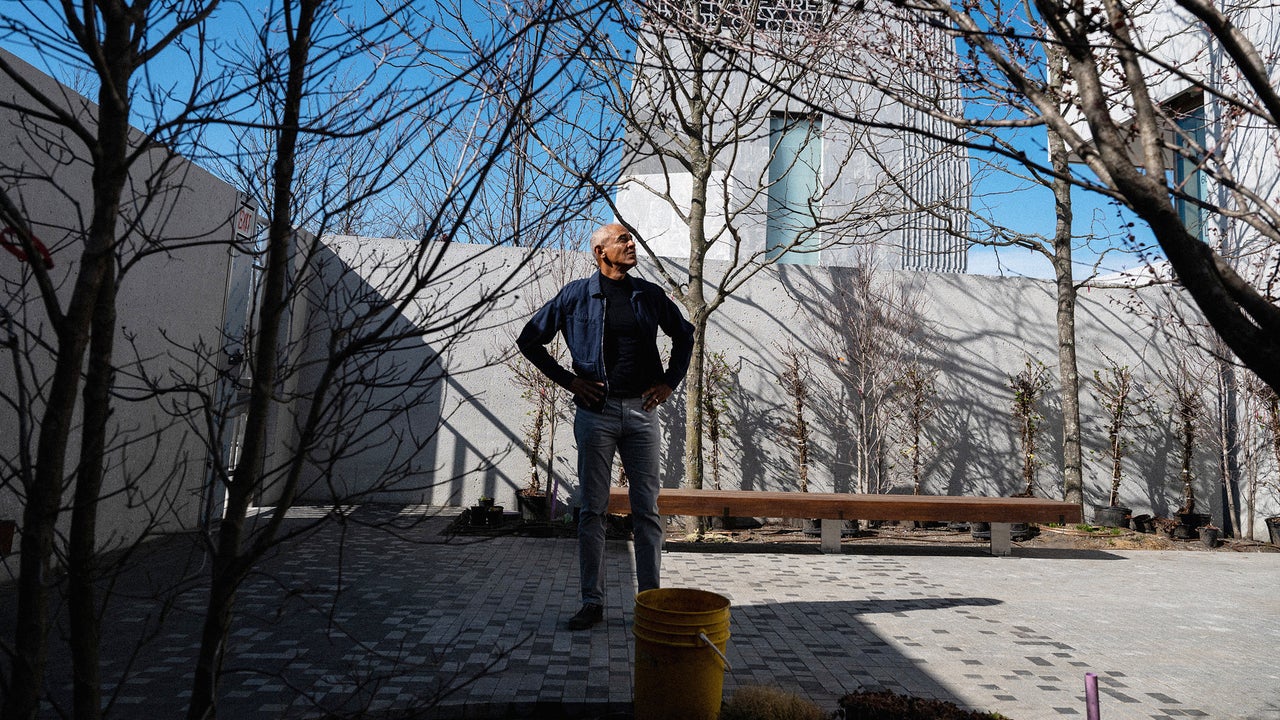
FastCompany: The imposing granite tower of the new Obama Presidential Center that’s risen from a public park on Chicago’s South Side is, depending on one’s aesthetic and political views, either jarring or monumental. But for all the hand-wringing that has come and will follow about the $850 million tower, it’s not the most important, or even the most interesting, thing about the project. In addition to being a significant piece of architecture representing the work and legacy of a president, the Obama Presidential Center is also one of the more environmentally ambitious large urban development projects to emerge in the U.S. in recent years.
From the microorganisms at the roots of its trees to its carbon-free operation to the citywide benefits of its stormwater management system, the Center is performing on a lot of different levels. When it opens to the public June 19, the Center will generate more power than it uses, balance its heating and cooling through an underground network of geothermal wells, reuse or recycle nearly all of the rainwater that falls on it, and blend most of its built footprint so thoroughly into its site in Jackson Park that it will actually create a net increase of parkland.
For all the pieces of the project that make it unique—the signature obelisk-shaped tower at its core, its location in a public park on Chicago’s South Side, and the decision by former President Barack Obama and his foundation to eschew the conventional presidential library model—its most impressive aspect may be its deep focus on sustainability. The sustainability measures put in place at the Center and across its 19-acre campus are, in a way, a representation of Obama’s presidency.
Improving the environment and combating climate change were key elements of his agenda, and the Center is a built extension of what he sought to achieve while in office, according to Valerie Jarrett, a longtime senior adviser to Obama and now the CEO of the Obama Foundation, the developer of the Center. “We’re maximizing the opportunity to showcase how you can do a large-scale development with a deep appreciation for sustainability, prioritizing it not as an afterthought but as central to our mission,” Jarrett says.
“Our expectation is that this will be a template for others to follow.” It was a given that the Obama Presidential Center would be a “green” building, but the foundation was looking far beyond earning a certification or slapping a plaque on the wall. [Photo: Angie McMonigal/The Obama Foundation] Designed by Tod Williams Billie Tsien Architects (TWBTA), the project’s most visible element is its 225-foot tower, which houses the four-story Obama Presidential Museum and a Sky Room observatory on the top floor. Through an underground base level, the tower connects to an events space called the forum and a branch of the Chicago Public Library.
A separate community center and gymnasium, designed by the architecture firm Moody Nolan , sits farther afield. The all-electric campus spreads across four buildings covering 276,000 square feet (6.3 acres), and it sits atop a campus-wide geothermal heat pump system that uses the constant temperature of the earth to regulate its heating and cooling. On a day-to-day basis, even in Chicago’s cold winters and humid summers, the Center will operate without any fossil fuels. The tower is a rare large building in this region that’s able to operate using just electricity, but its aesthetics are divisive.
Article truncated for readability. Read the full piece →
The article discusses a significant urban development project that aligns with contemporary values of sustainability and community, making it highly relevant and impactful for brand strategy professionals.
Weekly digest
Get the Signal digest
Every Monday morning — the top 3 brand trends, 10 high-signal articles, and one emerging signal to watch.
No spam. Unsubscribe anytime.