Score
The real reason Silicon Valley’s architecture is so boring
The architectural landscape of Silicon Valley reflects a unique blend of utilitarian design and a focus on innovation, which has historically prioritized functionality over aesthetic grandeur. As tech giants evolve, their corporate architecture is beginning to mirror their wealth and ambition, yet it remains largely isolated from the public, lacking the civic engagement seen in other iconic urban centers. For brand strategy, this highlights the importance of aligning physical spaces with brand identity while considering how these spaces are perceived by both employees and the broader community.
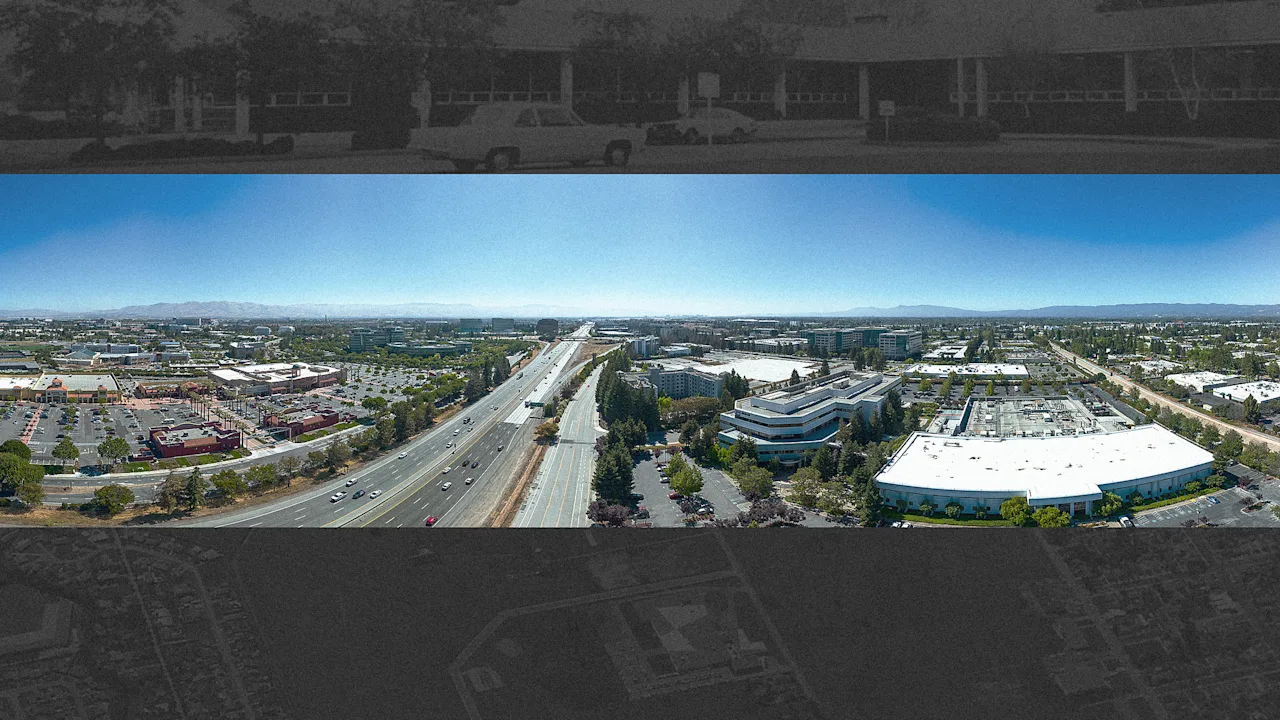
FastCompany: Never in human history has there been a greater concentration of wealth than in Silicon Valley. The three most valuable corporations in the world have their headquarters in the region, within a few miles of one another, in addition to many other unfathomably wealthy people and companies. It would logically follow that such a place would have some of the world’s finest architecture, as we’ve seen in previous centers of economic power. Think: Beijing in the Ming Dynasty, Venice in the Renaissance, New York and Chicago in the early 20th century.
But no, Silicon Valley looks like just about any other American suburb (with a few notable exceptions). The future is invented in boxy office parks shielded from the street by hedges and parking lots. Tourists who come to see the global epicenter of innovation inevitably leave disappointed. Cupertino, CA. [Photo: Wangkun Jia/Adobe Stock] This disconnect periodically causes a stir on social media. Matthew Yglesias captured the mood of a recent round of X discourse, posting , “The tech industry would be so much cooler if it built iconic skyscraper headquarters instead of this lame office park bullshit.” How did Silicon Valley end up like this?
It’s partially the story of a place that came into its own in the mid-to-late 20th century, a time when sprawl was the overriding mandate of American urban planning. But there are actually more particular reasons for Silicon Valley’s architectural identity, rooted in the tech industry’s history and ideology. Stanford Research Park (then called Stanford Industrial Park), 1955. [Photo: courtesy Stanford University] Research Park inc. In 1953, Stanford University and the city of Palo Alto opened a new joint development about a mile from campus called Stanford Industrial Park.
The university marketed the complex as a hub for “smokeless” industry, where university affiliates could commercialize their cutting-edge research. It was immediately an enormous success, incubating Silicon Valley giants like Varian Associates and Hewlett-Packard, and later, Meta and Tesla. The first building in Stanford Research Park, Varian Associates, 1953. [Photo: courtesy Stanford University] Stanford Research Park, as it’s now known, is a fairly ordinary-looking office park to contemporary eyes. But at the time of its construction, there was nothing like it in the world.
Its design reflected its identity as a fusion of the university, the factory, and the corporate office, Louise Mozingo writes in the book Pastoral Capitalism: A History of Suburban Corporate Landscapes . Stanford Research Park employed modernist architectural principles dictating the arrangement and spacing of buildings. The office park’s developers were required to leave more than half of the land area as open space, and to establish 90-foot landscaped buffers separating buildings from surrounding streets, much like the rules governing tower-in-the-green-style housing projects going up in central cities.
Stanford Research Park’s zoning rules were based on earlier policies enacted by the neighboring city of Menlo Park in its “Administrative, Professional, Executive, and Research” zone in 1948. This was the ur-code for office park zoning, mandating strictly limited lot coverage, large lot sizes, generous parking requirements, and banning noxious industrial processes. Silicon Valley may have pioneered the economic and regulatory frameworks for office park development across the U.S., but it did so with a local flavor. Varian Associates main entrance, 1953.
Article truncated for readability. Read the full piece →
The article discusses the architectural trends in Silicon Valley and their implications for brand identity, which is significant but not groundbreaking, offering moderate relevance to brand strategy professionals.