Score
Lego’s largest, most complex set ever is a must-have for architecture lovers
Lego's new Sagrada Família set exemplifies how brand strategy can leverage iconic architecture to create immersive and complex products that resonate with consumers. By honoring Antoni Gaudí's vision through thoughtful design, Lego not only enhances its product line but also deepens its connection with architecture enthusiasts, showcasing the brand's commitment to creativity and craftsmanship.
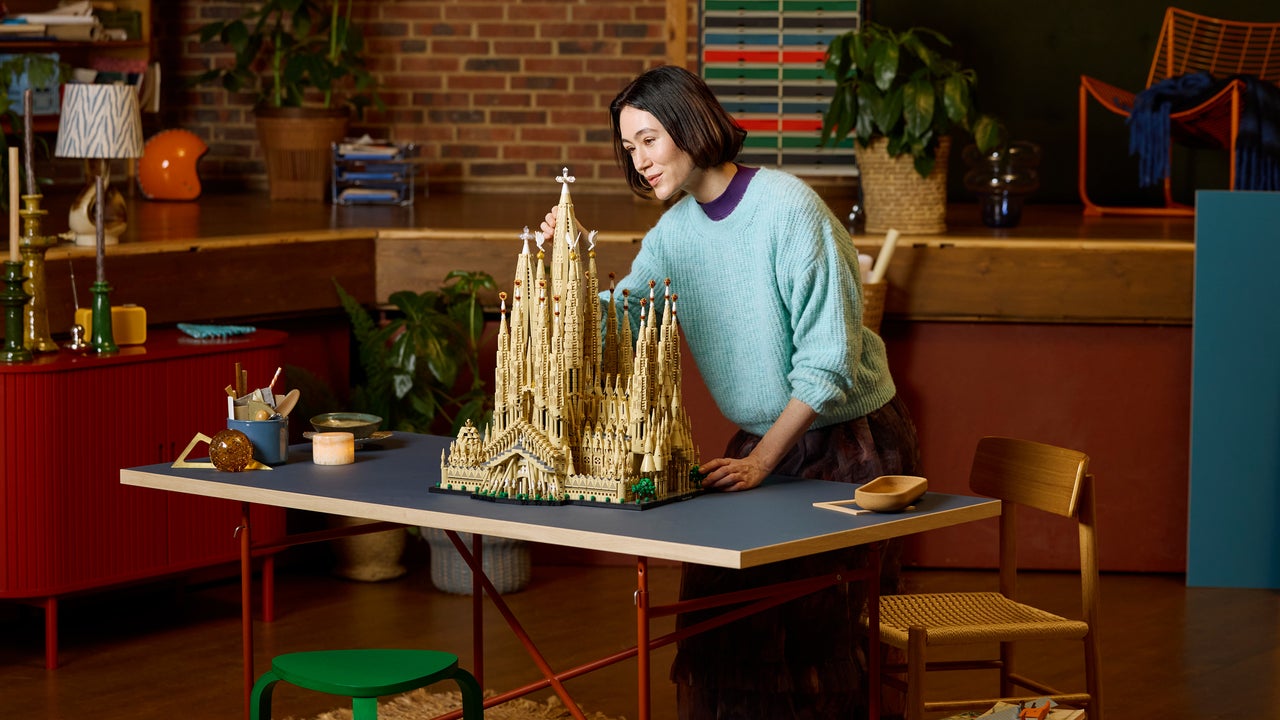
FastCompany: There are 12,060 reasons to clear your weekend calendar. That is the piece count of the new Lego Sagrada Família . It’s the largest, most complex Lego set ever made by piece count, designed around one of the most visually audacious buildings in history. Priced at $800, it is not for everyone, but it sure beats paying for a flight to Barcelona to fight the swarms of tourists buzzing around this iconic landmark. [Photo: Lego] Lego has produced oversized sets before, many of them bloated monuments to their ambitions , but this one earns every single brick.
Translating Antoni Gaudí’s century-spanning, organically erupting, mathematically impossible basilica into a display object you can fit on a bookshelf is not a flex. It is a massive design problem that Lego designers have solved masterfully . [Photo: Lego] The set, measuring 24 by 18.5 by 15 inches, is truly the ultimate Lego Architecture masterpiece, a product line that translates most famous architectural marvels into bricks.
It is a genuine attempt to bring one of the most visually complex buildings ever conceived—a cathedral that has been under continuous construction since 1882 and still isn’t finished—into a display object that captures its essence in an impressionistic way, but with apparent perfect precision. The mission, as Lego designer Rok Žgalin Kobe frames it , was not to simplify Gaudí’s vision but to honor it. “We felt an immense responsibility to do justice to the Sagrada Família through this design,” Žgalin Kobe says.
“Our goal was to honor Gaudí’s vision with the utmost respect, capturing the rhythm of the basilica’s construction, its extraordinary complexity and ambition, and translating that into an immersive building experience.” [Photo: Lego] The key for Žgalin Kobe’s translation is not replication but psychological suggestion. The cluster of bricks that he uses to build the towers, for example, does not recreate the soaring stone nave brick by brick; it gives your brain just enough geometric information to recreate one in your mind.
Lego works because the brain fills the blanks, and the better the designer, the less the brain has to work to complete the illusion. With the Sagrada Família, Gaudí’s towers are encrusted with organic, nature-inspired ornamentation—stone that looks like it grew rather than was carved. [Photo: Lego] Surreal masterpiece The Sagrada Familia is one of the great unfinished stories of modern civilization. Construction began on March 19, 1882, commissioned by the devout Catalan bookseller and philanthropist Josep Maria Bocabella.
The first architect, Francisco de Paula del Villar, abandoned the project in 1883 after disagreements with Bocabella’s architectural advisor, Joan Martorell, leaving little more than the crypt complete. Antoni Gaudí, then 31 years old and already radically unconventional, took over that same year and threw out everything, reimagining the structure as a vertical forest of organic towers, parabolic arches, and stained glass designed to flood the interior with colored light. He knew he would never see it finished. “My client is not in a hurry,” he reportedly said.
Article truncated for readability. Read the full piece →
The article highlights a significant product launch by Lego that merges brand strategy with architecture, making it impactful and relevant for professionals in the brand and design industry, while also showcasing a novel approach to product development.
Weekly digest
Get the Signal digest
Every Monday morning — the top 3 brand trends, 10 high-signal articles, and one emerging signal to watch.
No spam. Unsubscribe anytime.