Score
How Gayle Kabaker Turned A Whisper At The Met Into A Life Of Pools Brides And Quiet Rebellion
Gayle Kabaker's journey as an illustrator for The New Yorker highlights the importance of persistence and adaptability in brand strategy. Her ability to embrace a unique artistic style, despite initial resistance, demonstrates how staying true to one's vision can lead to significant opportunities and recognition. This approach can inspire brands to cultivate authenticity and resilience in their own narratives.
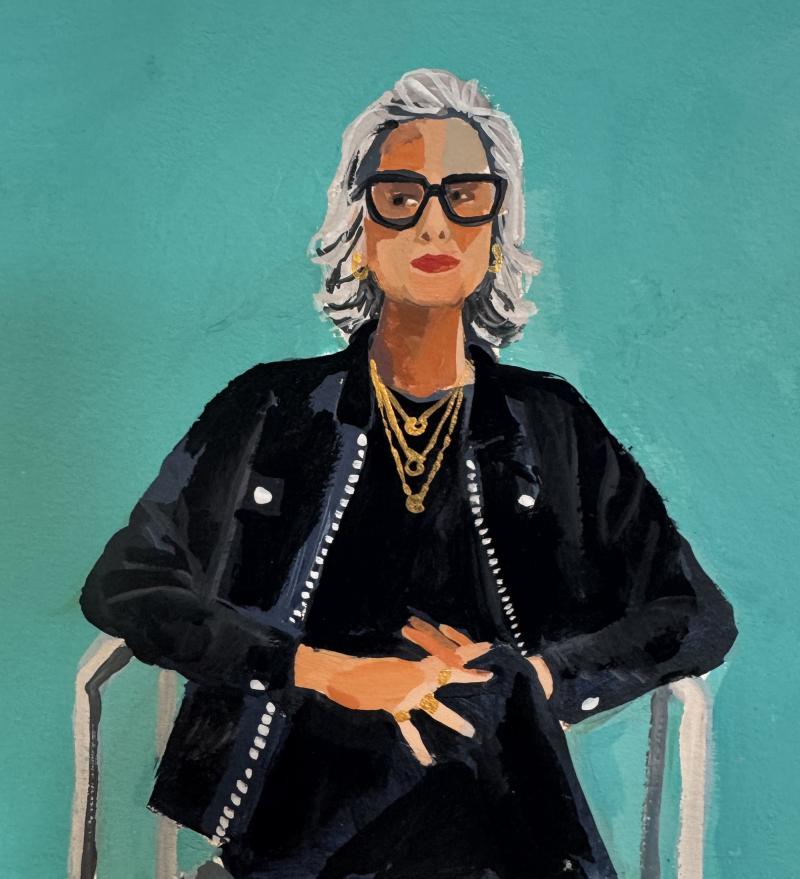
Creative Boom: Inspiration Illustration How Gayle Kabaker turned a whisper at the Met into a life of pools, brides, and quiet rebellion The New Yorker cover artist on why a cover still feels like a miracle, the morning David Hockney died, and learning to paint bedding like water. Written By: Katy Cowan 18 June 2026 Hockney-inspired self-portrait © Gayle Kabaker Gayle Kabaker has illustrated some of the most recognisable covers The New Yorker has ever run, but she will be the first to tell you the gigs always astonish her. "It never stops feeling like a miracle," she tells Creative Boom.
"Partly because I send so many ideas and finished paintings that I get no response back, or that get rejected, so when I do get a cover, that's why it seems miraculous. But the joy of seeing my art on the cover of The New Yorker just never changes, either. It's always such a thrill." It's this mix of persistence and wonder that runs through everything she makes. It was there, too, at the very beginning. Her first New Yorker cover, June Brides, marked a turning point in her career as well as how she paints. She had started working in a looser, more painterly style, and at the time it met resistance.
"My agents at the time said they didn't think it was a very marketable style and they didn't want to put it on the website," she remembers. When the possibility of a cover came along – in exactly that new style – she pushed back. "I kind of insisted that they put this new style of work up. Maybe it is marketable, and it turned out I was right." She had a hunch that the disappointment might be hiding something better. The painting that became June Brides came out of a family show she staged around 16 years ago, a body of work full of women in beautiful gowns that, to her dismay, sold only a few. "I was actually quite disappointed," she says.
"But within six months, I had turned one of those paintings into June Brides, which became my first New Yorker cover. So I'd say I had a better outcome than I would have if I had sold all the paintings from my show. I always try not to be attached to the outcome I'm hoping for, because maybe the universe has a better plan." All The New Yorker covers © Gayle Kabaker Swim, The New Yorker © Gayle Kabaker Brides Send, The New Yorker © Gayle Kabaker The morning, everything stopped Her openness to redirection was tested earlier this month, when Gayle woke to the news that David Hockney had died at 88.
"I saw it first thing in the morning, and I immediately texted my artist friend Noah Woods, who met me in Paris last June, so that both of us could go to the Hockney exhibition for two days." She put aside her plans and sat down to write – a newsletter about how deeply his work had shaped hers, and the whole story behind it. The story began at the Met, in front of one of his pool paintings. "I heard a whisper saying you must paint people in pools," she says.
"I followed this guidance, and it took me down a path of starting to paint people in pools, and made me start to paint water and oceans in a completely different way." Her approach to water is now far more interpretive, almost abstract. She photographs her subjects, then converts the images to high-contrast black-and-white, so she reads everything in terms of shapes and tones. "The more I draw on location, the more I start to see things clearly, then I interpret them however I want to make it my own view." In the days after Hockney's death, she gave herself completely to his work.
Article truncated for readability. Read the full piece →
The article showcases a unique personal journey that emphasizes authenticity and resilience in brand strategy, making it relevant and inspiring for professionals in the industry.