Score
SpaceX’s insane IPO valuation is based on a sci-fi tale
SpaceX's ambitious plans for a $1.75 trillion IPO, driven by a vision of launching a million AI servers into orbit, may be more science fiction than feasible reality. This highlights the importance of aligning brand narratives with technological capabilities and market realities, as overpromising can lead to investor skepticism and potential brand damage.
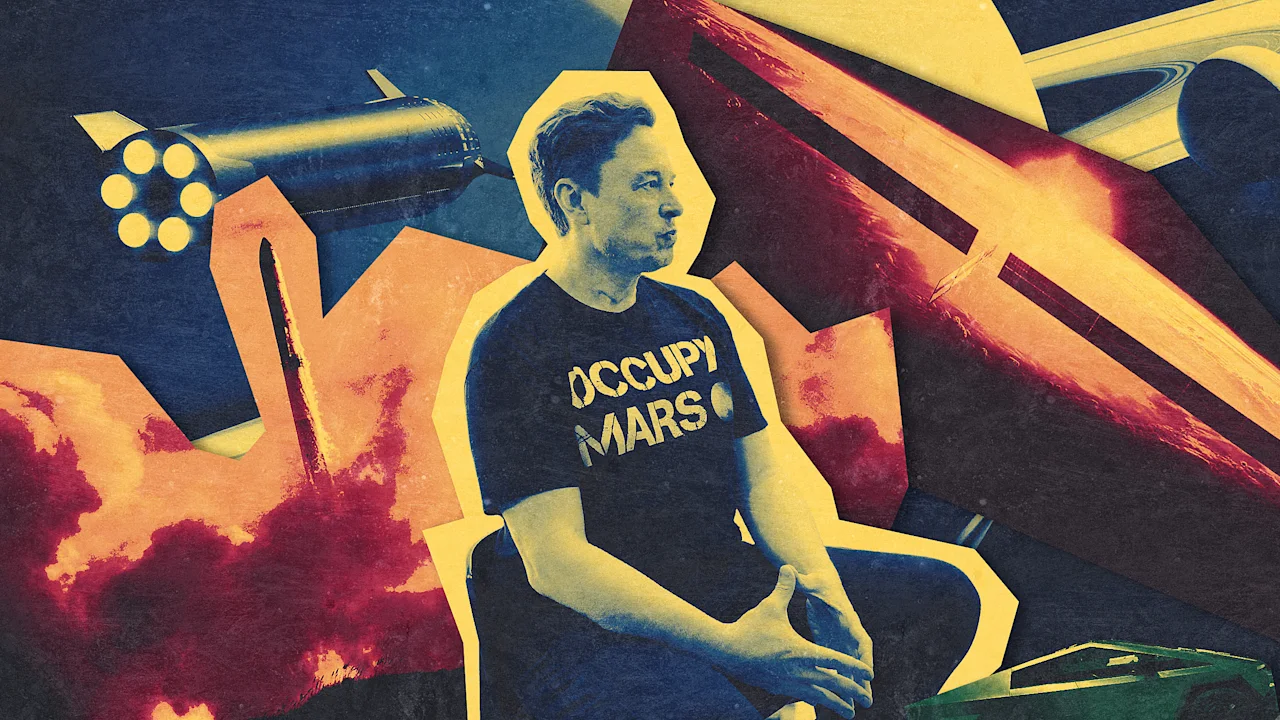
FastCompany: Elon Musk wants to execute the largest initial public offering in history, chasing a staggering $1.75 trillion to $2 trillion valuation for SpaceX. To justify this unprecedented price tag, he is aggressively hyping a cosmic vision: launching 1 million artificial intelligence servers into orbit to create a 100-gigawatt space data center in the next decade. He plans to one day build a factory on the moon to catapult these servers to Earth’s orbit. If that sounds like the background plot of a boring space movie, it’s because it is science fiction.
The TL;DR: here is that Musk’s blueprint is fundamentally broken, according to experts in physics, aerospace engineering, and chip design. It ignores basic thermodynamics and the logistical impossibility of extraterrestrial manufacturing. Even if the talented SpaceX engineers perform multiple miracles to make their CEO’s plan work, the real timeline spans decades, not years, as Musk has proposed.
Outside a SpaceX facility in Hawthorne, California, on April 2, 2026 [Photo: Mario Tama/Getty Images] This sci-fi narrative masks a vulnerable core business that, despite being the current leader by a wide margin, could lose its launch monopoly to cheaper Chinese rockets and face a fatal technological disadvantage in the upcoming space cellular war. Sound familiar? Yes, SpaceX 1.0 could quickly become Tesla 2.0.
And yet Musk—who, remember, has a long history of delays in his enterprises—boldly claims that SpaceX can build the required lunar infrastructure for his million-satellite plan in less than a decade, and that his orbital AI computing idea can reach cost parity with terrestrial AI farms in just two to three years. According to the experts I’ve spoken to, this timeline is unlikely to play out. And if you’re planning to spend your money on Musk’s latest pipe dream, you should pay attention to what the experts are saying.
Those pesky physics Down on Earth, when a computer processor gets hot, a fan blows ambient air across it (it can be liquid-cooled, but that radiator also needs to radiate out the heat through air). The air absorbs the thermal energy and carries it away through a fluid motion called convection. In space, it’s a different story. Space is a vacuum, so there’s no air to carry the heat away. Electronics must shed their thermal energy by glowing, radiating it away as infrared light.
A slide from the SpaceX Terafab announcement on March 21, 2026 [Image: SpaceX] “Refrigeration in space is more challenging than on Earth because standard systems rely on gravity to manage liquids and gases,” Harvard astrophysicist Avi Loeb tells me in an email interview.
Article truncated for readability. Read the full piece →
The article discusses a significant IPO valuation of a major company and its implications for brand strategy, making it highly relevant and impactful for industry professionals while also presenting a somewhat novel perspective on the intersection of brand narrative and technological feasibility.
Weekly digest
Get the Signal digest
Every Monday morning — the top 3 brand trends, 10 high-signal articles, and one emerging signal to watch.
No spam. Unsubscribe anytime.