Score
Your next hike could be at a Microsoft data center
Microsoft is implementing a nature-positive approach in the design of its data centers to mitigate environmental concerns associated with these facilities. By integrating landscape design and ecosystem restoration efforts, the company aims to create habitats and recreational spaces around its data centers, thereby improving their public image and reducing their ecological footprint. Brand strategists can take note of how Microsoft is leveraging sustainability to enhance its brand reputation in the tech industry.
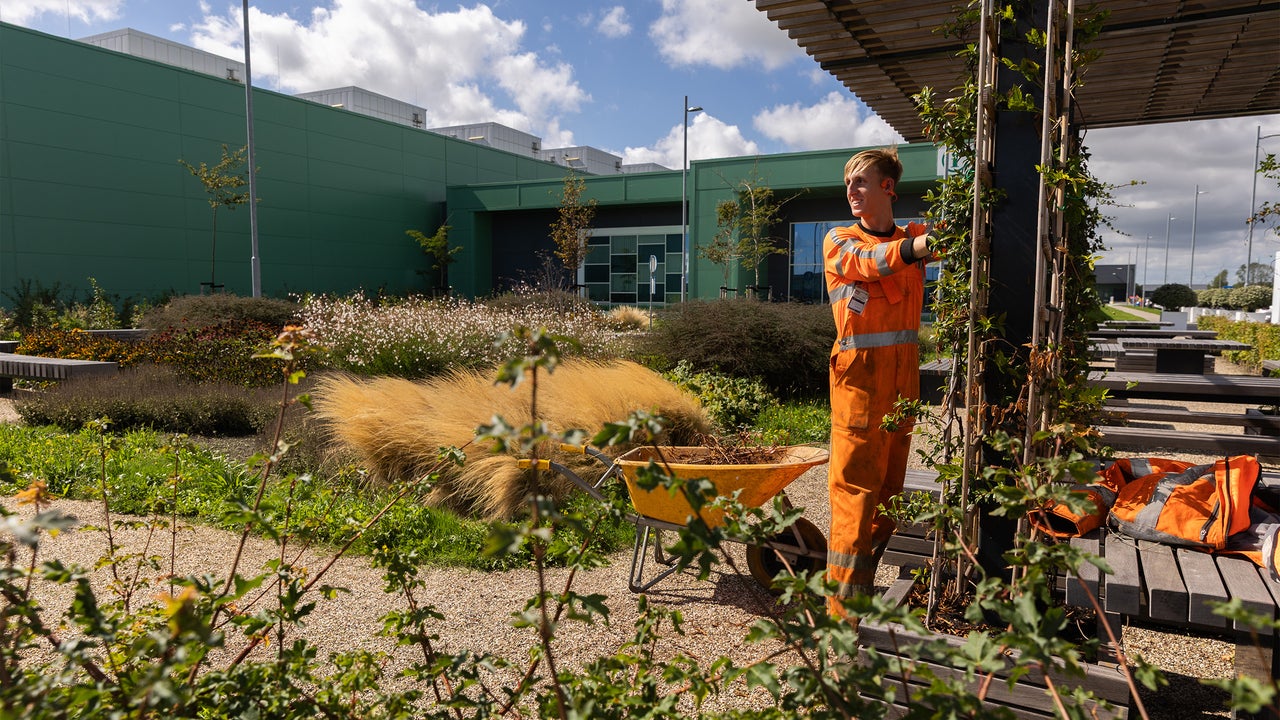
FastCompany: The growing opposition to data centers tends to stem from concerns about the environmental toll of these massive, resource-intensive facilities. Their high use of land, energy, and water has turned some communities and elected officials against the projects, and noise pollution has led to lawsuits. Meanwhile, It’s expected that the power demands of data centers will continue to rise, more than doubling from 2025 to 2027 . To try to soften some of the negative impacts, Microsoft is designing its new data center projects to give a little back to the environment.
The company is making landscape design part of every data center it builds in the U.S., along with select international projects. “We are taking a nature-forward, nature-positive approach to how we steward the land where our data centers sit,” says Kaitlin Chuzi, director of global land strategy at Microsoft. More than 20 of Microsoft’s current data center projects include ecosystem creation and restoration efforts around the sites, adding native plants, animal habitat, and natural areas for use by people in their surrounding communities.
In some cases this effort is creating dozens of acres’ worth of new habitat, miles-long hiking trails, and restored waterways. It’s an attempt to shift the public image of data centers from cacophonous energy and water hogs to something more bucolic. Even large-scale ecosystem improvements are unlikely to mitigate the full environmental costs of the data centers being built today. But Microsoft’s effort is at least a sign that the companies behind the AI boom are beginning to think about how they can reduce their negative impact and better integrate them into their surroundings .
“Really what this program is about is blurring the line between nature and technology, and how important it is to get data centers not just fitting into their surroundings but learning how to belong and contribute back so that landscapes and communities can be better than how we found them when we arrived,” Chuzi says. A photo taken on July 31, 2026, shows an aerial view of agricultural land acquired by Microsoft in Middenmeer, the Netherlands, near its existing data centers, where the company plans future development.
[Photo: Mouneb Taim/Anadolu/Getty Images] The effort is based on what Microsoft learned during a pilot project it undertook in 2022 around a data center near Amsterdam, where the company worked with local landscape architects to plant 150 native trees and a half acre of shrubs and grasses. The trees visually buffer the data center amid the flat landscape of the Netherlands, while the planting adds more habitat for local fauna, as well as an outdoor space for employees surrounded by a garden. Microsoft is now applying that approach to more locations.
The company has developed a set of ecosystem design playbooks based on ecological research for each major biome where it builds data centers, with input from the community and local partners. “I think the size and scale of our data centers really can be an advantage,” Chuzi says. “If you can do good on 1 acre of land, there is so much more that you can do as you multiply that up to bigger scales.” For one project in Mount Pleasant, Wisconsin, part of the ecological intervention involved creating a conservation easement for a local creek running through the site, which was restored and gifted back to the community for recreational use.
Article truncated for readability. Read the full piece →
This article highlights a significant shift in how a major tech brand like Microsoft is integrating sustainability into its operations, which is highly relevant for brand strategists looking to enhance brand reputation through environmental initiatives.
Weekly digest
Get the Signal digest
Every Monday morning — the top 3 brand trends, 10 high-signal articles, and one emerging signal to watch.
No spam. Unsubscribe anytime.