Score
Meet The Yorkshire Designer Behind This Summers Official World Cup Scarf Collection
The article highlights the creative journey of Tom Pitts and his studio, Hand Drawn Pixels, in designing nearly 200 official FIFA World Cup 2026 scarves. This project emphasizes the importance of cultural authenticity and visual identity in brand strategy, as the scarves are not just merchandise but symbols of belonging and identity for fans, requiring a deep understanding of diverse cultural contexts.
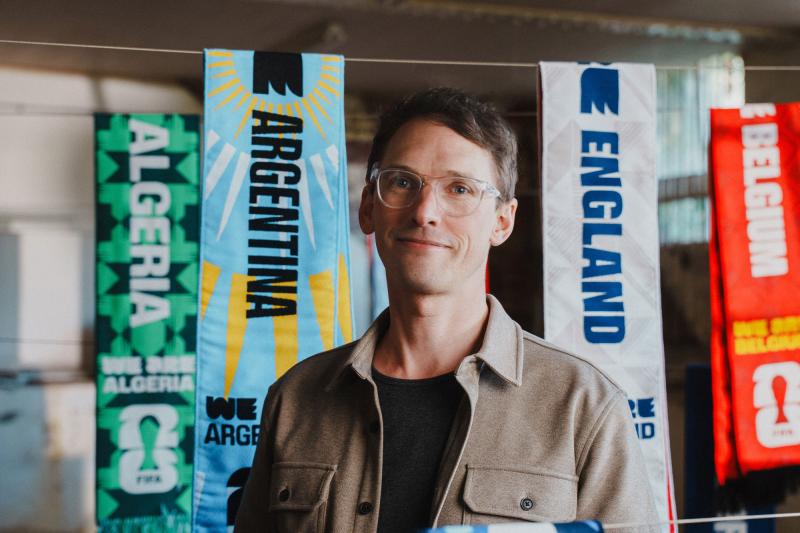
Creative Boom: News Product How a Leeds studio designed nearly 200 World Cup scarves for a global stage Tom Pitts of Hand Drawn Pixels on designing nearly 200 official FIFA World Cup 2026 scarves, and the unprecedented production challenge still ahead of him. Written By: Tom May 27 May 2026 There are big briefs, and then there are briefs that start big and get bigger. Tom Pitts, founder and creative director of Leeds-based creative design studio Hand Drawn Pixels, thought he was signing up to design scarves for a handful of host nations.
What he actually signed up for was a creative marathon involving close to 200 individual designs, each one rooted in cultural research, and engineered to work within the demanding constraints of woven textile production. The client was Global Scarves LLC, a third-generation textile producer with an official licence to produce FIFA World Cup 2026 merchandise. The project grew in stages: first, the host countries and cities; then all 48 qualified nations; and, for Fanatics, a retail range requiring another 48 scarves on top, many of which were then adapted into matchday half-and-half versions.
"We didn't initially realise quite how many designs it would become," Tom says. "Once we got into the rhythm of it, though, it became creatively addictive." For a studio that works across branding, digital, product and campaigns, this was a different kind of challenge: not just depth of craft on a single project, but consistency at scale, across dozens of cultural contexts, with a brief that kept growing. The results are now appearing in FIFA stores, fan festivals and Fanatics-run stadium shops across North America and Europe.
For Tom, a lifelong Sheffield United supporter who grew up steeped in football culture, it also turned out to be something a bit more personal than a product commission. The weight of the scarf For starters, a football scarf isn't merchandise in the conventional sense. "A football scarf isn't just merchandise," points out Tom. "People attach memories to them: games, trips, family, identity, belonging. You become very aware that someone might buy one of these scarves at a World Cup and keep it for the next 30 years. That adds responsibility." This wasn't just a theoretical matter to Tom.
"I've grown up around football culture my whole life," he says. "Matchdays, terraces, scarf sellers outside grounds, all of that subconsciously feeds into your understanding of what makes football visuals feel authentic. It never felt like designing products. It felt like contributing to football culture in some small way." Importantly, the brief called for designs that felt rooted and real, not touristy. "We consciously tried to avoid lazy visual stereotypes wherever possible," Tom stresses.
"Football culture is modern, global and constantly evolving, so the scarves needed to feel like contemporary design pieces rather than tourist souvenirs." Down the rabbit hole The research process was extensive. For each nation, the team looked beyond football into architecture, street culture, folklore, historic kits, typography styles, local art and national symbolism. "The aim wasn't just to make country-themed scarves," Tom explains. "It was to build visual identities that felt rooted in somewhere real." Japan's balance of minimalism, heritage and contemporary graphic culture pulled the team deep.
Article truncated for readability. Read the full piece →
The article showcases a significant project for a major global event, highlighting the intersection of design and cultural identity, which is highly relevant to brand strategy professionals.