Score
Yahoo just redesigned its weather app for the ‘weather geek’ in us all
Yahoo's redesign of its weather app focuses on creating a visually appealing and user-friendly experience that anticipates users' needs and answers common weather-related questions. This strategic shift aims to differentiate Yahoo Weather from competitors by emphasizing simplicity, social interaction, and a joyful brand voice, ultimately enhancing user engagement and loyalty.
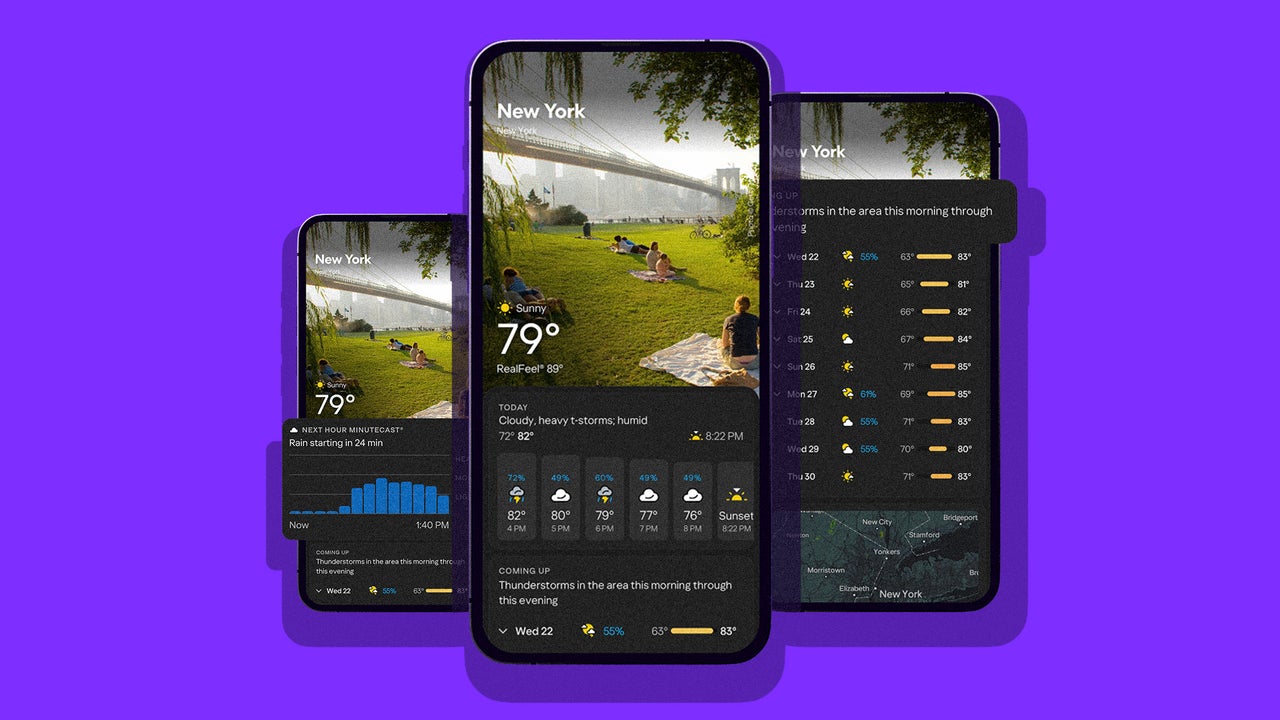
FastCompany: Yahoo just redesigned its weather app for the first time in 13 years, and it might make you want to delete your default app. Much has changed about how people use their smartphones in the past two decades, but checking the weather is one habit that remains almost ubiquitous. In a 2019 study , roughly 90% of smartphone users reported having a weather app on their phone, and, per a 2023 YouGov survey , 53% of Americans use weather apps as their primary source of forecast information. Yahoo’s own data shows that the majority of its users opt to check the weather on the brand’s app rather than its website.
The options for weather apps are practically endless: from Google and Apple’s default offerings to The Weather Channel , the social media-style interface Appy Weather , and the rain gauge tool Precip , users have plenty of tools at their disposal. Despite this glut of options, Mike Park, Yahoo’s head of weather and self-described “weather nut,” believes that most apps out there haven’t entirely caught up with the way that people are habitually checking the weather. “People are not just looking for data, but an easy way to make a decision,” Park says. “They want to know, ‘Should I go outside? What should I wear?
What does it mean that the UV is 10? Is that good for me or is that bad for me?’” In real-life conversations and texts alike, Park says, these are the daily conversations that people are actually having about the weather—and their apps should cater to that. Yahoo Weather’s new app design (powered by data from AccuWeather) is all about anticipating those key questions and building an information architecture that answers them before users even think to ask. Using snappy blurbs and clever visuals, it translates the weather from inscrutable data into easily digestible anecdotes for the group chat meteorologist in us all.
[Image: Yahoo Weather] ‘We want weather to be beautifully simple’ Park’s original pitch for his new Yahoo Weather app design had three stipulations: “It needs to be more visual, more social, and a little bit more fun.” When you first open the app, that visual component is immediately clear. Yahoo has long invested in stand-out photography, Park says, and the initial image that users will be greeted with when they log in is a real photo of their local neighborhood representing that moment’s weather.
Immediately below that image (no scrolling required), they’ll find the current temperature, an hour-by-hour forecast, and a summary of the current weather, like “sun giving way to clouds,” ”clear,” or “sunny and pleasant.” [Image: Yahoo] This first screen was intentionally designed using user feedback. According to Park, users tend to be frustrated if they can’t find the hourly forecast right away—they don’t want to have to scroll or parse through tabs to locate that information. “They loved having all of the key information on one screen,” Park says.
“If you look at competitors, you’ll see that you kind of have to jump around just to get to the hourly forecast. We’re showing you the hourly right away. The other thing that they really loved was the simplicity of how the information is presented. I worked with our designer and we came up with this design principle: We want weather to be beautifully simple .” That simplicity is bolstered by the app’s custom voice. Yahoo’s early ‘90s “ king of the internet ” days might be long behind it, but today, the Yahoo network still has 250 million monthly users who recognize and trust the brand for its optimistic, silly, early-internet vibe .
Article truncated for readability. Read the full piece →
The redesign of a widely used weather app by a major brand like Yahoo is significant for the industry, but the focus on user experience and engagement is a common trend in app development.
Weekly digest
Get the Signal digest
Every Monday morning — the top 3 brand trends, 10 high-signal articles, and one emerging signal to watch.
No spam. Unsubscribe anytime.