Score
Documenting The Last Generation Of Teenagers To Grow Up In An Analogue World
The project 'Tracking Line' by the Paris duo Souffle emphasizes the importance of documenting the tactile experiences and gestures of the last generation to grow up in an analogue world, contrasting it with the instant gratification of today's digital age. By deliberately excluding AI from their creative process, they aim to preserve the authenticity and emotional resonance of physical interactions, which can inform brand strategies that prioritize genuine connections and sensory experiences in their messaging.
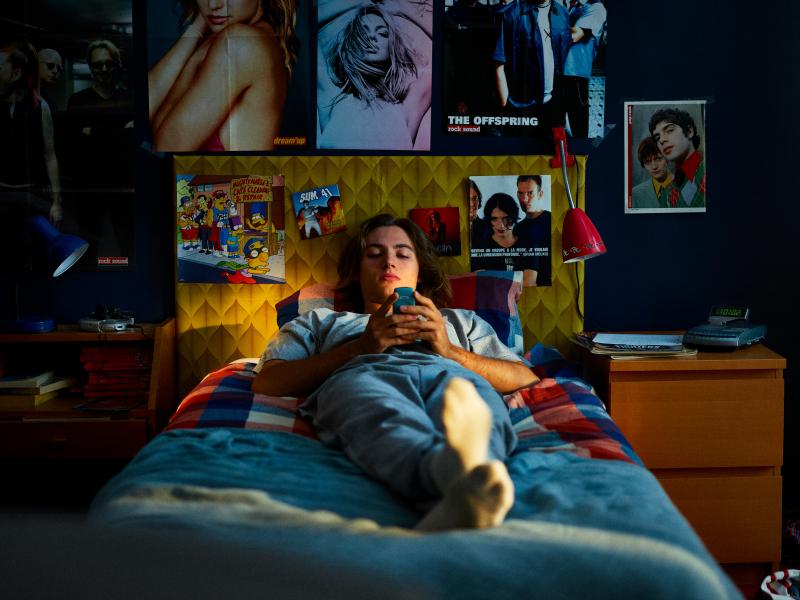
Creative Boom: Inspiration Motion Documenting the last generation of teenagers to grow up in an analogue world Tracking Line is a new series by Paris duo Souffle that pays tribute to the early 2000s, not as an aesthetic but as a vanishing set of gestures and motions. We find out more about the film-and-photo project and why, in 2026, they refused to let AI anywhere near it. Written By: Katy Cowan 4 June 2026 There's a sound only a CD player makes that certain generations can instantly recognise – the soft mechanical click of the tray closing, and the satisfying hum of the disc beginning to spin.
For Richard Dell'aiera, one half of the Paris creative duo Souffle, it was that exact sound, heard again through his own young children, that set a new project into motion. Souffle, made up of Dell'aiera and Sophie Cuffia, work as photographers, directors and art directors, moving between fine still life and narrative, cinematic imagery. The pair met at ENS Louis-Lumière, the storied French film and photography school.
Their latest self-initiated project, Tracking Line, is something quieter and more personal than their commercial output: a poetic, sensory study of the last generation of teenagers to grow up in a mostly analogue world, right on the cusp of the digital revolution. Instead of reaching for the easy iconography of 2000s pop culture, like so many others do, Souffle approached the era as an archaeology of lost gestures... sliding a phone cover open with your thumb, the frustration of a skipping CD, the patience of rewinding a cassette with a biro.
To keep it honest, they built a full set in their studio by hand, largely furnished with their own teenage memories. And in 2026, with AI now part of their everyday toolkit, they made a deliberate choice to keep it out of this one entirely. We spoke to Dell'aiera about the gestures worth remembering, the beauty of small failures, and why some things simply have to be built for real to feel real. Where did Tracking Line begin? My partner Sophie and I have two children, aged three and six. Last year, we bought them a CD player so they could listen to audio stories.
While showing them how to use it, we suddenly realised that this whole process, taking the CD out of its case, placing it in the tray, hearing the mechanical click and the distinct sound of the disc starting to spin, was something that barely exists anymore. It triggered a deep conversation between us about all the physical gestures we used to do daily as kids or teenagers that have completely vanished in the digital age. That exact moment was the spark for the entire project. We realised we needed to document those disappearing gestures and sounds before they vanished completely.
Why did you resist the obvious route of leaning on 2000s pop culture? We resisted the pop-culture route because it would have been the easy, expected version and wouldn't have been true to what we actually remember. We didn't grow up inside an aesthetic; we grew up inside sensations. The pop-culture take flattens the era into a set of references: what interested us was the infra-ordinary, the gestures and textures nobody photographs because they seemed too banal at the time. To us, that's where the real memory lives. Why focus on such a narrow window of time? Those five years are the actual hinge.
Article truncated for readability. Read the full piece →
The project highlights a significant cultural shift and offers insights into brand strategies that focus on authenticity, making it relevant and novel for brand professionals.