Score
Wispr Flow: The Voice Dictation App Rethinking Input
Wispr Flow redefines voice dictation by transforming spoken language into polished text in real time, enhancing user experience through a minimalistic design and context-aware functionality. For brand strategy, this approach emphasizes the importance of seamless integration and user-centric design, positioning Wispr Flow as a collaborative tool rather than just a transcription service.
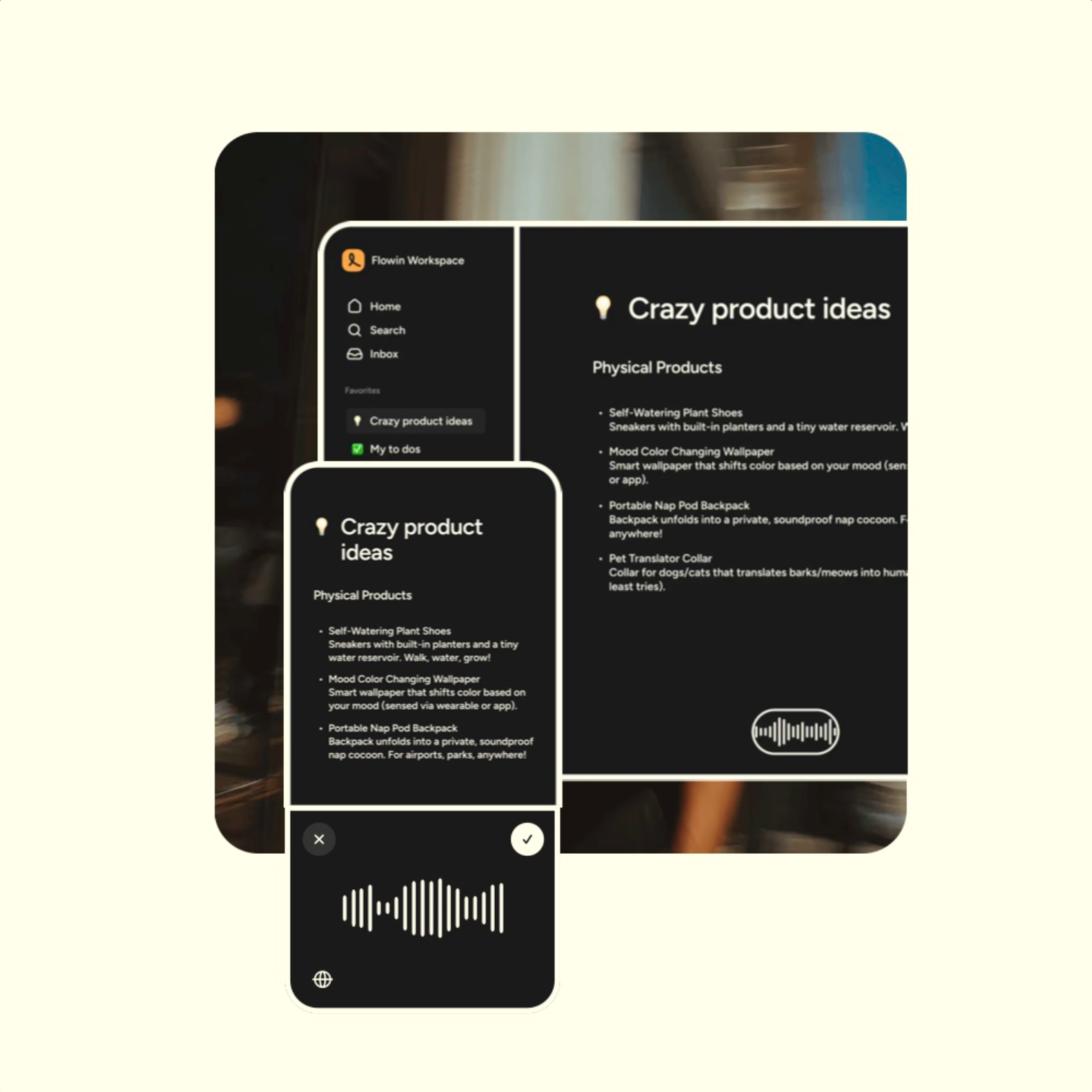
Abduzeedo: Wispr Flow: The Voice Dictation App Rethinking Input kai April 07, 2026 Wispr Flow is a voice dictation app that rewrites scattered, rambling speech into polished prose in real time — silently, across every app on any device. The keyboard has dominated input for 150 years. Most people type somewhere around 45 words per minute. Speaking, on the other hand, runs closer to 220 words per minute — nearly five times faster. That gap has always existed, but the tools to close it have been disappointing. Old-school dictation software produced literal transcripts full of false starts, repeated words, and verbal tics that needed heavy manual cleanup.
Wispr Flow takes a different approach. This voice dictation app does not just transcribe speech; it processes and edits it on the fly, removing filler words, correcting grammar, and shaping the output into clean, context-aware prose before it lands in whatever field the user is typing into. What makes this a design story is how the product chooses to show up. Flow does not launch a separate window or demand a dedicated app screen. Instead, it appears as a minimal dark floating overlay — a slim, unobtrusive panel that activates with a hotkey and sits quietly over whichever application is in use.
The visual language is deliberately restrained: dark background, subtle waveform animation while listening, and a near-instant transition to finished text. There is no mode-switching, no intermediary editing step, and no visible complexity. The UI asks almost nothing of the user. A Voice Dictation App Built Around Context One of Flow's more considered design decisions is its context-awareness. The voice dictation app automatically adjusts tone depending on which application is active. A message drafted in Slack gets a conversational register. A document in Google Docs gets something closer to formal prose.
This kind of ambient intelligence is hard to surface visually, but it changes how the tool feels to use — more like a collaborator that reads the room than a generic transcription engine. The personal dictionary feature shows the same attention to practical friction. Flow learns custom names, technical terms, and brand-specific vocabulary over time, adding them to a user-managed dictionary panel with a clean list interface rendered in light mode against the otherwise dark product aesthetic. The snippet library extends this further: users can define voice shortcuts that expand into full formatted blocks of text.
Saying a cue word triggers the full text — a scheduling link, an FAQ answer, a boilerplate opening. It is a small feature with a disproportionate effect on daily workflow. Cross-Platform Design Consistency Flow runs on Mac, Windows, iPhone, and Android. The product screenshots show a deliberate effort to maintain visual and functional consistency across these contexts. The Mac and Windows versions use the floating overlay model. The mobile versions adapt the same core interaction — activate, speak, receive polished text — to a compact format that fits naturally into the iOS and Android input paradigms.
The before-and-after demonstration on the homepage makes the core value proposition concrete: raw spoken input on the left, finished prose on the right, with the transformation happening in milliseconds. The speed comparison graphic is worth noting as a design choice. Rather than using abstract marketing language, the team used a side-by-side animation: a keyboard input stream at 45 wpm versus the voice dictation app output at 220 wpm, with the visual gap between them widening in real time. It is a clear, quantitative argument made with motion rather than copy.
Article truncated for readability. Read the full piece →
Wispr Flow presents a fresh take on voice dictation technology that could influence user experience design in the brand industry, making it relevant for brand strategy professionals focused on user-centric approaches.