Score
How Joana Machado Made A Book From The Offcuts Of Another Book And It Has A Hole Through The Middle
Joana Machado's innovative approach to book design, which involves creating a unique object from print proofs with a circular cut, challenges traditional notions of what a book can be. This strategy emphasizes the importance of intuition and materiality in design, suggesting that brands should explore unconventional methods and narratives to engage their audiences more deeply.
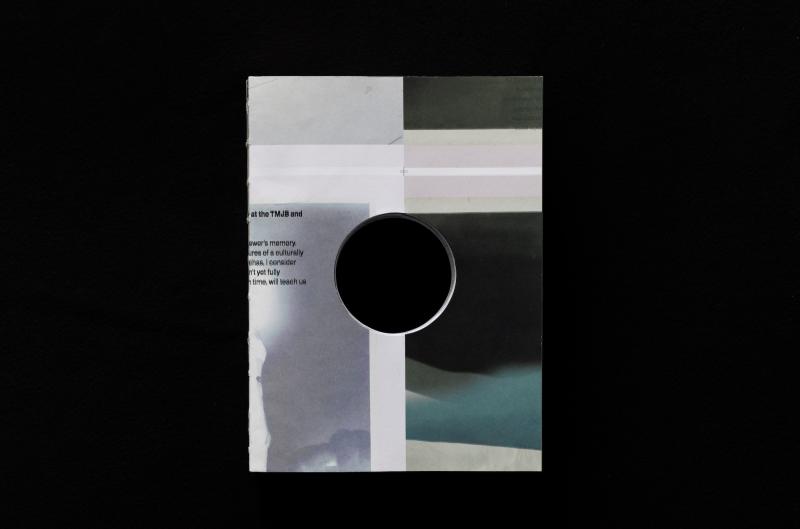
Creative Boom: Inspiration Graphic Design How Joana Machado made a book from the offcuts of another book – and it has a hole through the middle The Porto-based graphic designer turned a pile of offset print proofs into a unique, unrepeatable object, posing questions about what a book can be. Written By: Ayla Angelos 18 May 2026 Book cover ©Joana Machado. Photographs of Filipe Braga There's a story Joanna Machado loves to tell about Roberto Burle Marx, a landscape architect who became world famous for introducing modernist principles to parks and gardens.
One day, one of his assistants approached him in the studio and asked him why he'd designed a garden with those particular curves. He looked up and replied: "Because I like it!" For Joana, a Porto-based graphic designer who has spent 15 years building an immaculate career in art, culture and books, this story threads through her entire philosophy. "My work lives within a certain dichotomy," she tells Creative Boom. "On the one hand, I seek a space more connected to intuition and the inexplicable.
On the other hand, it is characterised by a deep study of each author or artist it engages with." This tension between these dualities is what drives everything she makes. And nowhere is that more visible than in a new object she created at a print shop during the production of someone else's book, almost without planning to. Photos of the book interior ©Joana Machado. Photographs of Filipe Braga Joana studied Communication Design at the Fine Arts Faculty of the University of Porto before completing a postgraduate in the History of Aesthetics of Electronic Art in Barcelona.
Those early years – of shared studios, life drawing classes, and theory classes in anthropology, sociology and aesthetics – gave her an unusually interdisciplinary foundation for what became a practice devoted to one specific form. For the past 15 years, she has worked with some of Portugal's most prestigious cultural institutions – like the Serralves Museum of Contemporary Art, the Porto Book Fair, the MNAC Museum of Contemporary Art in Lisbon and the Julio Pomar Atelier-Museum. The books she has produced for them are the kind that win awards.
In 2022, her catalogue for the Serralves exhibition Agnès Varda: Light and Shadow received the AIGA 50 Books | 50 Covers award in New York. A year later, her book on filmmakers Jean-Marie Straub and Daniele Huillet was nominated for Best Book Design from All Over the World by the German foundation Stiftung Buchkunst. She describes her process for each project as a "dive". For example, when designing for someone like French filmmaker Agnès Varda, she will go deep into the artist's work and life. Same for Jean-Luc Godard: she will watch the films, read the interviews, sit with the texts until the visual language reveals itself in her mind.
"I often say that I design from the inside out," she explains. It is a slow and immersive way of working, which makes what happened at the print shop all the more interesting. Details of the circle ©Joana Machado. Photographs of Filipe Braga Joana had been overseeing the printing of a catalogue for Noé Sendas, the Brussels-born artist whose work in photography, sculpture, collage and video revolves around questions of identity, authorship and the body. Noé's practice involves deconstructing Hollywood film stills, erasing faces and limbs, and superimposing images until they become something new and unsettling.
Article truncated for readability. Read the full piece →
The article presents a creative approach to book design that could inspire brand professionals to think outside the box, making it significant and relevant, though it may not have a widespread impact on the industry as a whole.