Score
How Chili’s got its sizzle back: The untold story of the biggest, most viral restaurant turnaround in years
Chili's has successfully revitalized its brand by embracing a retro, maximalist design and enhancing its menu offerings, leading to a significant turnaround in customer engagement and sales. This strategic shift, spearheaded by CEO Kevin Hochman, focuses on creating a vibrant dining experience that appeals to a younger demographic while maintaining affordability, ultimately positioning Chili's as a leader in the casual dining sector once again.
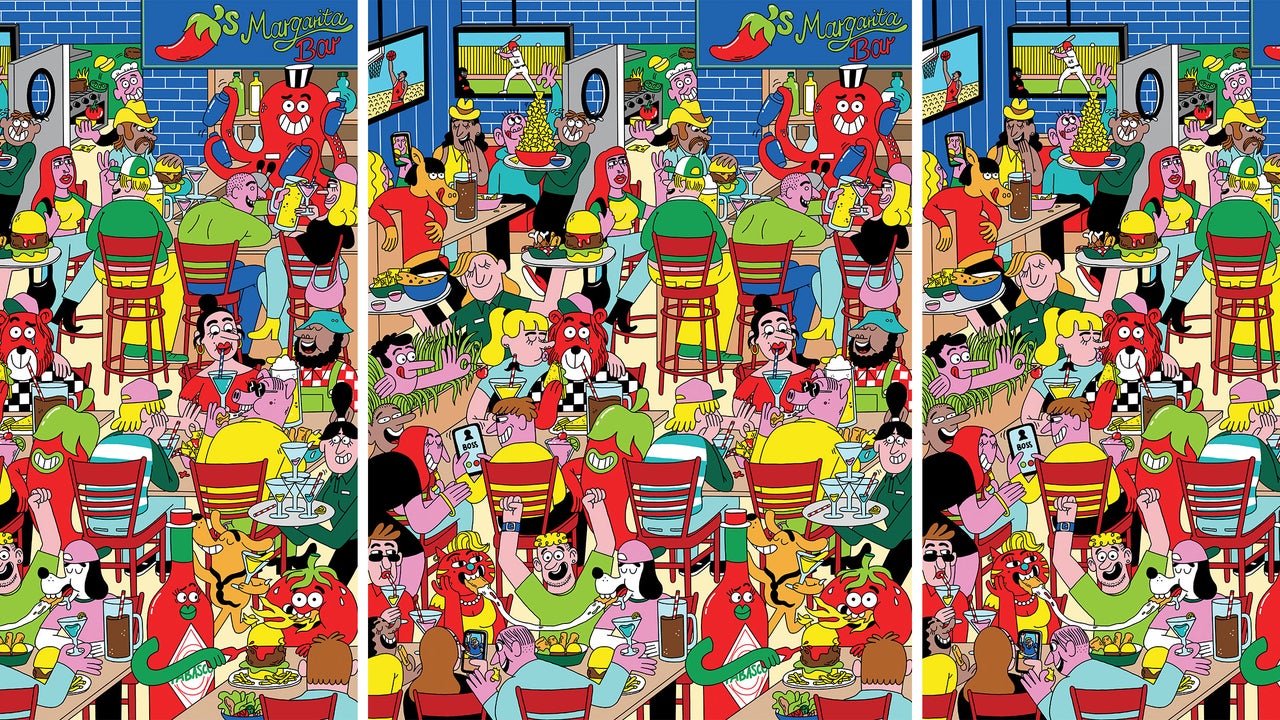
FastCompany: At first glance, the toile wallpaper is pure class: cream-colored and printed with intricate, brick-red drawings. But as I look more closely, I see . . . Wait. Is that a pair of chili peppers riding a Jet Ski? And is that other pepper, the one on a chaise longue, posing nude for a painting? The wallpaper is just one of many decorative flourishes competing for my attention as I sit at a Chili’s restaurant, already on my fourth free iced tea refill. Technicolor tiles blanket the tables and bar, patterned like Mexican ceramics.
Neon-light chili peppers and a framed illustration of a cheese pull (that thing that happens when you bite into a gooey mozzarella stick) hang on the walls. There’s even a chalkboard-style drawing of a bright-red chili pepper at the host stand, just like the one that greeted Chili’s diners throughout the 1990s. In fact, it was made by the same artist, who came out of retirement for the commission. This restaurant, in the McMansion-filled Dallas suburb of Richland Hills, Texas, looks and feels a helluva lot like the Chili’s of old.
You may know what I’m talking about: That salt-crusted gathering place from the days before GLP-1s and inscrutable Uber Eats fees. A place where the Tex always rhymes with Mex, ranch is practically a food group, and no one will judge you for being a grown-up and ordering a dinner that consists solely of appetizers. The spot where your plate of sizzling fajitas snaps necks at other tables when it arrives at yours with a loud sszzzhhhhh .
But it’s actually a prototype for the Chili’s of the future, featuring a retro redesign that will roll out across the company’s more than 1,200 North American restaurants over the next decade, beginning this fall. (Richland Hills is a short drive from Chili’s headquarters in Dallas.) Instead of the cold, industrial interiors that have dominated Chili’s design in recent years, these will be filled with an exuberant mix of color and texture, including that toile wallpaper, which was designed in France.
[Image: Chili’s] This shift back to the brand’s maximalist roots is the brainchild of Kevin Hochman , who became CEO of Brinker International (parent company of Chili’s and Maggiano’s Little Italy) in 2022. A veteran of Procter & Gamble and Yum Brands—where he pulled double duty as president of both KFC North America and Pizza Hut—Hochman has spent his tenure at Chili’s executing what Evercore analyst David Palmer calls “the best turnaround story of all time in restaurants.” Chili’s had been a brand lost for at least a generation.
In the years before the pandemic, it was, like so much of the casual-dining industry, bleeding customers to newer fast-casual brands, like Chipotle, and trying to stanch the wound by lowering prices. After COVID-19 hit, its kitchens were so underutilized that Brinker enlisted them for a virtual concept, It’s Just Wings, and dedicated much of the Chili’s marketing budget to the soulless ghost kitchen brand while cutting back on human waitstaff. Today, Chili’s is on fire.
Article truncated for readability. Read the full piece →
Chili's significant turnaround and strategic rebranding efforts provide valuable insights into effective brand revitalization in the competitive casual dining sector, making it highly relevant and impactful for brand strategy professionals.
Weekly digest
Get the Signal digest
Every Monday morning — the top 3 brand trends, 10 high-signal articles, and one emerging signal to watch.
No spam. Unsubscribe anytime.