Score
Oura shrunk its new ring by 40% and made it look a lot more like jewelry
Oura's launch of the new Oura Ring 5, which is 40% smaller and designed to resemble traditional jewelry, signifies a strategic shift in wearable technology towards aesthetics without sacrificing functionality. This approach aims to broaden the brand's appeal and enhance user experience, positioning Oura as a leader in the competitive smart ring market.
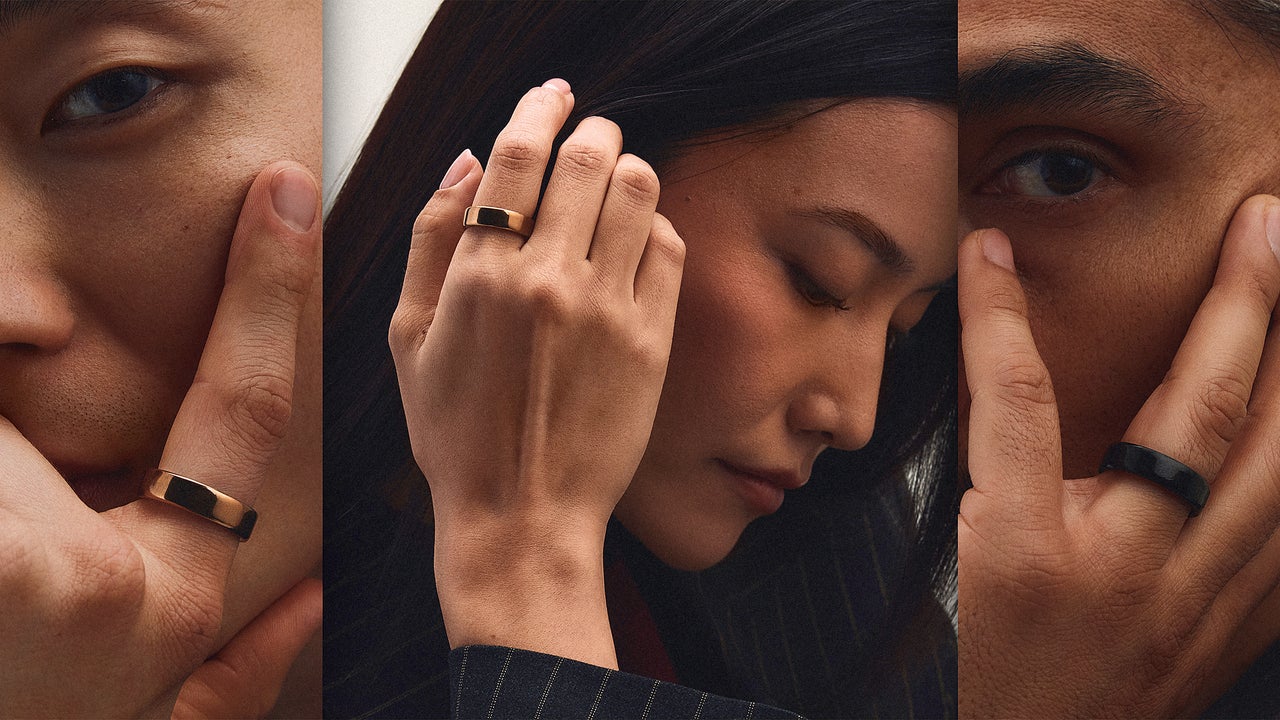
FastCompany: For years, the smart ring has been pitched as a piece of jewelry that happens to read your sleep stages, your heart rate variability, and your blood oxygen. In reality, though, most smart rings are chunkier than anything you would pick at a jewelry store—something that many consumers find annoying. Oura, the Finnish-founded, San Francisco-based company that helped invent the category over the past 12 years, has heard the complaint from its own customers repeatedly. “The feedback we always hear is, ‘We love the power and insights of the ring, but can you make it smaller?'” said Lindsey Belknap, Oura’s vice president of marketing .
“We previously thought it would require compromising on functionality, features, and battery life but we’ve finally made some breakthroughs.” [Image: Oura] Behind the scenes, wearable companies have been on a mission to cram a lot of technology—a battery, LEDs, infrared sensors, an accelerometer, a skin-temperature monitor—into increasingly thinner and more delicate rings. Today, Oura is unveiling Oura Ring 5, a device roughly 40% smaller than its predecessor, with a uniform thickness of roughly 2 millimeters (0.8 inch) and a width that’s been shaved from about 8 mm to 6 mm.
Crafted from scratch-resistant titanium, the ring is waterproof to a depth of 100 meters (328 feet). Preorders open today, with the ring shipping June 4. Pricing starts at $399 and runs to $499. [Image: Oura] How Oura Ring scaled down According to Belknap, the Oura team spent years working on the problem precisely because the obvious approach, shrinking existing parts, was a dead end. “In wearables, reducing size almost always forces you into a trade-off in battery life or accuracy,” she says.
“It took us years to develop this ring because we had to rethink the mechanical and electrical architecture from the ground up.” The answer came down to using fewer sensors rather than smaller ones. Oura Ring 5 has 12 sensing pathways, down from 18 in the previous generation, but Belknap says the remaining ones are more powerful and better positioned. The LEDs that pulse light through the skin to read blood-volume signals are now up to four times stronger than in previous generations, which matters because a thinner ring sits closer to the finger and has less room to capture a clean signal during high-motion activity like running or biking.
[Image: Oura] The battery, traditionally the bulkiest single component in any wearable, was redesigned entirely. The new architecture extends battery life to six to nine days —up from from five to eight days in the previous generation. Oura is also launching a separate, $99 size-matched wireless charging case that holds about a month of reserve power. While Oura has been able to tap into new components that have hit the market over the past few years, many of the parts had to be custom built. “We’re often starting from scratch with partners and producers to make for us,” Belknap said.
The aim, she said, is for the ring to feel “like jewelry first and technology second.” [Image: Oura] The Battle of the Rings Oura crossed $1 billion in revenue in 2025, growing 100% year over year, and is now valued at roughly $11 billion, making it the most valuable standalone wearable company in the world. It sells in more than 4,000 retail doors globally, including Walmart, Best Buy, Target, and Costco, and counts members in 150-plus countries.
Article truncated for readability. Read the full piece →
The launch of a significantly redesigned product in the wearable tech space reflects a noteworthy shift in brand strategy, making it highly relevant for industry professionals focused on product design and consumer appeal.
Weekly digest
Get the Signal digest
Every Monday morning — the top 3 brand trends, 10 high-signal articles, and one emerging signal to watch.
No spam. Unsubscribe anytime.