Score
This Oregon library ditched Dewey Decimal and got people excited about books again
The Deschutes County library system's shift from the Dewey Decimal System to the innovative Wayfinder system represents a significant evolution in how libraries can engage with their communities. By prioritizing a browsing experience akin to that of a bookstore, this strategy not only enhances user interaction but also drives increased circulation and community involvement, showcasing the importance of adapting brand strategies to meet contemporary needs.
FastCompany: American libraries have evolved in recent decades as their role as centers for learning and community expand. Many have added maker spaces , turned into climate resilience hubs , and even become partners in projects to add more affordable housing . But despite all that change, a vast majority of them still organize books with the Dewey Decimal System, a categorizing system developed in 1873, which critics say still has the outdated 19th century social opinions to match .
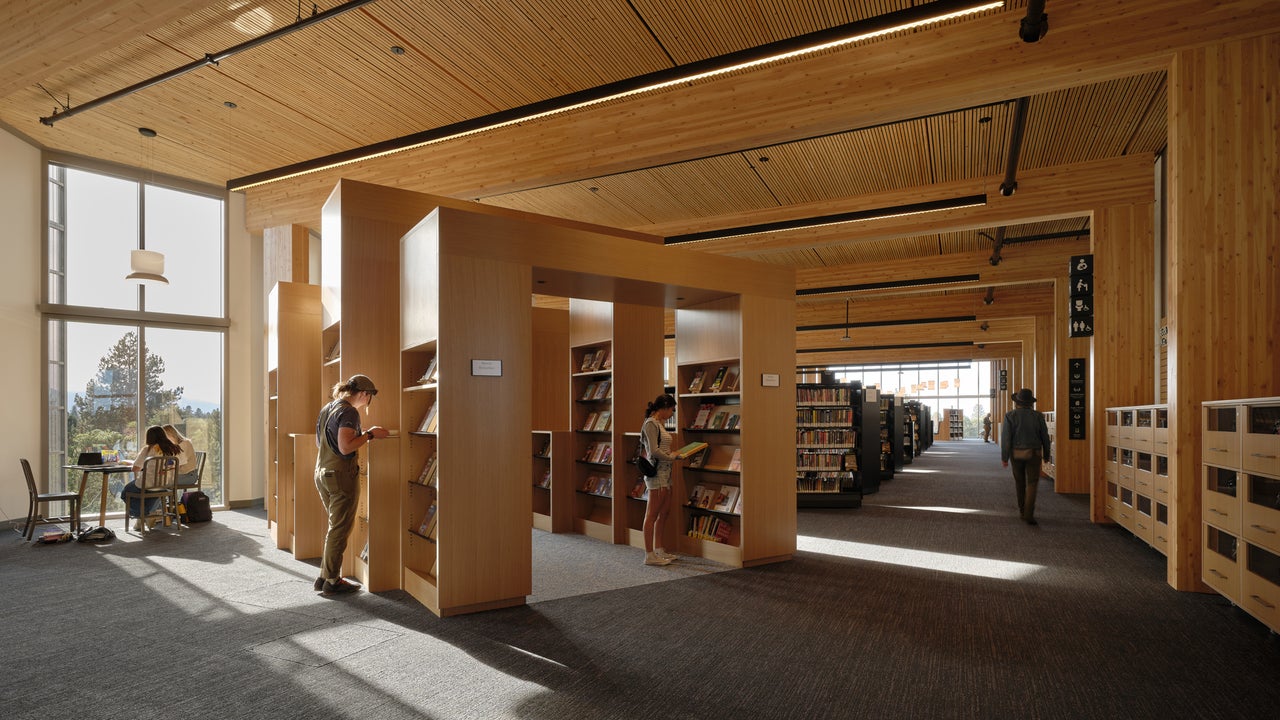
[Photo: Kevin Scott/courtesy Miller Hull Partnership] In Deschutes County, Oregon, the local library system not only said “down with Dewey” but rethought how books should be categorized and displayed. After passing a $195 million bond measure in 2020, the county redesigned all its branches at once, which allowed library staff to conduct an experiment in rethinking how libraries engage readers today.
[Photo: Kevin Scott/courtesy Miller Hull Partnership] The new Stevens Ranch Central Library in Bend, Oregon, a 100,000-square-foot branch designed by architects from the Miller Hull Partnership , features a new philosophy of organization and engagement. In addition to a new set of shelving units designed to feel more like a bookstore, books were placed using the libraries’ proprietary Wayfinder system. “The research that we did told us that the vast majority of library users are actually there to browse,” says Emily O’Neal, a librarian who as technical services manager for Deschutes Public Library helped develop the new system.
“We really embraced the idea of making it as fun and exciting and as unexpected a browsing experience as you could.” [Photo: Kevin Scott/courtesy Miller Hull Partnership] What comes after Dewey In the Dewey method, books are assigned numbers that correspond to their place in broad three-digit categories. For each book, that number is followed by a decimal point and a longer string of digits that correspond to subsections that convey greater specificity. Wayfinder eliminates the Dewey reliance on mere numbers, and instead organizes into broad categories and subcategories.
A book on growing tomatoes, for example, would be in the Arts and Crafts category, in the gardening subcategory. In the Dewey Decimal System, a book on gardening could potentially be in any of the four places in the system that contained gardening content. With Wayfinder, it’s all in the same place. [Photo: Kevin Scott/courtesy Miller Hull Partnership] There have been alterations and expansions to the traditional categories used by libraries in recent decades. O’Neal and her team looked into systems that had done similar projects, such as Markham, in Ontario, and the Maricopa County system in Arizona, outside of Phoenix.
But by and large, the widely adopted Dewey Decimal System remains slow to replace, despite complaints against it. The effort by Melvil Dewey, the developer and library pioneer, to classify and categorize knowledge is filled with blind spots and prejudices, including a number of racial, religious, and sexual biases (LGBTQ+ content was originally filled under “mental derangements”). Dewey himself was called out by librarians of his time for sexual misconduct and lewd advances .
Article truncated for readability. Read the full piece →
The article highlights a significant shift in library branding and user engagement strategies, which can inspire brand strategy professionals to rethink traditional systems in favor of more user-centric approaches.