Score
‘We make people feel something as a result of our work:’ Figma’s chief design officer on how to build impactful technology
Loredana Crisan, Chief Design Officer at Figma, emphasizes the importance of creating meaningful experiences through design, drawing parallels between music and design in their ability to evoke emotions. Her approach to brand strategy focuses on collaboration across disciplines, ensuring that purpose, progress, and community are balanced to prevent burnout and foster creativity. This holistic view of design as a means of communication highlights the need for brands to connect emotionally with their audience.
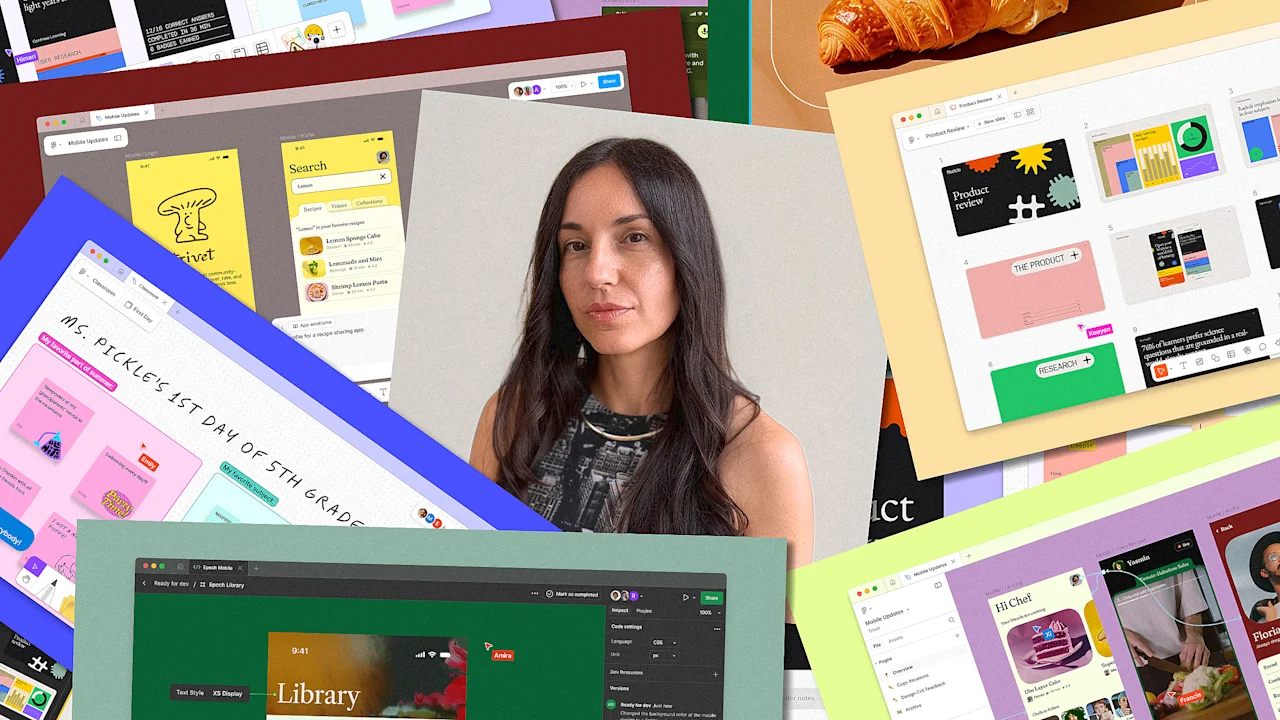
FastCompany: Loredana Crisan says her relationship with creativity started when she was 7 years old, sitting with her mother in her family’s kitchen in Bucharest, Romania. “The question she posed was, ‘Do you want to learn piano,’ and as a kid I was like, ‘Yes!’ –– probably because I was singing in the house.” From then on, says Crisan, she never stopped playing. In fact, she ended up as a student studying classical music in a conservatory. “I was very dedicated to music for a very long period of my life,” says Crisan.
Now, as Chief Design Officer at Figma, Crisan says her musical training has informed her relationship with her work in ways she never expected. “If we are successful, we make people feel something as a result of our work,” she says. Here, she shares how her relationship with creativity has been informed by growing up with the iPhone, her love of cross-disciplinary work and the fight against burnout. This interview has been edited and condensed. I studied classical piano . As a teenager, I actually rebelled against classical music and picked up techno and other types of music production.
This is Romania, like, transitioning from communism to actually being open to Western music and other types of things coming into the country. That was my first exploration phase. That career in music production actually brought me to the United States, where I worked in recording studios as a sound engineer and as a producer. And I did this in San Francisco, coming from Romania to the United States. When I realized that San Francisco was not the recording industry, I realized I had two options in front of me: move to L.A. or join a startup.
Again, my exploratory bent was like, “Let’s join a startup, and figure out what this thing is about.” So I joined a startup called Lexy as a sound engineer to prototype audio interfaces for an assistant-like experience. I was not a visual designer, but what I knew was what it feels to be comfortable creating in a medium. That created this really deep desire for me to learn pixels and be as comfortable with pixels as I was with sound. The only way that I know how to do this is through apprenticeship. You dive in and you learn how to see, just like with piano, you dive in and you learn how to hear. I’m big into neuroscience .
I think about how my brain reacts to different environments that I create for it. If you just go for a walk without any stimulation at all, this thing in your brain that’s kind of like always active, just comes through the surface. Ideas come from there. Burnout is real. Oftentimes what I focus on is like making sure that people have the time to breathe. I actually have a framework for how I lead teams that I come back to often: purpose, progress, and community. All of these have to be in great balance for work to be meaningful and for people not to burn out.
I am very fortunate that at Figma, my seat is across disciplines: the product design team, the research team, the branding team. It allows me to think across all of all parts of the product development because research obviously helps us understand what we want to build next and what the market wants from us. Design looks at what shape that might take. And of course, we collaborate with PMs and engineers. And then on the brand side, we talk about our purpose, how we communicate and what the narrative is about the products that we build. I really thrive in the ability to look across things.
Article truncated for readability. Read the full piece →
The article discusses significant insights from a leading figure in design about emotional connection in technology, which is highly relevant and impactful for brand strategy professionals, though the concepts of emotional design and collaboration are not entirely new.