Score
MoMA explores the useful beauty of information design
The Museum of Modern Art's upcoming exhibition, 'Full Disclosure: The Edge of Information Design', emphasizes the importance of information design in contemporary culture and its role in conveying complex data in an accessible manner. This approach not only showcases the museum's commitment to current artistic practices but also encourages audiences to critically engage with the visual representation of information in their daily lives, ultimately enhancing brand strategy by aligning with values of transparency and relevance.
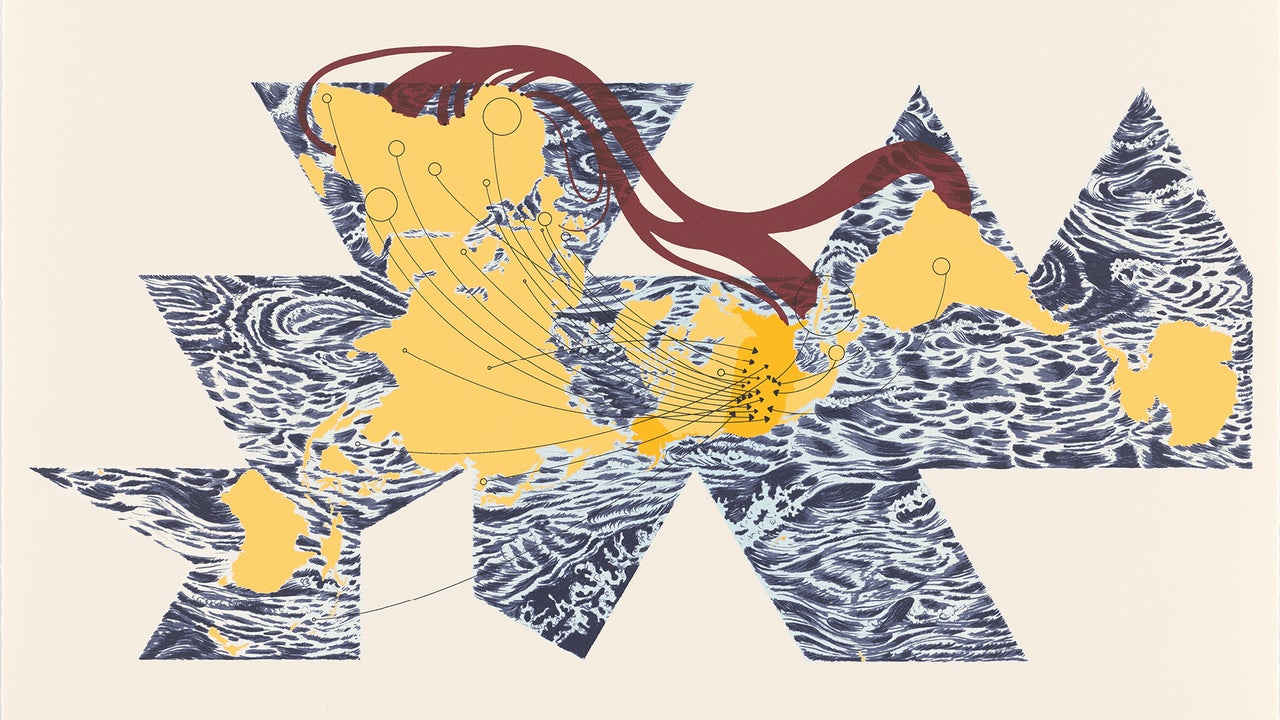
FastCompany: When people post infographics on their Instagram accounts, they’re sharing information and facts about the world with their followers. They’re also trying to convey something about the kind of person they are by distributing these aesthetically pleasing, digestible bites of data. Perhaps they want to make a statement about their own politics or conscientiousness. So what is the Museum of Modern Art revealing about itself as an institution with its forthcoming exhibit Full Disclosure: The Edge of Information Design ?
The pieces of information design in the exhibition “tell us the fact that the museum is always ready to understand what’s important to the world in that particular moment, and to try to give the best examples of it,” says Paola Antonelli, the senior curator of architecture and design at New York City’s MoMA, during a walkthrough of the exhibit as she and her team prepared it for its opening on September 27. “Having an exhibition about information design shows that we’re continuing our mission to talk about the art in our time, of our time.” Ed Hawkins, Warming Stripes, 1850-2025. 2018-ongoing. Courtesy of the artist.
[Image: MoMA] The first piece that visitors will see upon entrance through the museum is Warming Stripes , by climatologist Ed Hawkins, who “wanted to find a way to drill it in people’s brains that global warming is really happening.” The stripes, which over the course of the work go from a deep blue to a bright red, represent the average temperature of each year. The imagery resembles a gorgeous rug—and also a huge warning sign.
To Antonelli, Warming Stripes is an ideal distillation of information design, because the field “takes phenomena big and small, public and intimate, complex, scientific, and statistically more superficial, and renders them in a way that is comprehensible by a wide audience.” The exhibition shows that information design is not limited to weaving huge data sets into legibility. One portion of Full Disclosure focuses entirely on personal data, and includes a correspondence between artists Giorgia Lupi and Stefanie Posavec.
In what became their Dear Data project , the two found creative ways to visualize how many times they cursed in a week, for example. The idea is that the practice of information design can help people connect in a more personal or even playful way with the many nuggets of data that have come to symbolize their lives. Giorgia Lupi and Stefanie Posavec, Dear Data: Week 14 (Abstract Productivity / A Week of Schedules). 2015. The Museum of Modern Art, New York. Committee on Architecture and Design Funds.
[Image: MoMA] MoMA has been collecting works of information design since 2008, when Antonelli debuted an exhibition called Design and the Elastic Mind , which focused on the ways designers have adapted to revolutionary scientific change. As part of her curation, she encountered “all of these different designers that didn’t really have a home,” who worked with data visualization, she says. “I kind of hugged them up.” All but one of the pieces in this exhibition are part of MoMA’s collection. Often, the origination of information design as a practice gets traced back to the invention of the bar chart or Dr.
Article truncated for readability. Read the full piece →
The exhibition highlights a significant trend in information design that impacts brand strategy, making it relevant and impactful for professionals in the industry, though the concept of information design itself is not entirely new.
Weekly digest
Get the Signal digest
Every Monday morning — the top 3 brand trends, 10 high-signal articles, and one emerging signal to watch.
No spam. Unsubscribe anytime.