Score
Figma’s new agentic design tool is like getting an ultra-fast coworker
Figma's introduction of an AI agent within its design platform transforms the digital drafting experience, enabling both designers and non-designers to create more efficiently. This innovation not only streamlines the design process but also democratizes creativity, allowing a wider range of users to engage in design while emphasizing the importance of human touch in achieving true distinction.
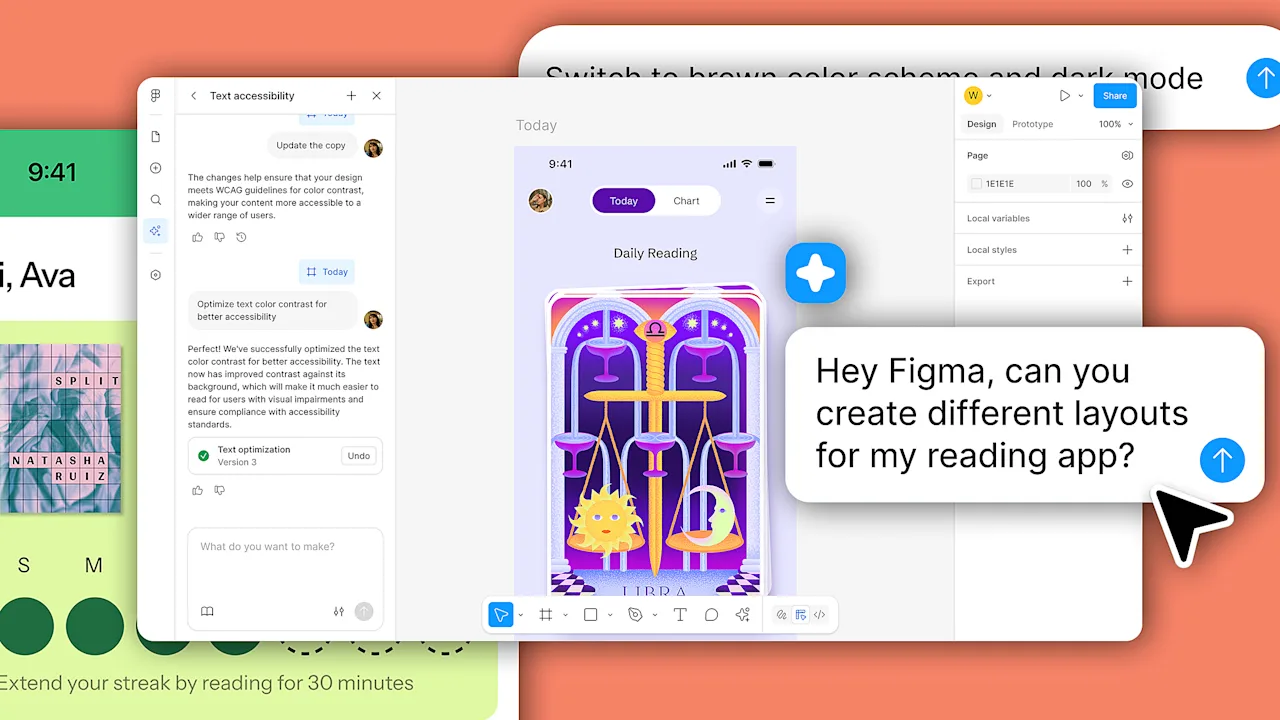
FastCompany: Today, Figma announced an AI agent built natively inside its collaborative environment. Forget the disconnected, floating prompt boxes we’ve grown so tired of; this system gives you multiple digital assistants right on your digital drafting board in Figma Design. According to the company, it is capable of churning out interface elements and banishing the mindless drudgery of pixel-pushing, while keeping creators locked in their creative zone. With the update, Figma is fundamentally reengineering the digital drafting board into an autonomous engine.
By throwing the gates wide open—inviting the marketing department, code-wranglers, and project supervisors to play architect—the company is reshaping the very definition of who gets to be a creator. Powered by a bespoke cocktail of algorithms educated specifically on UI architecture and the platform’s proprietary frameworks, this agentic system bridges the perilous gap between an abstract vision and a concrete, functional prototype. How do Figma’s agents work?
Unlike other AI-powered UX exploration tools that create user interfaces using an isolated, sterile chat window that results in different screens for your app, Figma’s agentic design product is much more granular and offers what appears to be full control of individual elements down to every radial button and icon. The natural language tool is embedded directly into Figma’s workspace and its elements. When you click on an app screen in your canvas, a star appears next to it, signaling that you can adjust the visuals with natural language. You just tell it what to do on the interface element you are working on.
It’s not only about making incremental adjustments, however. You can prompt the agent to generate initial design layers, explore multiple visual directions, change color palettes to one element or screen, or many, globally. It can handle the tedious work of formatting components, sometimes in bulk, like changing the spacing in the progress bar mentioned before and all the progress bars in your app. Teams can deploy multiple agents simultaneously alongside their human colleagues, all of them working in tandem, controlled by different users.
And crucially, the AI continuously reads the room, which means that it is constantly referencing your existing design system logic and the ongoing conversations right on the canvas, while you seamlessly toggle between typing commands and manually manipulating the design. The agent tradeoff The tool will undoubtedly be a time saver for seasoned designers. It will also be a way for non-designers to start designing. In theory, that’s awesome. Yet, this democratization is as terrifying as it’s exciting.
Much like generative video, handing AI design powers to non-creatives could lead to brilliant creations by those with a clear idea, but no skills or money to pay someone to execute it. But also it could be a fast track to a reality where the delicate art and science of product design is diluted into an endless ocean of sanitized, algorithmic sludge. [Image: Figma] I brought this existential dread straight to Figma’s chief design officer, Loredana Crisan. She vehemently pushed back, arguing that automation doesn’t erase the artisan; it isolates their true value.
Article truncated for readability. Read the full piece →
Figma's new AI design tool significantly impacts the design industry by enhancing efficiency and accessibility, while also providing actionable insights for brand strategy professionals.