Score
John Imah knows how to avoid the tech founder fashion trap
John Imah's approach to fashion as a tech founder highlights the importance of personal branding in establishing credibility and respect within the industry. By dressing thoughtfully and stylishly, he not only enhances his confidence but also creates meaningful connections with clients and investors, reinforcing the idea that a founder's image can significantly impact their brand's perception and success.
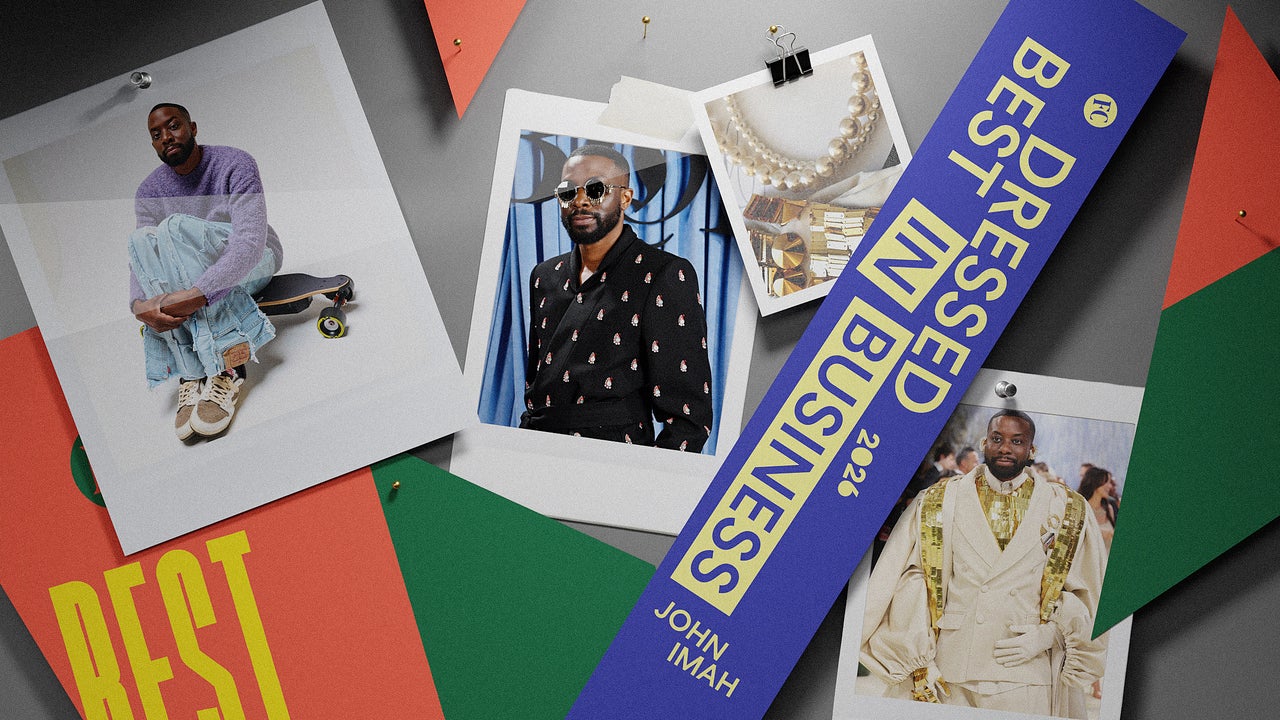
FastCompany: “When you’re an entrepreneur, you wear multiple hats, no pun intended, but pun intended,” says John Imah , the founder of SpreeAI , a platform on a mission to make shopping for clothes online easier through AI -powered virtual fitting rooms equipped with size-prediction tools and personalized styling. Imah is one of the rare figures in tech to land on best dressed lists. In a world of quarter zips and logo tees, he’s chosen instead to wear independent labels and couture fashion. The most recent thing he’s bought? A full suit from Kidsuper , a streetwear brand based in Brooklyn.
“I never want to look like the algorithm’s idea of a tech founder,” he says. This spring he hit the Met Gala carpet in a regal and luxuriously draped ivory overcoat, ivory suit, and a gold vest by Harbison Studio that riffed on the idea of tech royalty. Last year he wore a double-breasted lavender suit, a beaded and embroidered overcoat, a coral necklace, and a lavender kufi by Sergio Hudson—an ensemble that nodded to Imah’s Nigerian roots.
[Source images: Courtesy John Imah, Jamie McCarthy/Getty Images, John Shearer/WireImage/Getty Images SugarSatea ( Clip )/ CC-BY 4.0 , Adobe Stock (textures)] Part of Imah’s success with SpreeAI, which earned a $1.5 billion valuation in 2025, is dressing for the part. He founded his company after stints at Snap Inc., Meta, and Amazon. And while fashion has been part of his life since he was in high school, he recognized that he “needed to take it to the next level” in order to make his company a success so that “people realized that I wasn’t a tech guy trying to just get into fashion,” he says.
“It’s like, no, this person has always been fashionable and respects this space. He just so happens to have a tech background.” To that end, Imah adopts a somewhat chameleon-like approach to dressing, enabling him to respectfully command attention in whatever rooms he might enter, be it a board meeting with investors or introductions to potential clients of his growing platform. (For the latter, he likes to wear clothing from the brand. “It just becomes a conversation point,” he says. “The way that it’s styled on me, that gets their attention. They’re always like, okay, he respects our brand.
Let’s talk to him.”) Calling Fast Company from Los Angeles—he’s bicoastal between there and New York—Imah is dressed casually in a navy-blue Yankees cap, a white tee, wired earbuds, and an olive-green flannel jacket he designed and made himself. During COVID-19, he taught himself how to sew. “Especially being an introvert and being closed in, you’d be surprised what you could learn during that time,” he says. “My goal I haven’t told anyone yet is I want to make my outfit from scratch for a gala or big event.” Imah’s journey to this point is, in some ways, surprising. When he was growing up, his mother was very stylish.
“If we went to the grocery store or the gas station, she was always in fashionista mode, wearing gowns and dresses,” Imah says. Meanwhile, he protested having to dress up. “I actually hated fashion,” Imah recalls. In his youth he preferred Hot Topic T-shirts with slogans like Calculus Nerd or I Love PI . “I was this really, really nerdy kid that was good with technology and in those days I dressed like a nerd,” he says. [Source images: Courtesy John Imah, Justin Sullivan/Getty Images, Adobe Stock (textures)] Then, around high school a switch flipped and he began to take fashion seriously.
Article truncated for readability. Read the full piece →
The article discusses the intersection of personal branding and fashion in the tech industry, which is significant but not groundbreaking, making it moderately impactful and relevant for brand strategy professionals.
Weekly digest
Get the Signal digest
Every Monday morning — the top 3 brand trends, 10 high-signal articles, and one emerging signal to watch.
No spam. Unsubscribe anytime.