Score
The dollhouse just got an ingenious design update
Melissa & Doug's innovative Cheery Lane dollhouse represents a strategic shift in toy design, focusing on the unique play patterns and ergonomic needs of very young children. By prioritizing open-ended play and accessibility, the brand enhances engagement and fosters creativity, demonstrating the importance of user-centered design in brand strategy.
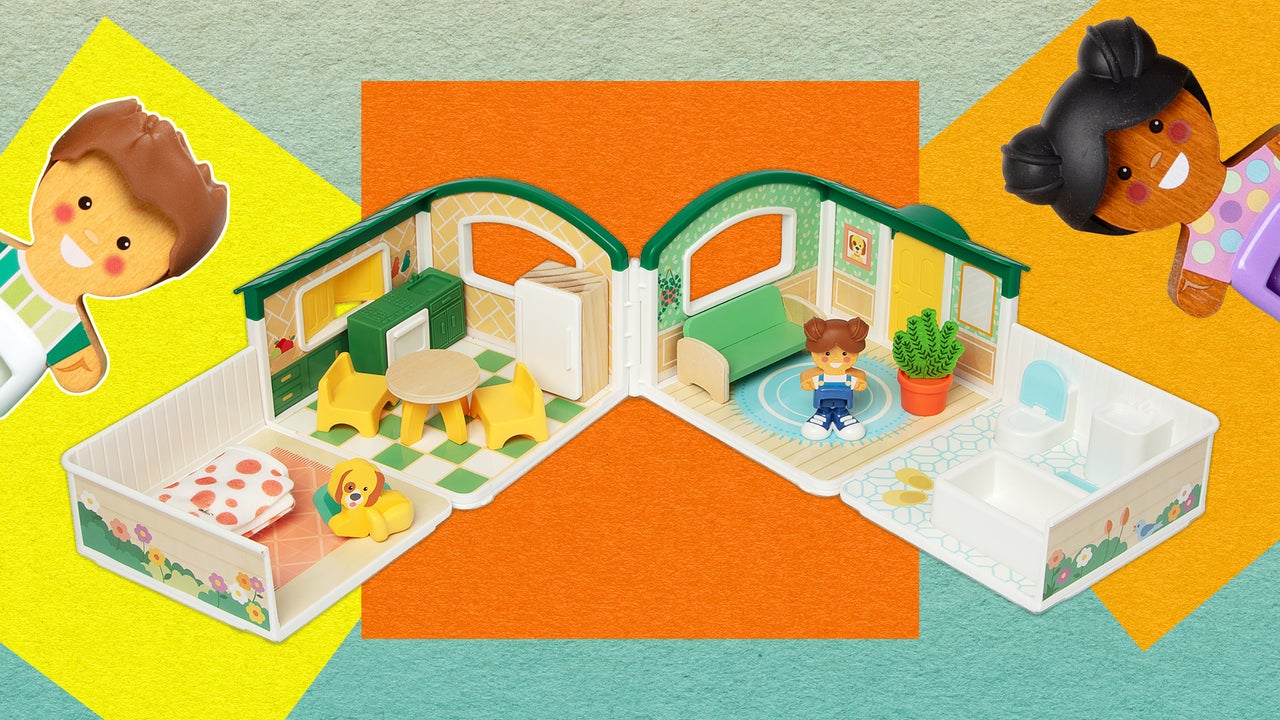
FastCompany: The cutaway has been the default design of dollhouses for generations. Like a house that’s been sliced in half from the roof to the floor, this conventional dollhouse design is a standard part of many childhoods. But for very young children, the cutaway dollhouse isn’t very easy or fun to play with. “They’ll be reaching to try to get the figure in and out of the door and the table will get knocked over, or they’ll be reaching and trying to get someone in the bathroom and they’re not really seeing the action,” says Sofia Dumery, head of design at the toymaker Melissa & Doug .
That’s why Melissa & Doug created Cheery Lane , a product line centered on a dollhouse designed to be played with from the top down. Aimed at 2- to 4-year-olds, Cheery Lane’s dollhouse comprises four small rooms with short corner walls and no ceilings, each accessible to the still-bumbling hands of very young children. Complete with small, easily gripped figurines, furnished rooms, and movable household objects, the dollhouse meets young children where their play modes and ergonomic abilities overlap. [Photo: Melissa & Doug] “Having the child access from the top means they can just easily put the figure in the bathtub.
And they love doing this; especially, they love tucking in and nurturing the little figure, putting it in the bed,” says Dumery. “At 2 years old, they’re really into just having the figure go in and out of the house. So, of course, you have a door. They love the door. They love the windows, and popping those open.” A eureka moment Dumery says the concept for Cheery Lane came from noticing frustration among younger kids when playing with conventional dollhouses. With Melissa & Doug’s focus on open-ended play, Dumery and her team saw room to give younger kids more play opportunities through a different kind of dollhouse.
As it does with all its toys, the company field-tested this new idea with actual kids, holding tryout sessions for 2-, 3-, and 4-year-olds in day care centers. “The kids are honest. They can’t hide it if they’re not happy,” Dumery says. “They walk away from a toy, and we’re like, oh, red flag, let’s readdress.” Testing showed the kids really engaged with the new dollhouse format. “At that age, their attention span is sometimes limited, so we gave them like 20 minutes. They wanted to extend that time. After their naptime they came back [and] they want to engage with it again,” Dumery says.
[Photo: Melissa & Doug] The dollhouse also comes in an ice cream shop version and is reconfigurable, with a central hinge that allows it to swing open, and stackable rooms that can be taken out to create four distinct or interconnected spaces. Dumery says the designers included a variety of sensory materials in the dollhouse, including fixed furniture pieces with moving parts and movable elements like a felt potted plant and a fabric blanket. Colors were chosen to not skew only to girls or boys, and the reconfigurable form is especially conducive to multichild play.
The designers were also conscious of giving at least some definition to the spaces in the dollhouse with fixed items—the bath in the bathroom, the bed in the bedroom—as a way of encouraging creative play . “We felt that that extra stability of having things fixed was a benefit. That it was easier for kids when they’re playing, especially with a piece where you’re engaging so much, that it was beneficial to have those things tethered to the room itself,” Dumery says.
Article truncated for readability. Read the full piece →
The article discusses a significant design update in a popular toy brand that reflects broader trends in user-centered design, making it relevant and innovative for brand strategy professionals.