Score
Domininkas Virbickas of Nord Security On 5 Tips for Accelerating Product Ideation & Innovation
The insights from Domininkas Virbickas at Nord Security highlight the importance of understanding user problems and leveraging evidence-based decision-making in product development. By focusing on underlying patterns of threats rather than specific categories, brands can innovate more effectively and create comprehensive solutions that resonate with users, ultimately enhancing brand trust and loyalty.
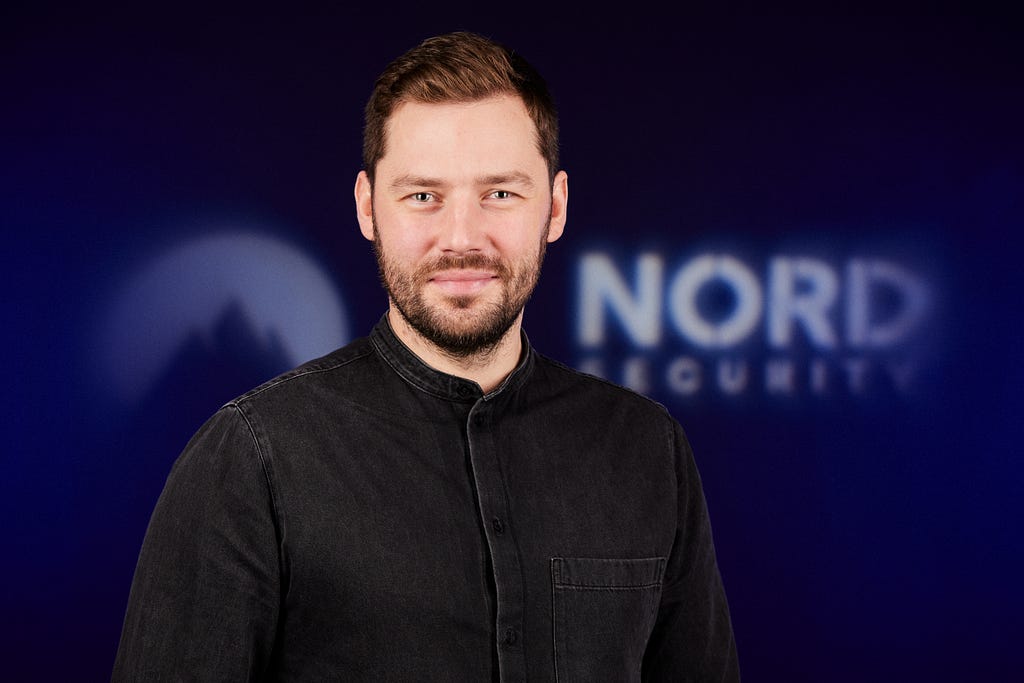
Authority Magazine: Domininkas Virbickas of Nord Security On 5 Tips for Accelerating Product Ideation & Innovation -- Listen Share The way to stay ahead of unanticipated threats is to detect the pattern, not the label. The way to stay ahead of unanticipated threats is to detect the pattern, not the label. As a part of this series, we had the pleasure to interview Domininkas Virbickas. From a background in engineering, Domininkas Virbickas transitioned to leadership roles as VP of engineering and CTO before becoming a product director at NordVPN.
There, he redefined the product strategy, introducing industry-first features like Threat Protection, malicious site blocking, and crypto-wallet checks. His work is guided by the core belief that great security should feel invisible. Thank you so much for joining us in this interview series! Before diving in, our readers would love to learn more about you. Can you tell us a little about yourself? Thanks for having me. I’m an engineer at heart — I love solving complex problems and building products that genuinely help people.
This mindset took me from telecom engineering into leadership, and then to my current role as product director at NordVPN. In this role, I oversee security features that protect millions of users. The reality is that online threats have become incredibly sophisticated, yet most people don’t want to actively manage their own security. That’s why I focus on building practical defenses that work quietly in the background and keep people safe without extra effort. What led you to this specific career path? Funnily enough, it was a hacked ride-sharing account. Small stuff — but that’s the point.
If it can happen to someone who thinks about tech all day, every day, it can happen to anyone. And that’s exactly why I’m passionate about my work at NordVPN. I get to build practical online security tools, helping millions of users protect themselves from unwelcome surprises like the one I experienced myself. Can you share the most exciting story that has happened to you since you began at your company? We’d been building scam protection as a broad capability — our machine learning models were trained to detect the patterns that make a site fraudulent, not to target one specific subcategory.
We weren’t thinking in terms of “fake shop detection” or “tech support scam detection.” To us, it was all scam protection: the same underlying signals of deception, just in different packaging. Then one day I saw the results from an independent testing lab that had run a specific benchmark for “best fake shop detection.” We hadn’t specifically optimized for that test or tuned our models for that category. We hadn’t even known the benchmark was happening. But we scored in the top three. That was the moment it clicked — our architecture was working the way we designed it to.
When you build detection around the underlying patterns of deception rather than chasing individual threat categories one by one, you get coverage you didn’t explicitly engineer for. We framed the problem correctly, so the model generalized to more cases. This also confirmed that threats no longer fit into neat categories. Users don’t get scammed by “fake shops” or “phishing pages” — they get scammed by convincing deception, whatever form it takes.
Article truncated for readability. Read the full piece →
The article provides actionable insights on product ideation relevant to brand strategy professionals, but the concepts discussed are not groundbreaking in the industry.