Score
NYC opens its first rest stop for delivery workers
The opening of New York City's first rest stop for delivery workers signifies a strategic shift in urban planning that prioritizes the needs of gig economy workers and addresses climate justice. This initiative not only enhances the working conditions for delivery personnel but also reflects a growing trend of repurposing public spaces to serve underrepresented communities, which could influence future branding and marketing strategies focused on social responsibility and community engagement.
FastCompany: “This story was originally published by Grist . Sign up for Grist’s weekly newsletter here .” The day’s forecast called for high winds, but around midday in downtown Manhattan, it felt like a perfect spring day. The sun shone high in the sky last Tuesday as people gathered on the sidewalk around the corner from City Hall. Municipal employees mingled about, chatting excitedly. The cause for celebration wasn’t the weather—but a sleek, modernist-looking shed on the sidewalk where there had once stood a vacant newsstand. The structure may not have looked like much, but it had been years in the making.
Since 2021, Los Deliveristas Unidos—a union of app-based delivery workers—have been campaigning for the city to build outdoor structures where they can safely rest on the job, charge their e-bike batteries, and escape the elements. The crowd had gathered for the opening of the first “deliverista hub,” which had been a long-discussed idea, until recently—when Mayor Zohran Mamdani decided to expedite the building process following years of permitting delays and red tape. By the time several delivery workers dressed in jeans, tactical-looking jackets, and bike helmets showed up, the atmosphere was buzzing with excitement.
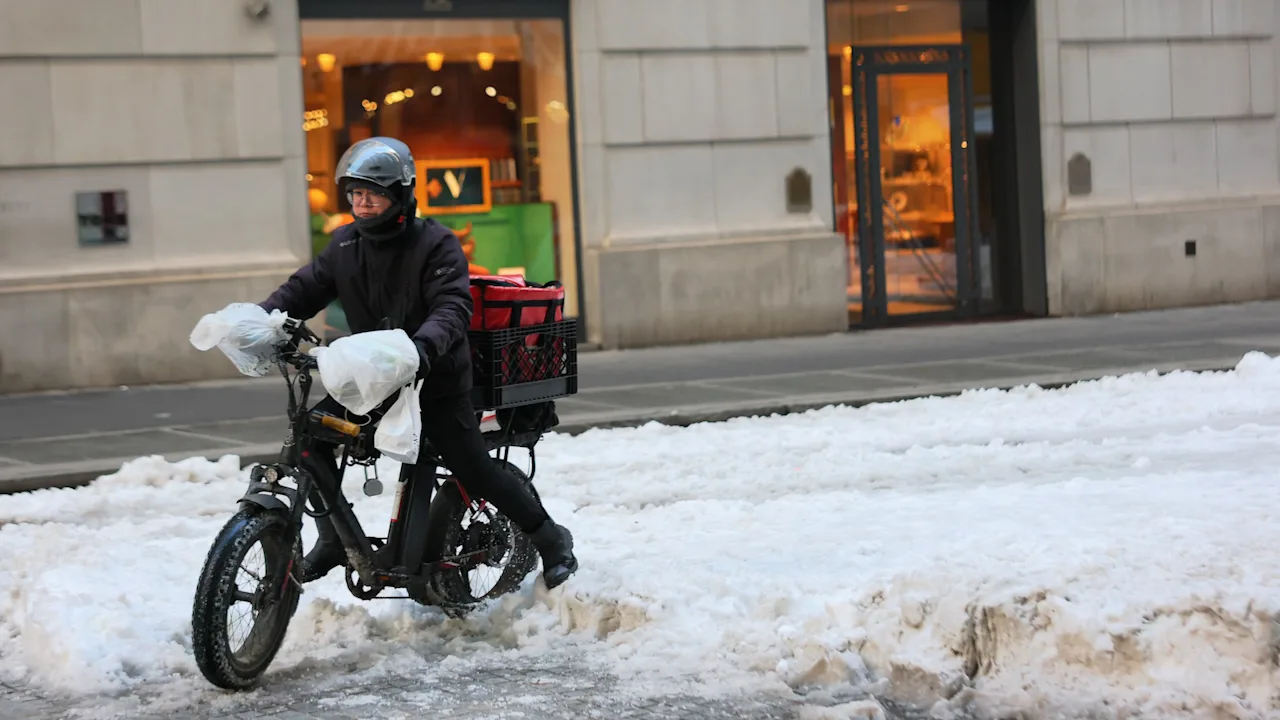
“This is what the public realm is made for,” New York City Parks Commissioner Tricia Shimamura said from behind a podium, standing next to the hub with its clear glass windows and tall metallic columns. “This is what it means for our city to serve the people who keep it running.” In New York City, more than 80,000 men and women board their vehicle of choice every day and shepherd everything from burrito bowls to groceries to many people’s front doors. Many of these deliveristas travel on two wheels: opting for e-bikes, scooters, and mopeds over cars.
That means this workforce is more vulnerable to extreme weather events like heat waves and flash flooding—which are becoming more frequent and more severe due to climate change. The idea for deliverista hubs sits at the intersection of workers rights and climate justice. If the city opens more of these facilities throughout the five boroughs, they will offer respite through all kinds of inclement weather, as well as provide a space for workers to talk to one another. Soon, the Lower Manhattan hub will also be staffed five days a week by a member of the Worker’s Justice Project, the worker center that helps organize Los Deliveristas Unidos.
Delivery workers who are interested in learning more about joining the union can stop by the hub as a starting point. At the grand opening, representatives from the New York City Parks Departments, the delivery workers union, Worker’s Justice Project, and the Department of Transportation were present and gave speeches. New York Senator Chuck Schumer—who secured $1 million in federal funding for this hub—as well as New York City Public Advocate Jumaane Williams and City Council Member Shaun Abreu also spoke. Throughout the ceremony, a fine mist fell over the attendees.
But it hardly dampened the mood of the ceremony, with the crowd frequently breaking out into cheers. Ligia Guallpa, the executive director of the Worker’s Justice Project, proudly claimed this week’s opening as a victory for the working class.
Article truncated for readability. Read the full piece →
The establishment of a dedicated rest stop for delivery workers is a significant development in urban planning that highlights social responsibility, making it highly relevant to brand strategy professionals focused on community engagement and sustainability.
Weekly digest
Get the Signal digest
Every Monday morning — the top 3 brand trends, 10 high-signal articles, and one emerging signal to watch.
No spam. Unsubscribe anytime.