Score
Cats Take Centre Stage In Minyoung Kim Surreal And Subtle Paintings
Minyoung Kim's surreal paintings, which subtly feature cats as recurring motifs, highlight the importance of indirect representation in art. This approach encourages viewers to engage with the artwork on a deeper level, weaving their own narratives around the pieces, which can inform brand strategies focused on storytelling and emotional connection.
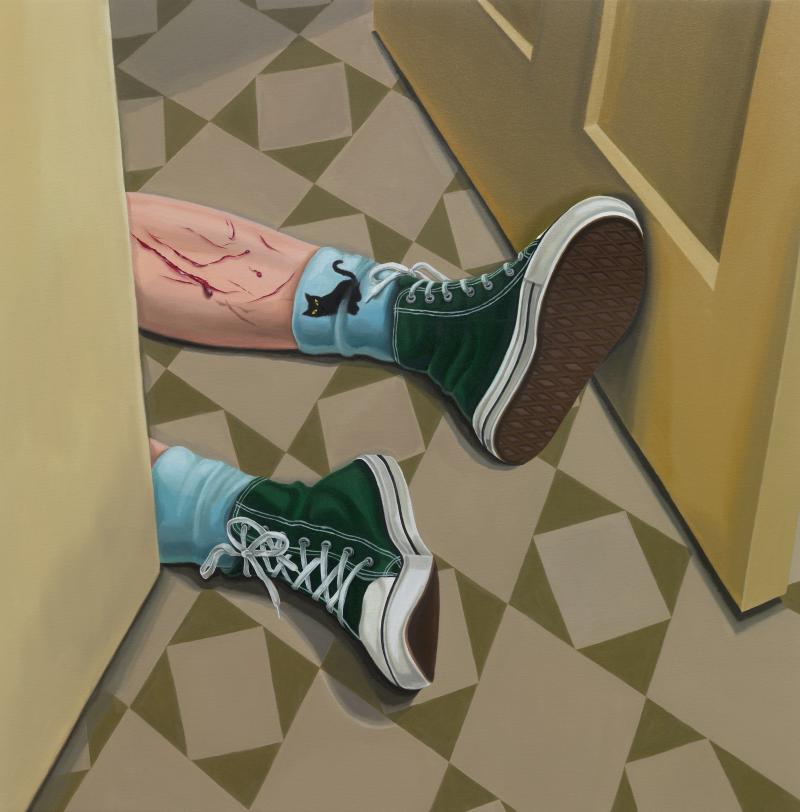
Creative Boom: Inspiration Art & Culture Cats take centre stage in Minyoung Kim's surreal and subtle paintings The South Korea-born and London-based artist has always been obsessed with cats. Below, she tells us why they're a recurring motif and her reasons for only showing the indirect details. Written By: Ayla Angelos 17 August 2026 Cat Sock, 2024 © Minyoung Kim We often hear about a character or subject matter becoming a focal point in a creative's work. It can start unknowingly, because you just enjoy drawing a certain thing.
Then it creeps back in again and again, and there you have it – you're obsessed with drawing one thing, and you become well known for doing it. In the case of Minyoung Kim, it's cats. But don't expect a cat sitting prettily in the centre of the canvas. Minyoung's cats are painted with a black paw hooking over the rim of a table, a pair of yellow eyes glinting behind a curtain, a shadow bleeding through a gauzy veil onto an otherwise composed dining scene. In one painting, a claw reaches up to lift the lid off a silver cloche, where a single leaf burns inside the reflection.
Condensed Gaze, 2026 © Minyoung Kim Summer Reverie, 2025 © Minyoung Kim Behind the Veil, 2026 © Minyoung Kim In another, a watermelon balanced on draped blue fabric turns out to have a paw gripping the cloth beneath it – the cat itself never fully in view. Some are more visible, like a black cat crouched low over a plate of cherries, eyes locked on the viewer, one paw already reaching for the fruit like it's just been caught red-handed. But most of the time, they're depicted subtly. "Cats are a recurring motif in my work, though the way they show up has evolved.
Instead of capturing them directly, they now tend to exist as a shadow, a paw peeking out from behind an object, or just a subtle presence in the room," Minyoung explains. That sensibility of creating a sense of calm with the feeling of something faintly wrong extends to her objects, too. A teapot grows a human-like face and a clawed hand of its own; a jar takes on a human expression; a lobster with a pair of cat eyes. "I'm interested in that point where the familiar starts to shift into something a little stranger," she says.
Minyoung grew up in South Korea, completing her BA and MA in Fine Art there before moving to London in 2019 for an MFA at the Slade School of Fine Art, where she graduated in 2021. She's worked in London as a full-time artist ever since. She credits the move with reshaping her approach to painting: "It really pushed me to become more experimental, trust my visual instincts and develop a practice that feels deeply personal." Big Fish, 2026 © Minyoung Kim Cherries with Cat, 2025 © Minyoung Kim The Jar, 2025 © Minyoung Kim Colour is as important as the subjects on the canvas, and she considers it before anything else.
"I often find myself visualising the overall palette before the composition is even fully locked down," she says. Sometimes a painting begins because a particular combination of tones has caught her attention, with the scene built out from there. After that, she sketches on her iPad or in notebook thumbnails before mapping a loose version onto canvas and painting quickly, resisting a tightly rendered underdrawing in favour of letting the piece shift as she works. "I prefer to let the piece evolve organically as I work.
Article truncated for readability. Read the full piece →
While the use of indirect representation in art is not entirely new, its application to brand strategies offers fresh insights for professionals looking to enhance storytelling and emotional engagement.