Score
This clever new app bribes teens to get off their phones, with help from brands like Starbucks and Adidas
The launch of the Dayo Deals app highlights a strategic opportunity for brands to engage with a younger audience by aligning their products with initiatives that promote healthier screen time habits. By partnering with Dayo, brands like Starbucks and Adidas can enhance their visibility and appeal to parents seeking solutions for their teens' screen addiction, thereby creating a win-win situation that fosters brand loyalty and customer acquisition.
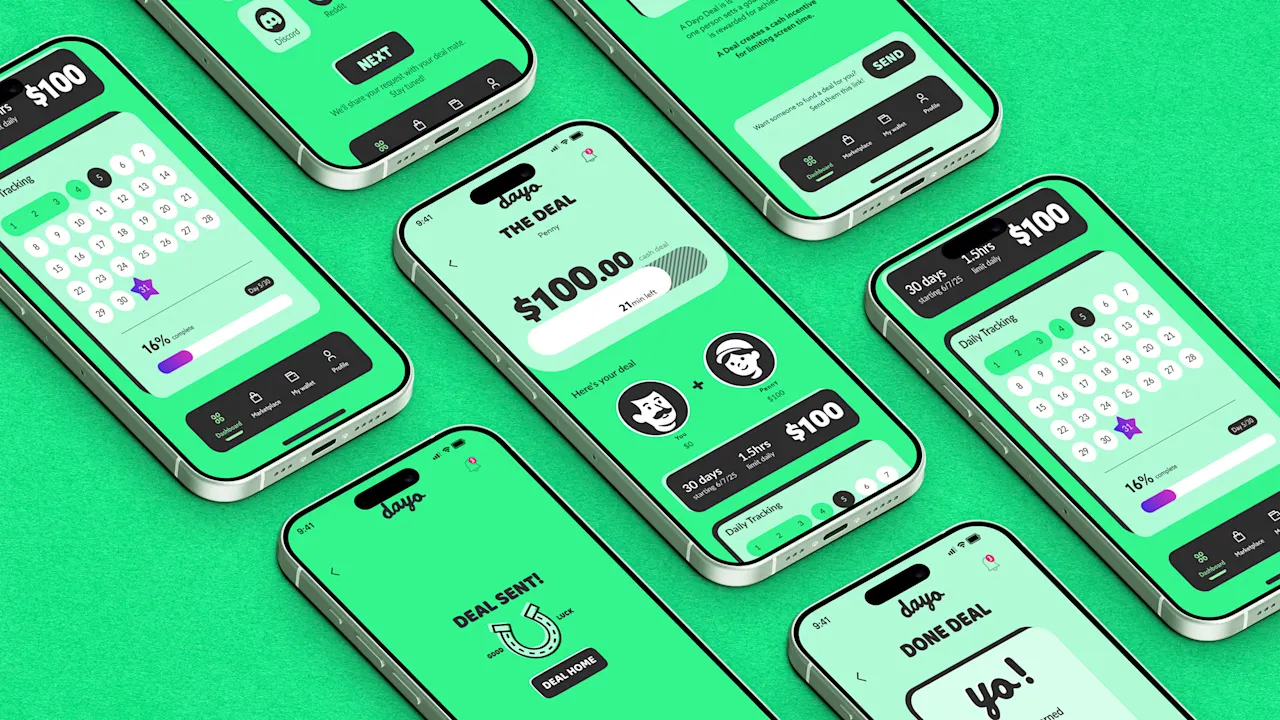
FastCompany: Parents make “deals” with their kids everyday. Mow the lawn and get your allowance. Finish your dinner, and you’ll get some ice cream. When Corey Scholibo was eight, his mother made him an offer: if he stopped sucking his thumb , he’d earn $20. He stopped in a week, and she made good on the promise. Now 47, Scholibo has a business designed around these childhood “deals.” In January, he launched an app-based service, Dayo Deals, that enables parents to strike bargains with their teenage children—specifically to help them reduce their screen time and social media use.
Together, both parties work together to establish time limits and a monetary reward. If the teen stays within the limit, they keep the money; if not, the cash vanishes. Sure, it could be considered bribery. But Scholibo argues, quite simply: cash talks. “There’s something transactional about it, and that’s kind of the point,” he says. A screen time solution [Photo: Courtesy of Dayo] Parents and teens alike agree that the overuse of smartphones is a problem. According to Pew , half of teens between 13 and 17 spend more than four hours a day on their phone.
Forty-six percent report being online “almost constantly,” with six in ten teens using social media apps like TikTok , Instagram, and Snapchat. But many are willing to ditch the screens. Nearly half of U.K. youths between 16 and 21 recently said that they support a digital curfew. Actually implementing limitations is difficult: A Pew Research study from 2024 found that four in ten teens and parents argue regularly about screen time, and while 76% of parents say managing screen time is a priority, 43% say it’s hard to do. “There’s never really been a product where people use it this much and dislike it this much,” Scholibo says of screens.
“Except maybe insurance.” Dayo Co-Founder Corey Scholibo [Photo: Courtesy of Dayo] Scholibo, a former journalist and entrepreneur whose previous ventures include compostable tableware and a plant-based wellness line for menopause-aged women, started the app with his co-founder, Patrick Triato, when Triato grew concerned about his own kids’ screen time. Scholibo and Triato realized that America is unlikely to follow countries like Australia and Spain in banning social media use by children under 16.
But the pair did notice people looking to restrict themselves , which was giving rise to a new category of products that Scholibo calls “restriction-as-a-service,” such as Bark and Brick . Scholibo describes Dayo as a “peer-to-peer payment model.” With a subscription of $9.99 a month, parents and kids set deal parameters together, then monitor progress live on a colorful dashboard that also shows monthly progress and days-in-a-row streaks. [Photo: Courtesy of Dayo] If teens keep their screen use under the allotted time, they can withdraw their reward—via Venmo or PayPal, or in gift card form from brands like Starbucks, Adidas, and Amazon.
But if they go over, they watch the money travel back to their parents. “It’s like asking your kid to give you back $5 at the fair,” Scholibo says. “No one wants to do that.” The brand connection [Photo: Courtesy of Dayo] Dayo initially launched in April 2025 as a “rewards-based marketplace” for helping adults reduce their own screen time. It resembled any earned rewards program: If users stick to their self-imposed limits, they can claim discounts at close to 100 partner stores such as Yeti, North Face, Stumptown Coffee, and Portland-based Powell’s Books.
Article truncated for readability. Read the full piece →
The article discusses a unique approach to brand engagement with a younger audience through a new app, which is significant for brand strategy professionals looking to address screen time issues among teens.