Score
Creative director Gemma Phillips on why the best ideas start with conversations nobody wants to have
Gemma Phillips emphasizes the importance of bold and honest communication in branding, advocating for brands to engage in difficult conversations rather than sugarcoating issues. Her approach highlights that taking risks and addressing uncomfortable truths can resonate more deeply with audiences, particularly in campaigns focused on women's experiences and societal issues.
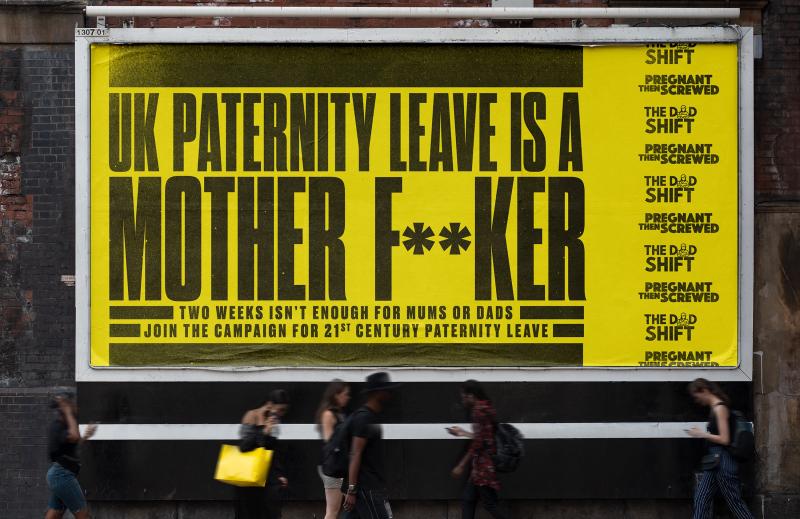
Creative Boom: Insight Advertising Creative director Gemma Phillips on why the best ideas start with conversations nobody wants to have Gemma Phillips spent 12 years at Saatchi & Saatchi before going it alone, and her solo work has already reached the House of Commons. We explore how she gets away with saying the unsayable. Written By: Tom May 6 July 2026 There's a particular skill in making a brand swear on a billboard and have it feel like the most reasonable thing in the world. Here's a great example. See the words "UK paternity leave is a mother f**ker" on Gemma Phillips's poster, and you don't think "how crude". You think "well, yes, actually".
It's typically brilliant work from a woman who spent over a decade as a creative director at Saatchi & Saatchi. Since 2022, she's been a consultant creative director for the campaign group Pregnant Then Screwed, which was centred on paternity leave (specifically post-C-section) and the impact of unequal parenting on women. Yet Gemma's not being edgy for the sake of it. It's less that she's found some answer, more that she's not afraid of the thing a lot of brands still shy away from. The rude bit isn't the risk. The risk is being boring. As she puts it: "Brands have an instinct to sugarcoat. Maybe they think we can't handle the truth.
But we're already living the truth; that's the irony. The grit is where it's at." The streak you can't fake Gemma says she can spot a client with the right attitude almost immediately. "I look at the work they're already doing," she says. "Who's taking risks? Who's trying to do something differently? Who's willing to say the thing that no one else is saying? Who wants to change things, rather than do more of the same but with nicer design?" That said, clients who don't already have that instinct aren't write-offs. "You can definitely guide clients to have a greater appetite for risk," she stresses.
"Especially ones with smaller budgets, as they can't afford to sit on the fence." Often, she says, it comes down to one thing: encouraging clients to have real confidence in their brand, and sharing your belief in what it could be (not what it is now). How motherhood made her braver Gemma's recent work—the CV shredder, the swearing billboards, the out-there nappy adverts—all circles back to one theme: how brands talk to women, and mothers in particular. She arrived at this not as a clever positioning strategy, but from lived experience. "Becoming a mother can be one of the most radicalising processes you'll ever go through," she notes.
"Not only in one singular moment but several hundred moments that permanently change you. Fertility struggles, postpartum, returning to work, navigating how your new life fits back together, or doesn't." That, she says, made her braver, both creatively and strategically. Yet this isn't an experience exclusive to mothers. She thinks the same shift happens to many women as they move into their 30s and 40s, whether or not they choose to have kids. "Weirdly, brands often want to speak to women like they are these very homogeneous beings," she points out.
In contrast, she says: "I'm down for the weirdness, the complexity and the messy humour." Getting parliament to notice The Career Shredder, a literal machine that devours the CVs of mothers pushed out of work, didn't just make an impact: it was raised in the House of Commons. But in retrospect, that shouldn't have been too surprising, because from the outset, Gemma wanted to go all-out. "Before we even had an idea, we knew the work had to be blunt," she recalls. "It had to be as visceral as possible. It had to manifest in physical form what millions of women feel and experience in the workplace.
Article truncated for readability. Read the full piece →
The article discusses a significant perspective on communication in branding that can influence campaign strategies, making it impactful and relevant, though the idea of addressing difficult conversations is not entirely new.