Score
The brand tightrope of the summer: How to make a patriotic sales pitch for America250 that won’t make anyone mad
As brands prepare for the America250 celebrations, they must navigate the complexities of patriotism in a polarized society. Coca-Cola's recent campaign, reminiscent of its iconic 'Hilltop' ad, serves as a reminder that brands can evoke national pride by focusing on individual stories rather than broad generalizations, allowing them to connect authentically with diverse audiences amidst current political tensions.
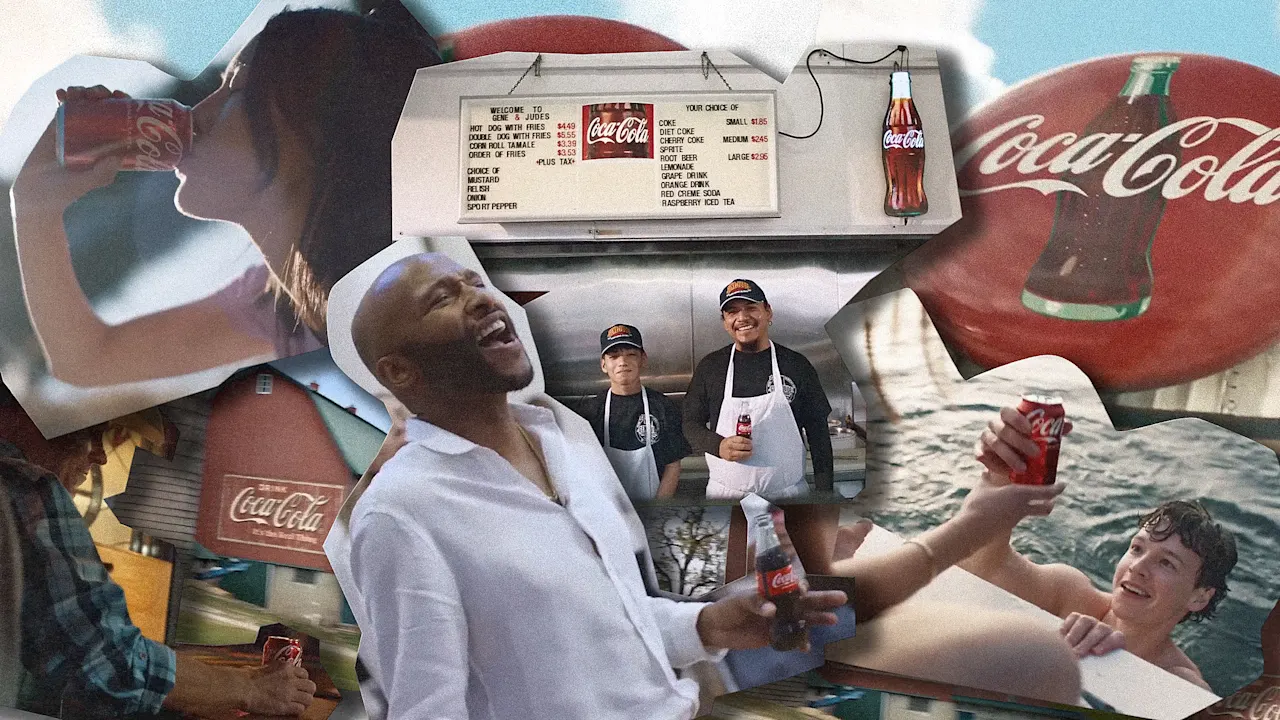
FastCompany: Back in July 1971, Coca-Cola debuted a TV commercial that would become one of the most iconic in the brand’s history. “Hilltop” featured a diverse group of people gathered on an Italian hillside, sharing their voices and bottles of soda, and famously singing, “I’d like to buy the world a Coke.” It was a Don Draper-approved multicultural, apolitical masterpiece. It was also a complete fantasy. Despite the kumbaya vibes of the spot, 1971 America was a much more complicated and volatile place than what was depicted in the ad.
It was the peak of the Vietnam War protest movement, with 60% of Americans opposing the war and 500,000 people demonstrating in D.C. just a few months before the ad dropped. Racial tensions continued to simmer, the economy struggled with high inflation, and unemployment peaked at 6.1%. Oh, and the Pentagon Papers were released that July.
This week, Coke reheated a similar strategy and launched its yearlong, nationwide campaign to celebrate America’s 250th anniversary with a three-minute video called “Drink in America.” It’s a direct descendant of the “Hilltop” spot—with a modernized cornucopia of diverse people, activities, jobs, and geographies—that’s set to an inspirational tune. Much like the 1971 spot, this is an incredibly idealized version of America. It feels especially weird amid intense partisan politics, an increasingly unpopular president, and a war with Iran. This video isn’t just selling sugar water—but an America you would barely recognize online.
Against the backdrop of the news every day, it doesn’t quite feel like the Real Thing. How do you throw a party in the middle of a war while so many folks at home are doomscrolling content designed to keep them hating each other? Coke went back to its original recipe to look for an answer, and there are lessons here for all the other brands getting their own America250 campaigns ready. Celebration nation This summer marks America’s 250th anniversary, and despite all the political chaos at home and abroad, people definitely still want to celebrate.
A recent M Booth survey reports 62% of Americans say the 250th anniversary is personally important, and 8 in 10 say it’s a moment to celebrate America’s history, achievements, and values. Yet 60% say the country is more divided now than at any period in their lifetime. In January, contextual advertising platform Chicory surveyed 1,000 U.S. consumers and found that while 58% of Americans plan to celebrate the nation’s anniversary, enthusiasm was far weaker for younger adults. “There’s a lot more hesitation within the Gen Z cohort,” Chicory CEO and cofounder Yuni Baker-Saito told Fast Company in February .
This is what the professionals call a brand challenge. Joining Coke to take a crack at it are brands such as Amazon, Chevrolet, and Stellantis (Dodge, Jeep, Ram, Chrysler), who are partnering with America250, the nonprofit that’s organizing the official celebration of the U.S.’s semiquincentennial. As delusional as they first appear in the context of everyday reality, both “Hilltop” and “Drink in America” offer an escape. A few moments in a harmonious alternate reality. In the first season of Mad Men , the world’s most famous fictional adman, Don Draper, said that advertising is based on one thing: happiness .
Article truncated for readability. Read the full piece →
The article addresses a significant challenge for brands during a major national celebration, providing insights into effective patriotic marketing strategies that are particularly relevant in today's polarized environment.