Score
There’s just one person behind this viral ChatGPT knockoff
The emergence of Tucker Bryant's ChatTJB project highlights a growing trend among independent artists to critique the overwhelming presence of AI in advertising. By using minimalist design and humor, these creators aim to provoke critical thinking about our reliance on AI, suggesting that brands should consider the cultural implications of their messaging and the authenticity of their offerings in an increasingly AI-driven market.
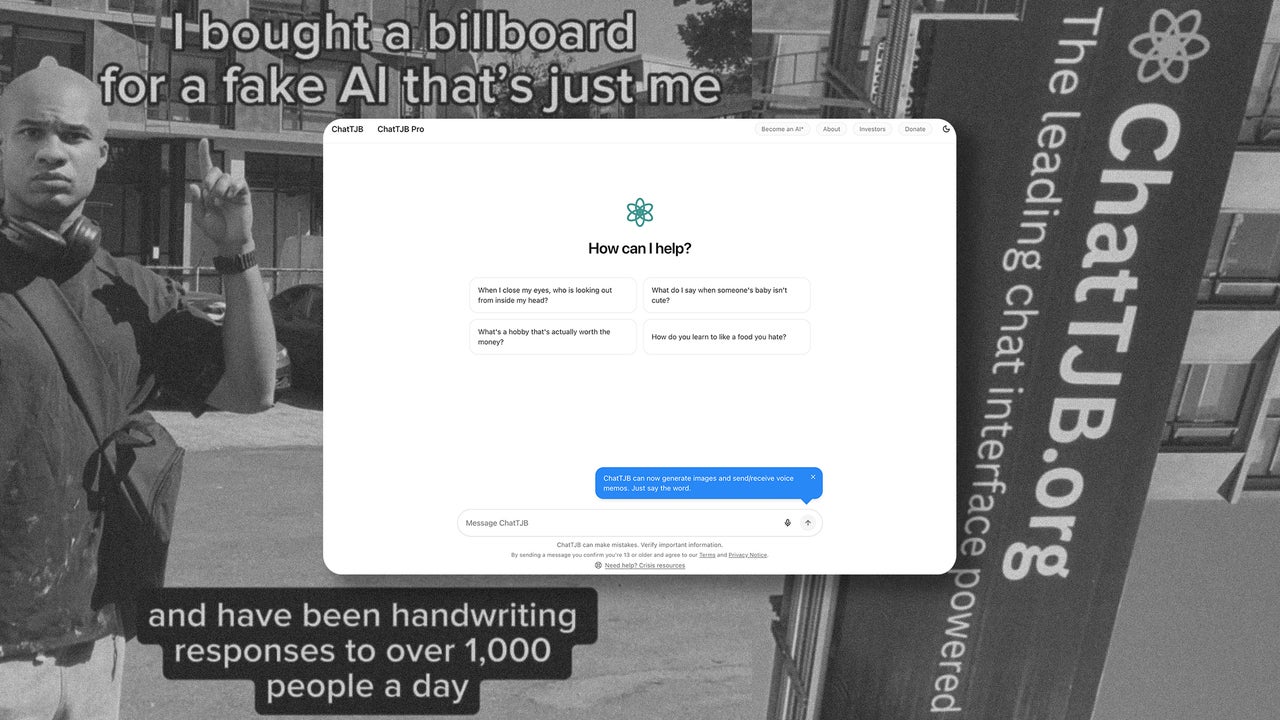
FastCompany: A new chatbot billboard recently appeared in San Francisco. It looks almost identical to the dozens of AI advertisements that have popped up throughout the city in recent years: simple font, a black-and-white color palette, and copy that sounds like it was written by a robot. “ ChatTJB.org ,” the billboard reads .
“The leading chat interface powered by AI.” An asterisk after that final word leads readers to the catch: “AI,” in this case, stands for “Actual Individual.” This billboard wasn’t sponsored by a company, but by Tucker Bryant , a former marketing manager at Google who now spends his time as a keynote speaker, artist, poet, and social media creator. ChatTJB is his latest digital project, and it’s a very real chatbot service that funnels every prompt to Bryant himself, who responds to them to the best of his ability.
View this post on Instagram If Bryant’s project sounds familiar, that’s probably because other artists have been using similar tactics to express their dissent against companies peddling their artificial intelligence features for the past several months. As tech hubs like New York City and San Francisco become inundated with AI startups and advertising, independent artists are creating their own subgenre of digital and physical parodies that take aim at AI “slop” advertising, and ask the public to think critically about their relationship with AI.
The fight against AI slop advertising “Hire everyone on earth without doing anything.” “The world’s first wearableAI grandfather.” “UnderwAIr: Panties that think.” All of these are examples of ads that, like Bryant’s physical billboard, have popped up IRL across the New York City subway system. They’re the creations of two comedians, Harris Alterman and Dave Ross, who have spent the past two months making and displaying fake AI ads in the city.
In an early June interview with Fast Company, the pair explained that their aim is to skewer what they call “slop voice”: a distinctive advertising format that uses techy buzzwords, minimalist design, and zero-context claims to capture a high tech, SaaS-speaking in-group . Slop voice, as Bryant points out in an August 2 Instagram video debuting his billboard, is a similarly rampant problem in San Francisco. Real examples he’s encountered include, “Goodbye missed calls.
Hello AI receptionist”; “Agents that improve themselves start with evals”; and “No AI without APIs.” “San Francisco has AI billboards absolutely everywhere, and it sort of felt like they popped up almost overnight,” Bryant says. “It can feel strange being in this city where on one hand, AI optimists make big promises and AI is doing some genuinely incredible things, but where it also has people anxious about the future.
Article truncated for readability. Read the full piece →
The article discusses a unique independent project that critiques AI in advertising, which is significant for brand strategy professionals navigating the evolving landscape of AI, making it impactful and relevant.